Big, fast, brutally powerful motorcycles will always be the flagships of the industry, but most often we see them wrapped in bodywork, with a less than luxurious riding position, and a seat that would trouble Mahatma Gandhi.
There is a simplicity to the classic naked road biased motorcycles that has always been the backbone of the industry, so today I am looking back at some of the big, beautiful motorcycles that have graced our roads, just not quite as far back as in many of my videos.
These are big, brash, brutally fast bikes from all corners of the globe, built in the first decade of the 2000’s.
With the performance and handling of a Superbike, they are stripped back to the bare essentials, and come in a rider friendly package without all the extra bodywork.
Some are spectacular and expensive, but others can now be had for very reasonable prices, so you don’t need to spend a fortune to get one of these fantastic bikes.
Winners come in many forms, and without a doubt some of these bikes are easier to live with than others, so putting them in a specific order isn’t easy, especially when some were updated many times.
Putting them in a fastest, or most powerful list gets a bit meaningless, it is more about the bike that suits you.
If it is a daily rider, some come with easier parts supply than others, so they would be the ones to go for, but if its a 2nd or 3rd bike in your garage, and waiting for parts isn’t such an issue, then maybe one of the more exotic bikes might be for you.
With that in mind, I decided to do it with the most obvious candidates first, and the ones you might not think about, or know about, at the end.
This is the era when various levels of electronic trickery were introduced, and they feature more on some of these bikes than others, but I am not even going to look at that here, if you like a full electronics suite, a newer bike may suit you better. If you prefer no electronics at all, an older bike might be more suited to you.
I have chosen these Big Brutal Motorcycles of the 2000’s on the pure, basic, engineering excellence that was involved in building them. That, and the joy they can bring to any rider sat in the saddle.
Its hard to believe some of these bikes are over 20 years old now. When you see them they don’t look outdated. Most could stand side by side with any of today’s bikes, and there isn’t much on the road that will keep up with them even now.
So without further adieu, let us take a step back 20 years into the world of these Big Brutal Motorcycles of the 2000’s.
I’ve left a little bit of onboard footage between the bikes where I can. It gives you an idea of the riders eye view on these fantastic machines, but I will leave timestamps if you want to skip on.
First today shouldn’t be too much of a surprise considering its historic name, but it is also the earliest of the bikes here today.
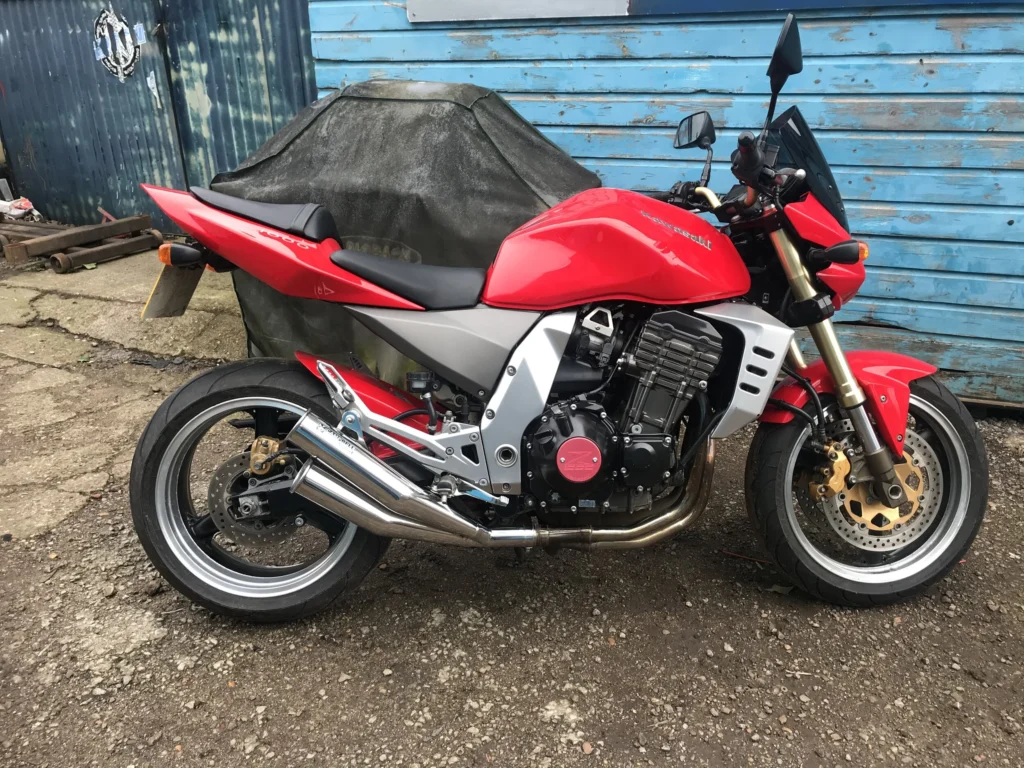
1 – Kawasaki Z1000 2003
We have had many incarnations of the Z1000, but in 2003 we got a new Kawasaki Z1000 a Big Brutal naked sport-bike with aggressive styling, a distinctive four-into-four exhaust, and a 953cc liquid-cooled inline-four engine based on the ZX-9R motor.
I say derived from and it was, but it was changed significantly. Both bore and stroke were increased and few parts were actually interchangeable between the ZX9 and the Z1000.
The Z1000 produced around 125hp at 11,000rpm when it first arrived, and maximum torque of 95Nm or 70ft/lbs hit around 8,000rpm, which gave you a 3,000rpm power band at the top, and that was really the place this engine loved to be.
It didn’t need to be revved, but it wanted you to rev it. There was little below 3,500rpm and even then things came in fairly steadily, which made it easy to live with. However, from 5,000rpm the charge began, and the air will rush past your helmet with added urgency as each 1,000rpm was passed.
From 8,000rpm to 11,000rpm it was just a case of hanging on, and it was always happiest high in the rev range.
It was a strong, raw, naked performance bike with a 198kg dry weight, and it marked the 30 year anniversary of the original Z1.
It was hyped as the first Super Naked, but I think there would be many arguments and discussions about that particular factoid.
Whether it was or not, it was a big powerful and well put together bike.
Although its 0-60mph time was just 3.1 seconds, the 11.3 second standing quarter mile time could have been better, but no one could argue this was a fast bike. Top speed was around 148mph or 238kmh.
It had inverted forks with cartridge internals that separate compression and rebound damping functions, so the compression damping adjustment was on one leg and the rebound on the other.
To be honest they always looked a bit flimsy beside the massive oversized forks on many of the bikes on todays list, but they worked well. The bike was stable, but it did require a bit more rider input than some of its rivals, especially the Italian ones.
One of the reasons the steering felt heavier was probably that massive 190mm rear tire, but I digress.
The early fuel injection system was sensitive and set up very specifically to the stock exhaust, so swapping to aftermarket exhausts could make it jerky at the bottom end without some tuning, and many riders stuck with the weight of the stock exhaust despite its relatively muted sound, because in stock form it worked well, and the low end fuelling was pretty good.
The Kawasaki Z1000 is a reliable bike as long as it has been well-maintained, but they do need caring for. Left outside for too long or ridden through winter the corrosion patches will grow quickly.
In 2007 the beautiful twin-stacked exhausts were dropped in favour of a cheaper and less aesthetically pleasing system, with a less than reliable exhaust valve introduced, and you do need to check on this generation that it isn’t seized.
The second-generation motor had smaller intake and exhaust valves as well as a 7% heavier crank, lower gearing and a lighter clutch action.
By 2010 the capacity was up to 1043cc and power had gone up to 138hp. Max torque of 110Nm or 81ft/lbs hit at 7,800rpm and the standing quarter mile time was down to 11.1 seconds. Top speed was still around 148mph or 238kmh, but it would only stop there because of the ECU. It was capable of more.
By then the old steel chassis had been replaced with a new aluminium one derived from the ZX10R, and a newly designed swingarm and rear suspension system with the shock laid horizontally.
This Big Brutal Motorcycle looked sharp and it rode sharp too.
It changed a lot both visually and from an engineering perspective, but whatever the year, they are all a lot faster than I will ever be.
Next, we stay in Japan, but go to a bike you might not expect.
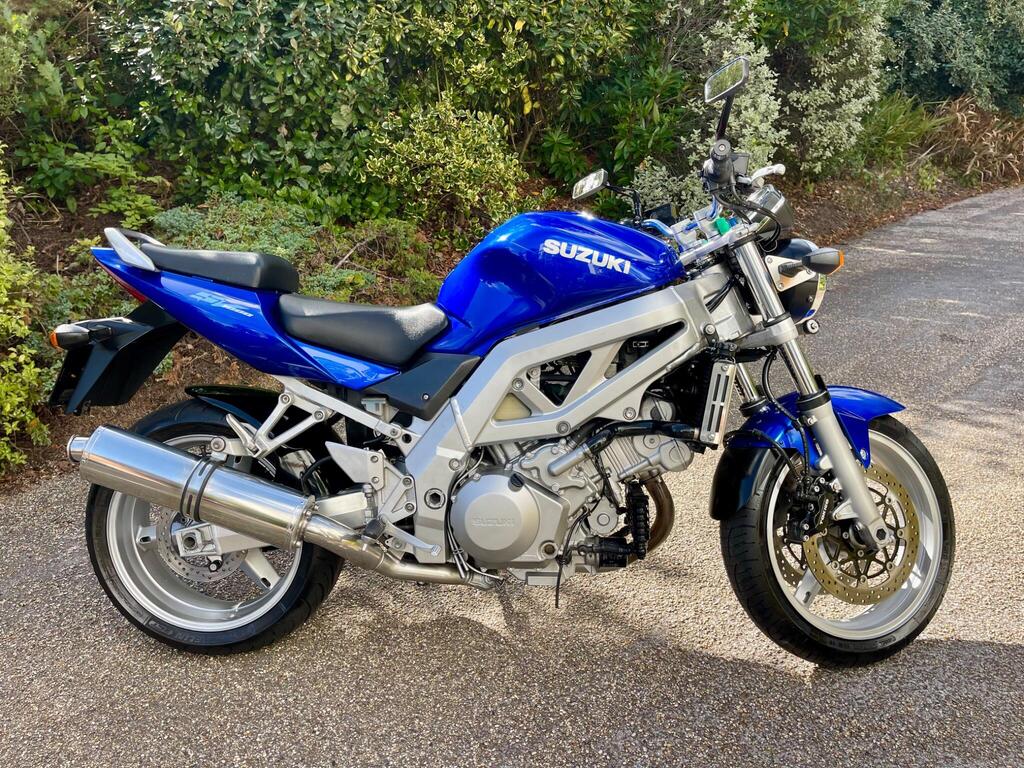
2 – Suzuki SV1000 2003
The Suzuki SV1000 first came along in 2003 and was only built for 5 years. It came completely naked, or as the half faired SVS version, but that was pretty much the only difference as far as I am aware.
The SV650 had been a phenomenal success and its chassis was a winner, so Suzuki took the obvious step of trying to cram the engine from the TL1000 into the chassis.
Re-tuned from its days in the TL, the SV engine would churn out around 125hp and around 100Nm or 75ft/lbs of torque.
It revved high for a V Twin with max power not hitting until around 9,000rpm, and peak torque coming in at around 7200rpm.
That smooth torque curve and that wide band of power between 7,000 and 9,000rpm meant it was easier to ride fast than many of the bikes of that time, and with a dry weight of around 190kg or 415lbs, it was lighter than the big 4 pots too, but it was never the big seller Suzuki had hoped.
Beside the sales success of the SV650 it could easily be seen as a failure, but that was maybe more to do with the market than the bike itself.
Despite never really fixing the issue with the noisy and sometimes problematic clutch basket from the TL, the gearbox itself was one of the bikes stand out features. Gearing was fantastic and changes slick and precise in true Suzuki style, and the linear power delivery came with a rush that just seemed to go on forever.
The handling was neutral and stable even at speed, but it was agile too, although better suited to fast, sweeping roads than a track.
The conventional forks were fully adjustable and the 4-pot Tokico calipers at the front on twin 310mm discs, gave you strong, controllable stopping power.
Sporty but not extreme, it had high bars and relatively low pegs, making it comfortable even on longer rides, but they wouldn’t be too long without a break. The 17 litre fuel tank meant that even being gentle with the throttle, you would be lucky to get 150 miles from the tank, so its use as a touring bike was limited, which was a shame.
It did suffer from Suzuki’s habit of using cheap metal fixtures and fittings too. Fasteners and engine paint were prone to corrosion, especially if used in British winters and even the radiator was prone to rusting.
Generally robust, it was built down to a budget, so the fit and finish was not the best even by Suzuki standards, but as a do-it-all bike that can handle scratching, commuting, touring, and the odd track day, without the extreme riding position of a full on superbike.
It is still an excellent, reliable used buy for anyone looking for litre-class V-twin power on a budget. Just look for any corrosion.
Moving to Italy, we have the bike that to many is the ultimate incarnation of its kind.
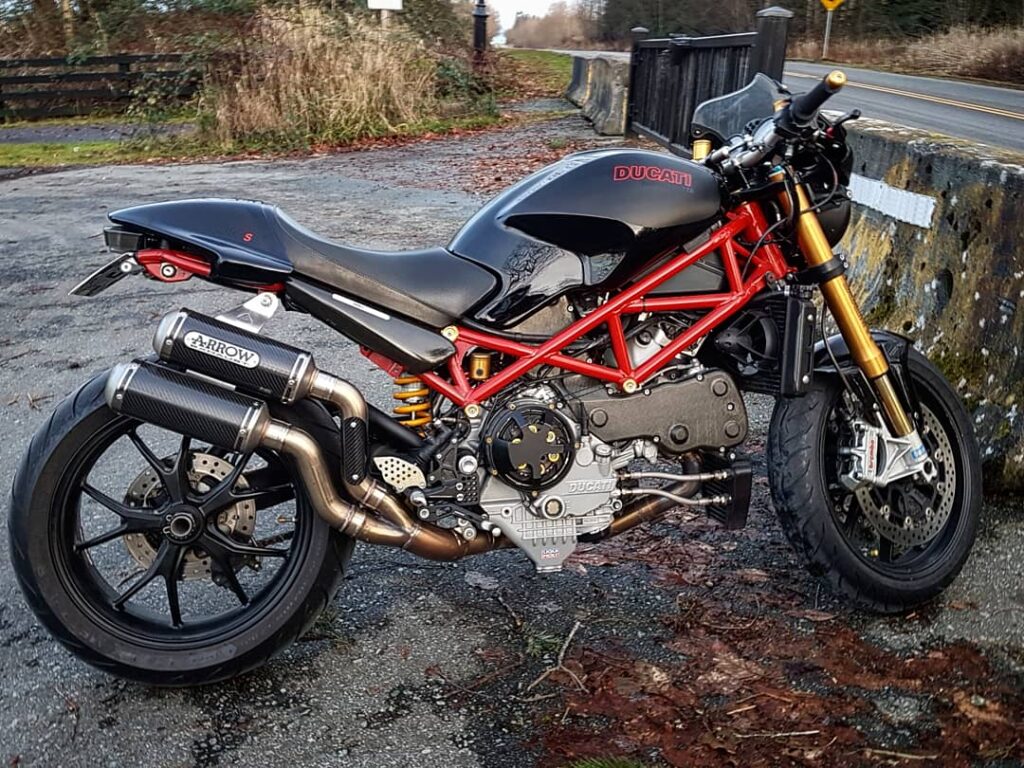
3 – Ducati Monster S4R 2007
The Ducati Monster was one of the happy accidents of the motorcycle industry, Miguel Galluzzi had originally taken the engine from the 900SS along with an existing trellis chassis and cut away everything that wasn’t essential to the design.
Everything was minimised or removed until the shape of the Monster was revealed. It was a motorcycle that somehow took the style of the past into the present, while also looking to the future.
If ever a design could be described as timeless, the Ducati Monster S4R is exactly that.
The first S4R came in 2003 and in its first guise used the engine from the 996 Superbike. the 996cc L Twin produced around 113hp at 8,750rpm, with peak torque of around 95Nm or over 70-ft/lbs hitting at around 7,000rpm. A dry weight of just 193kg or 425lbs made it light and compact compared to most litre bikes. That helped to give it a sub 11 second standing ¼ mile time and a top speed of around 135mph or 235kmh.
By 2007 though we got the next generation S4R Testastretta. Just 2cc more at 998cc, this engine churned out around 130hp at 9,500rpm and max torque was up to around 104Nm or over 76-ft/lbs hitting around 7,500rpm.
This is where it gets interesting though, because although listed dry weight is well down on the previous model at 177kg dry, the performance really wasn’t as different as you might think. Gearing was changed and Euro emissions were getting tighter.
The standing ¼ mile time had increased to 11.3 seconds, almost half a second slower, although top speed was increased to around 150mph or 245kmh.
The Testastretta did feel faster, but the original S4R was such a good bike it was never far behind.
With a single-sided swingarm, stacked twin silencers, aggressive stance, and gutsy performance, it was built for the open roads and had a nimble, light, responsive feel.
You got Showa Titanium Nitride coated adjustable suspension except on the Ohlins shod S4RS, both gave instant feedback to the rider and in truth, none but the very best riders could really get it close to its limits.
The Ducati Monster S4R was the liquid-cooled evolution of the Monster family, a classic naked roadster with superbike-levels of power.
Already unusual at the time it delivered a raw and unfiltered riding experience with no ABS or other rider aids to get in the way.
Back to Japan, and things were hotting up. The market for high performance UJM’s had become a battleground again.
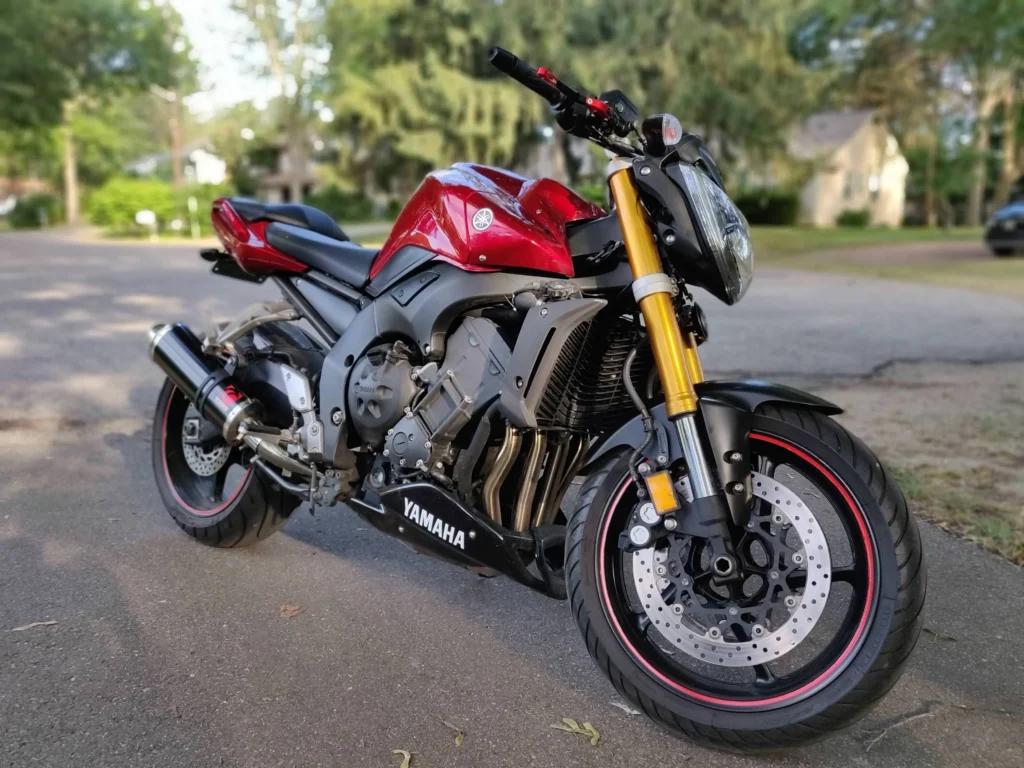
4 – Yamaha FZ1N 2006
The 2006 Yamaha FZ1N first came along in 2006 and kept its place in the Yamaha line-up until 2012.
The first FZ1N was very simply, a fantastic big capacity sport-bike with its clothes ripped off.
It featured a retuned 998cc inline-four engine derived from the ’04-’05 era R1. Delivering around 150hp at 11,000rpm, maximum torque of 106Nm or 77ft/lbs hit at 8,000rpm, so it had a wide usable spread of power that just went on and on.
It wasn’t the lightest, with a dry weight of around 205kg, but the forward weight bias helped make the steering sharp, and the rigid chassis kept it stable. The suspension was nothing special, but it worked well straight off the showroom floor, and keeping the build quality while keeping the price competitive meant there were bound to be compromises.
This was muscle for the Everyman, not an Italian supermodel just for the rich kids.
Top speed was 154mph or 247kmh and acceleration was brutal as I’m sure you can imagine. It could just sneak under the 11 second quarter mile mark which so many more expensive bikes struggled to do.
It was a big, naked, hooligan with no apologies or explanation, but it was easier to ride slow when needed than many litre bikes.
Roll on power came with the sort of rush you only normally get from jumping out of a high rise window, and at the end of a quarter mile strip it was only just getting into its stride.
The chassis was taught and precise, and monobloc calipers on the 320mm front discs did the job of stopping really well.
43mm Kayaba forks were fully adjustable, and the rear shock had preload and rebound damping adjustment, so it could be set up properly for the rider, and it did ride well straight off the showroom floor.
It didn’t really change much over the years, but that was for a good reason.
If it ain’t broke, don’t fix it as they say.
There are lots of ways to make the FZ1N better, but let us be clear, it is a better bike than most riders will ever be, and the limiting factor in most cases is the rider.
The first year there were reports of cracks at a specific frame weld on the upright rear rails. So the main support beams should be checked for any signs of welding fatigue just in case, but that was almost 20 years ago now, so the ones that went were sorted or scrapped long ago.
It had a snatchy throttle down low during the first year too, but this was improved, although officially there were no updates until 2010. Dealers had been doing an ECU remap from the early days, but Yamaha introduced it officially in 2010.
It sorted out the low end fuelling, and gave much better low end pick up with more midrange torque. This was traded for slightly less top end power, and although the difference was marked at the bottom end, it was barely discernable at the top, so it was a marked improvement.
All in all with the FZ1N, you got a lot of bike for the money back when it was released, and you get a lot of bike for the money now too.
The FZ1N’s biggest competition in some ways came from its neighbour, because…….
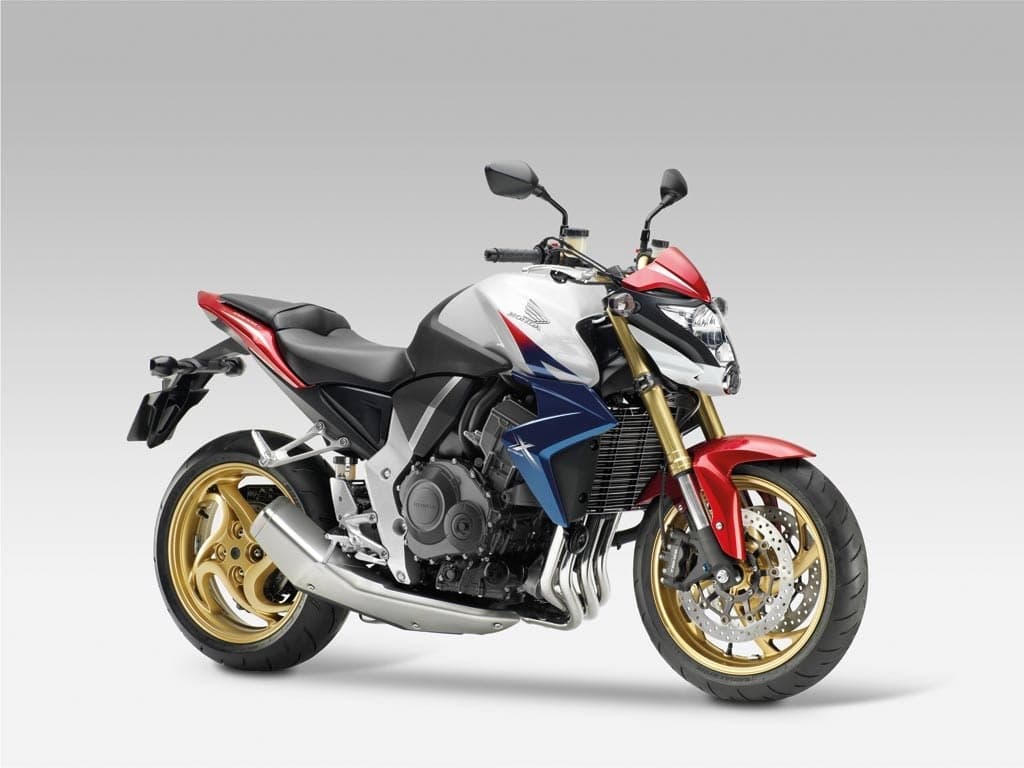
5 – Honda CB1000R 2008
Not to be outdone by their competitors, Honda decided they would have another go at the fast naked bikes market too.
The X11 hadn’t been the success they had hoped for, but they had a very successful CBR1000RR that was ready to become the donor bike.
And it doesn’t take a lot of brain power to figure out that if you put a Fireblade engine in a naked bike, and don’t turn it into a hippo, it will be great fun to ride.
First built in 2008, It had a hard job to replace the well loved Hornet 900, but it remained in the Honda range for the next 14 years, only being axed in 2022.
When it arrived in 2008, it used a retuned version of the 998cc across the frame four engine from the 2007 Fireblade.
The CB1000R was a bit short on muscle compared to the Yamaha FZ1 and some of the other bikes here, but in the real world there was little difference in usable power.
Despite only making 123hp at 10,000rpm, 25hp down on the Yamaha, it would pull over 140mph or 225kmh and had a standing quarter mile of 11.3 seconds.
It took a very good rider to get that extra bit of performance from the Yamaha.
100Nm or 74ft/lbs of torque came in gradually and smoothly, peaking around 8,000rpm, and it did have masses of midrange grunt. Power delivery was silky smooth, and it was a more refined ride that was just easy to get along with.
The engine was so under-stressed it would carry on forever if looked after.
Whether it helped in any way or not, the single sided swingarm always looked good, and the handling was nimble yet stable. It looked like Honda had given Showa a pair of the Yamaha/Kayaba forks and said “make us some of these” with the suspension. Honda’s Showa system had similar 43mm adjustable forks up front and a rear shock that was almost identical in spec to the Yamaha.
It was a compact machine despite its mass of 218kg or 480lbs, and I still remember thinking it was a 600 when I first sat on one.
The centre of gravity felt low and the bike was manoeuvrable at slow speed, but it also handled brilliantly in fast twisties.
The idea was to build a more serious, performance-focused machine than the Hornet, but still retain the daily usability the Hornet had become renowned for, and it did that with aplomb.
It might not break any records, but it had a certain style and refinement that was a bit lacking elsewhere in the market, and buying one now will certainly not break the bank.
The Honda CB1000R is still renowned as a bulletproof bike almost 20 years after it first arrived.
There are a few “weak spots” and maintenance quirks to check before you hand over any cash though.
The Single-Sided Swingarm chain Adjuster is an eccentric hub in the single-sided swingarm and they can seize if they aren’t looked after. Check it moves freely and make sure the adjustment teeth aren’t “chewed up” from someone using a hammer and drift instead of the correct C-spanner.
A rub with some scotchbrite and Duck Oil and a coat of good grease on the surfaces is usually all it takes, but if its all seized solid, getting it apart can be a pain.
On early models there were some stator problems too. If it’s slow to turn over and the battery feels weak, it might be worth checking any paperwork it has to see if the stator was replaced under an extension of the warranty Honda put in place.
If not, cost it in. Its not a hard job and to be fair, most were done long ago.
Back to Italy and a bike from a brand you might not expect here.
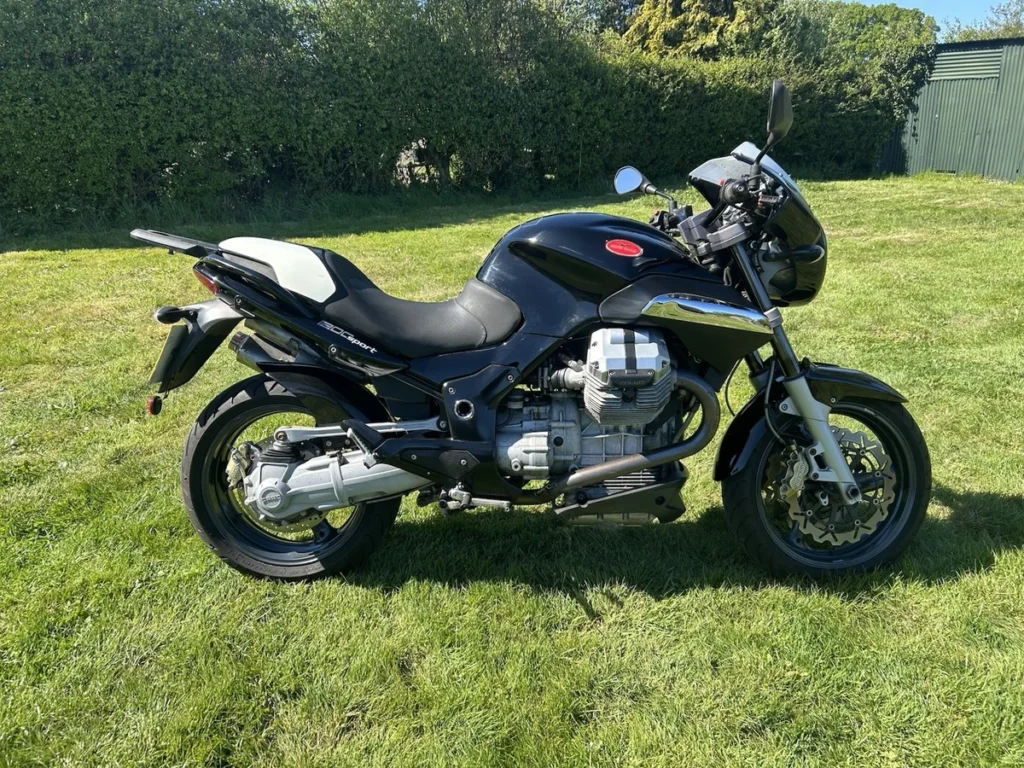
6 – Moto Guzzi 1200 Sport
Many people think of Moto Guzzi’s as lazy bikes, a long way from the realm of sport bikes, but that wasn’t always the case. The original Le Mans series of bikes were thoroughbred sport bikes and in the 2000’s, following that theme, we had the release of the Moto Guzzi 1200 Sport.
Originally a 2 valve per cylinder head, later models were dubbed the 8V because of a new 4 valve head giving it 8-valves total, hence the 8V name.
Both bikes were powered by a 1151cc, transverse V-twin and while it might not win the power race here it was a muscle bound roadster with serious grunt.
It had shaft drive and was renowned for its soulful Italian charm, comfort, and bold styling, it is a great bike, but it did hava an identity problem. It was versatile, and sat somewhere between naked roadster, sports bike, and tourer. But where it shone the most was on fast, sweeping curves in the mountains, the place it was born.
The Moto Guzzi 1200 Sport 8-valve has a broad, muscular power-band. The early 2-valve per cylinder 1200cc was all grunt and pulled from low in the rev range, but the 8V version gave you just a bit more go.
Released around 2008 as an update to the original 2-valve per cylinder model, it featured the “Quattrovalvole” or four valves per cylinder head version of Moto Guzzi’s big transverse 90° V-twin.
There was an issue with the early 8V and they were prone to tappet wear. By mid 2012 on this was solved by using roller rocker arms on the cams, and you will find plenty of people on the Moto Guzzi Club GB Forum that know much more than me and have done the swap to roller rockers, and it is a genuine mod that is a necessity for long term reliability.
Make sure it has been done, or cost it in, or things can get expensive quickly. Other than that they are a solid bike.
If I am right, the early 2-valve per cylinder engines didn’t suffer from this problem, and still produced just over 90hp and about 95Nm or 70ft/lbs or torque. Maximum torque arrived around 5,600rpm, but with the later 8V that power was pushed up to over 105hp with 105Nm or 80ft/lbs of torque on tap. The grunt came in a little later, around 6,500rpm, so it was a livelier ride and pushed the 230kg bike along just a bit faster.
Despite its name, it is more of a “sport-tourer” or heavyweight roadster than a dedicated sport-bike The 8V update improved its top-end rush compared to the gruntier, lower-revving 2-valve version, but they were all great bikes when sorted.
The valve train on the early 8V is the only major problem I know of, and build quality was very good in general. If that job is sorted, these bikes are filled with character, and can easily go on to do very high mileage.
And they do do it in style.
If the Guzzi brings style to the list, our next entry brings pure Italian Artistry.
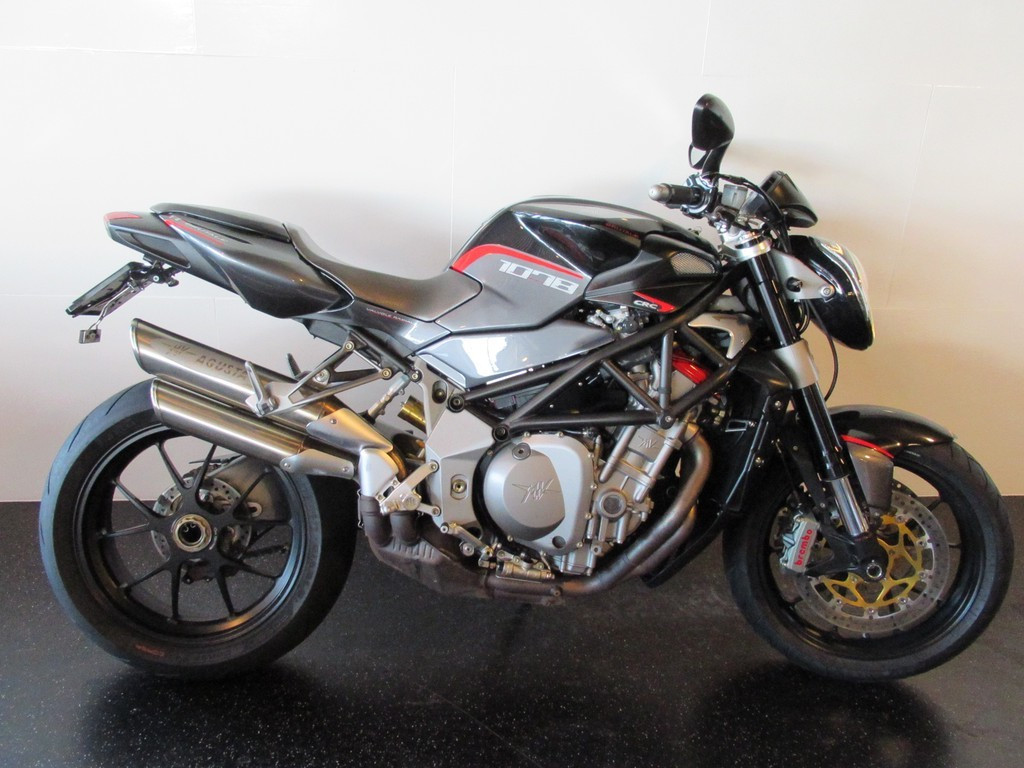
7 – MV Agusta Brutale 1078RR
MV Agusta had been pushing the Brutale as a concept for years and each generation saw more brute force and more innovation.
By 2008 we got the MV Agusta Brutale 1078RR. With an engine based on the F4RR 312 it needed a chassis and running gear to tame that beast of an engine.
Giovanni Castiglioni and Massimo Tamburini were at the forefront of this project, and this was the fourth iteration since the first Brutale generation had arrived in 2000. It retained that essence of the original Brutale, but had become more refined as well as more powerful.
It still featured the groundbreaking radial valves developed for the race bike and would churn out around 150hp and 120Nm or almost 90ft/lbs or torque, with a reputed top speed of over 155mph or around 255kmh.
The lightweight engine and chrome moly trellis chassis, along with its single sided swingarm helped to keep dry weight down at 185kg or 408lbs, then came the list of running gear meant to tame this monster.
Front forks were from Marzocchi and it had a Sachs rear shock, along with Brembo brakes, wheels and monobloc calipers, so as well as plenty of go, it had plenty of stop and was great around corners too.
As with most MV Agusta’s, the design was never its weak point. Cost was however, and for many, this remained a poster child of the industry that they would never get the chance to ride.
This bike was one of few that used a mechanical slipper clutch at the time. Ramps and roller bearing were the order of the day here, not electronic trickery. Another masterpiece was that cassette gearbox that could be removed, stripped, ratio’s swapped and re-installed in less time than it took to even get at the gearbox of most bikes.
It really was a collection of the best of everything when it came to the running gear. And it needed to be.
At the time the latest R1 would pull from 40 to 100mph or 60 to 160kph in around 9.2 seconds, The MV Agusta Brutale 1078RR would do it in just 7.2 seconds despite having no fairings.
The strong, rigid chassis didn’t just look good, it was compact and made the bike compact and much more manageable despite its sledgehammer like performance.
It was never a bike for the feint of heart, and it was a difficult beast to master, but it set a whole new benchmark in the industry when it came to high power Naked bikes.
To the States next, because I just had to really, because you know I appreciate out of the box ideas and I am a certified Rotax nut after all.
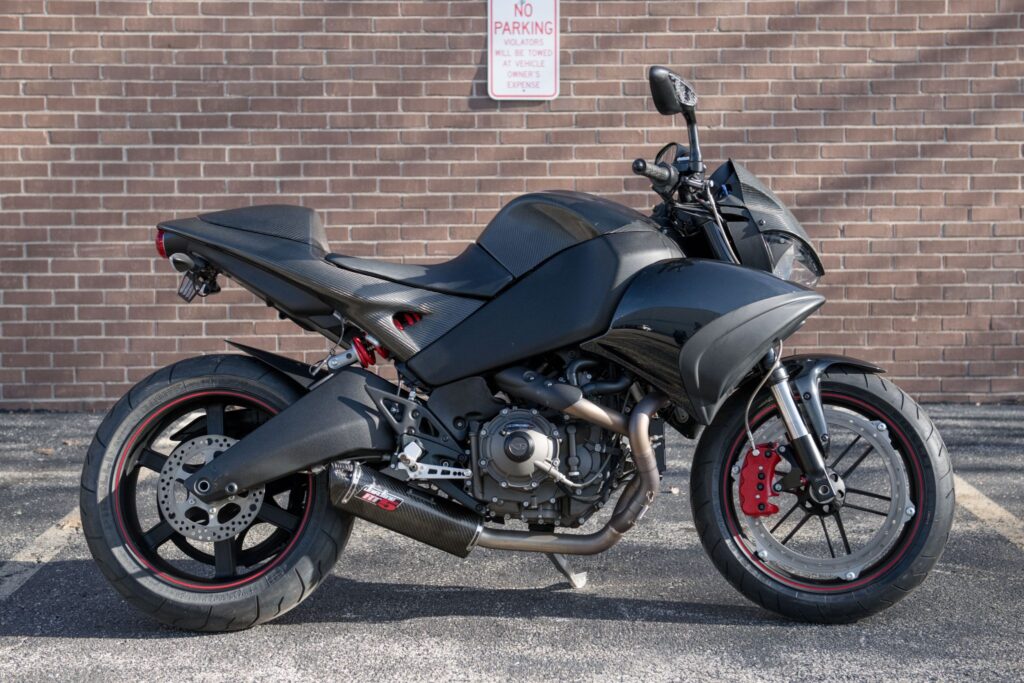
8 – Buell 1125CR
I didn’t want the Americans to feel left out and to be fair, I do have a bit of a soft spot for Eric Buell’s work, and freed from the shackles of having to use Harley’s engines, in 2008 he turned to Rotax.
It had been over ten years since Rotax had built the first of the now fabled big V-Twin engines that took Aprilia into a new era, and I guess Eric Buell hoped they could do the same for him.
Developing the new engine with Rotax meant he could concentrate more on the rest of the bike, but it was the engine that was the beating heart of this bike.
With a slightly narrower 72 degree V angle than the Aprilia, the Buell Helicon engine was a water cooled, 1,124.9 cc lump developed jointly by Eric Buell and BRP-Rotax.
It produced around 146hp at 9,800 rpm, and didn’t hit the redline until 10,500rpm. Maximum torque of 111Nm or 82ft/lbs didn’t hit until 9,000rpm, and it revved out far better than most V Twins.
As usual with Buell’s designs, there were many innovations. A hydraulically actuated vacuum assisted slipper clutch was a first, using the vacuum from the engine to make the clutch lighter and reduce what was truly violent engine braking without it.
I’m still not convinced an in frame fuel tank is a great idea, especially with all the additives in todays fuel, but that had become one of his USP’s.
The front brake was Buell’s ubiquitous inside out disc brake system, 4 pads and an 8 piston caliper squeezed a huge 375mm floating rotor mounted to the wheel rim instead of the hub. It was and still is as far as I know a design no one else has ever tried, and I can see pro’s and con’s to the system.
Twin side mounted radiators gave it a unique and almost bulky look, but the reduction in weight and low centre of gravity meant that it actually felt small when you were sat onboard.
Dry weight of the whole bike was just 170kg or 375lbs, which was lighter than anything else in its class at the time or indeed has since.
That was a big factor in the bikes 11 second quarter mile time, and with a top speed of around 150mph or 242kmh it was no slouch, with far better performance than any of Eric’s Harley engined motorcycles.
Front and rear suspension were both Showa systems, and were adjustable for compression and rebound damping as well as preload. The forks were 47mm diameter and the adjustment can be finicky, but once set up it dives confidently into corners and changes direction as well as most full of Superbikes.
This, as with a few of the bikes here today, is not an easy ride or a good bike for beginners, but if you have the skill and the patience they are a fantastic ride when everything is dialled in and sorted out.
You will need to be handy with the spanners though.
I do remember a lot of fuss at the tuning shop near me when a guy had decided to swap out the standard exhaust for a louder aftermarket unit without doing his due diligence. The effect of the Helmholtz resonator in the big chamber of the original system is hard to replicate.
I recall a lot of swearing, ending with the statement, if you are ever tempted to buy one of these, whatever you do, don’t swap the exhaust system.
He just couldn’t get it to work right across the whole rev range with the aftermarket can, but that is a whole different story.
We are nearing the end of the list today, but we go to Germany next, because………
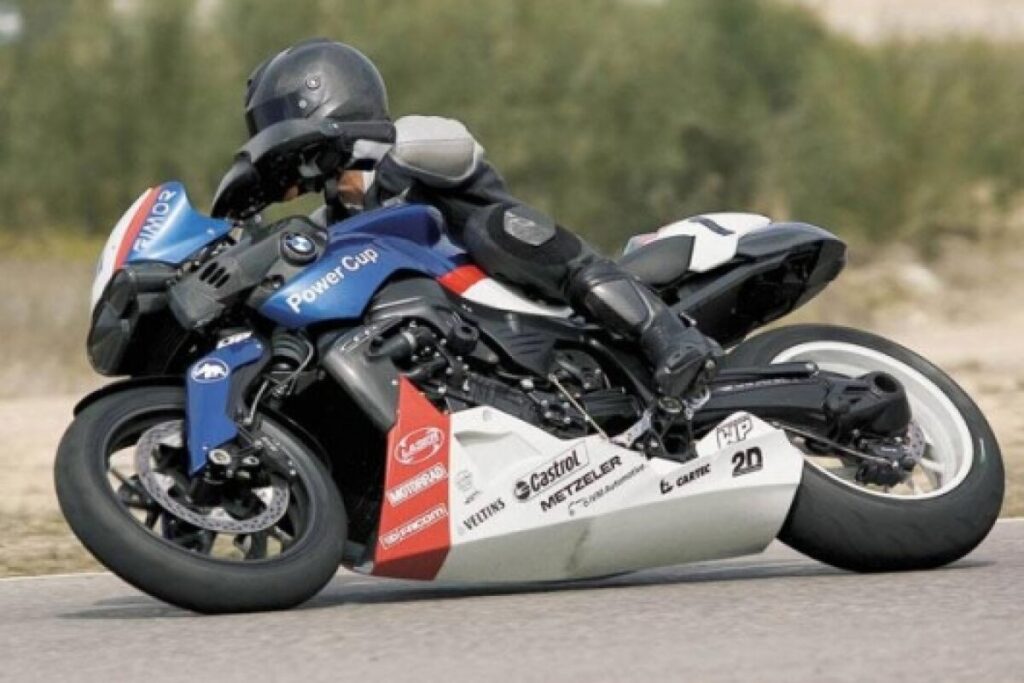
9 – BMW K1200R
At BMW the K1200 R was claiming to be the most powerful naked sports bike available when it was released in 2005, the 1157cc inline four-cylinder engine pushed out over 160hp at 10,250rpm and max torque of 127Nm or almost 94 ft/lbs hit at 8,250rpm. That pushed it up to a top speed of over 160mph or 260kmh if you could hold on.
Telelever front suspension and Paralever rear suspension were something completely different from what everyone else was using and the shaft drive was something only the Guzzi here shared.
Something that no other naked bike at the time had, was electronic suspension adjustment. A switch on the handlebars could firm up or soften the damping and preload settings on the suspension on demand.
This did mean it was very easy to get an excellent ride and the handling was superb, but it did mean an extra set of variables were introduced in the reliability department.
Having said that, the K1200 was built well and still holds its own today against many newer bikes.
A 10.8 second quarter mile meant it was swinging with the best here and although it took more work than some here because of the extra weight.
With the right rider it could keep up with most bikes of its day.
The extreme tilt on the engine meant that the bulk of the weight was low, and the low centre of gravity did make it seem to weigh less than it actually did.
A wolf in disguise, it was powerful and agile, and although shockingly fast, it was actually docile and manageable around town in a way most litre bikes just aren’t.
That meant it was easier to ride slowly, and when you wanted it to be, the BMW K1200R was certainly a more relaxing ride than most of the bikes here, so it had a lot going for it.
By the end of the decade it had grown to 1300cc, with over 172hp and 140Nm or 105ft/lbs of torque on tap, and it was down to 10.7 seconds on a quarter mile run. By then it had a theoretical top speed of 165mph or 266kmh, so any arguments about BMW only building slow bikes had been lost, and a new generation of performance BMW’s was well and truly shaking the market.
But they weren’t Italian, and somehow didn’t have that same Kudos.
The last 2 bikes on todays list are though, and for me, these last 2 bikes are hard to split. Both are Italian in the truest sense of the word.
First, a V-Twin, and in its day, one of the most muscular V Twins of all.
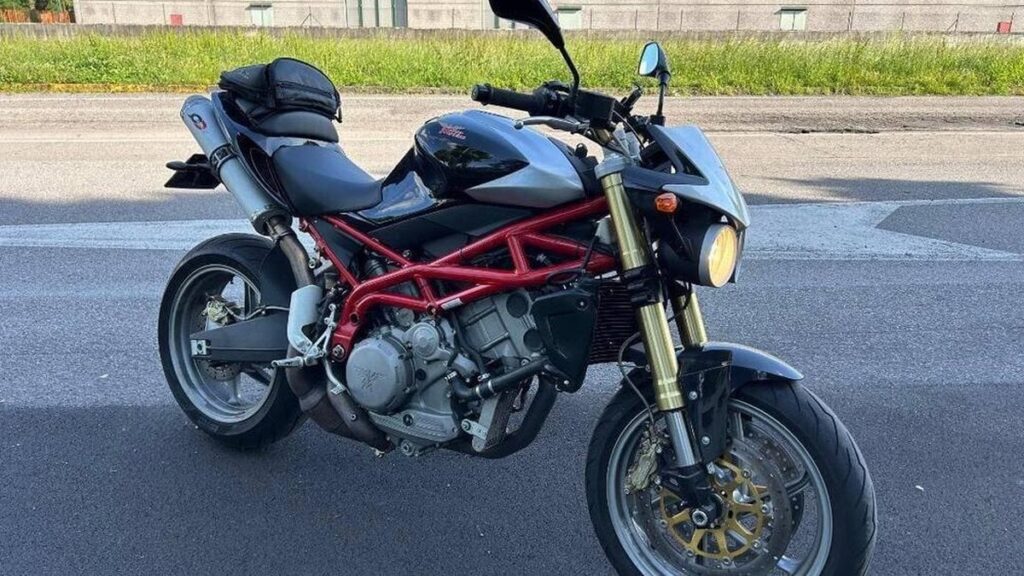
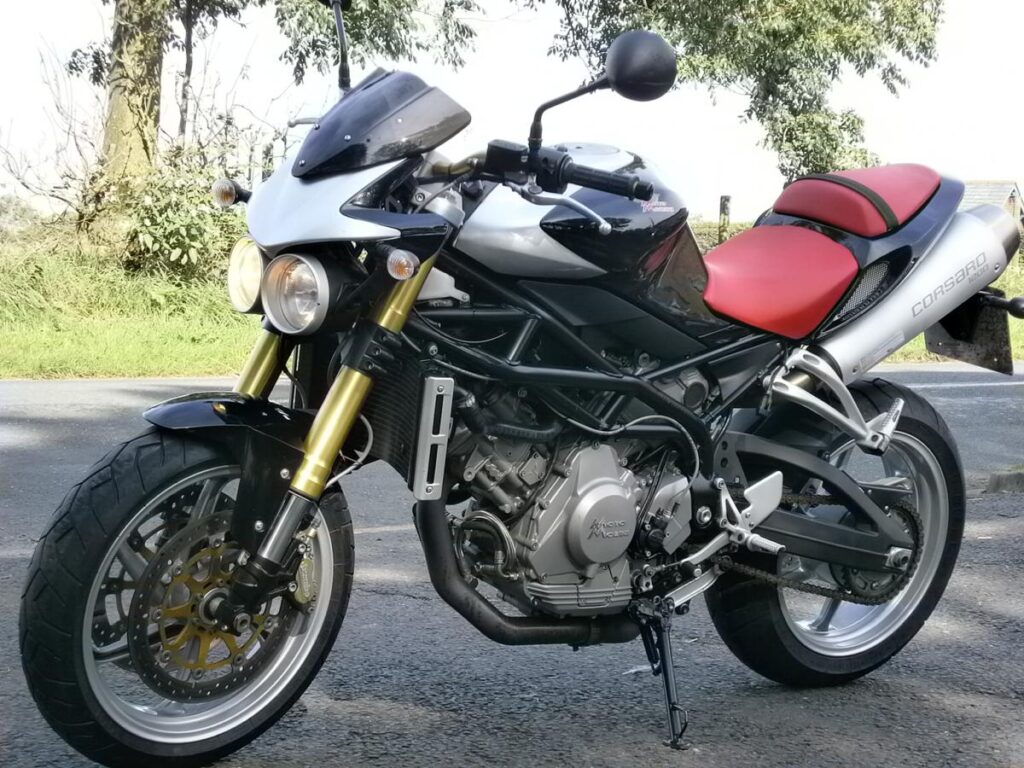
10 – Moto Morini Corsaro 1200
I featured the Moto Morini Corsaro in the second of the Italian Supermodels video years ago now and it was made between 2005 and 2013.
It was powerful, agile and Elegant with a solid, quality feel.
The big bore trellis chassis was built using wide bore tubing that made the tubing of the Ducati Monsters chassis look a bit flimsy, and the engine is a masterpiece.
It is an engine we will see again now it has been re-engineered to meet Euro 5+ regs too so it seems.
It is a big V-Twin originally designed by Franco Lambertini, the man who had designed the original Moto Morini V-Twins back in the 70’s and this was the culmination of his life’s work.
The Bialbero CorsaCorta engine was a fuel-injected, double overhead cam four valves per cylinder 87 degree 1187cc V-Twin that was brutally strong.
The CorsaCorta designation literally translates as short stroke, and the design had pistons the size of a bucket.
It produced a massive 123Nm of torque at 6500 rpm and pulled to 140 HP around the 8,500 rpm redline so it pulled like a train, and the strong midrange torque pulled seamlessly up the the redline, with a top speed around 150mph or 240kmh and an 11.3 second quarter mile.
It is a mechanically sophisticated engine with a distinctive sound, and a more civilised yet still very Italian feel, and it has the performance to match.
Top spec Marzocchi 50mm USD front forks, and similar fully adjustable Sachs rear suspension to the MV Brutale, the Corsaro was a rider’s bike that begged to be pushed.
Again following the MV Agusta route, they fitted Brembo brakes and wheels, to help make the package as refined as it was strong.
I remember one reviewer describing it as “prone to pull wheelies”, and that was true, but it could hustle through the corners better than many bikes half its size.
Lastly other than the honorary mentions we have a big triple to finish things off, and it truly is a definitive piece of motorcycle art.
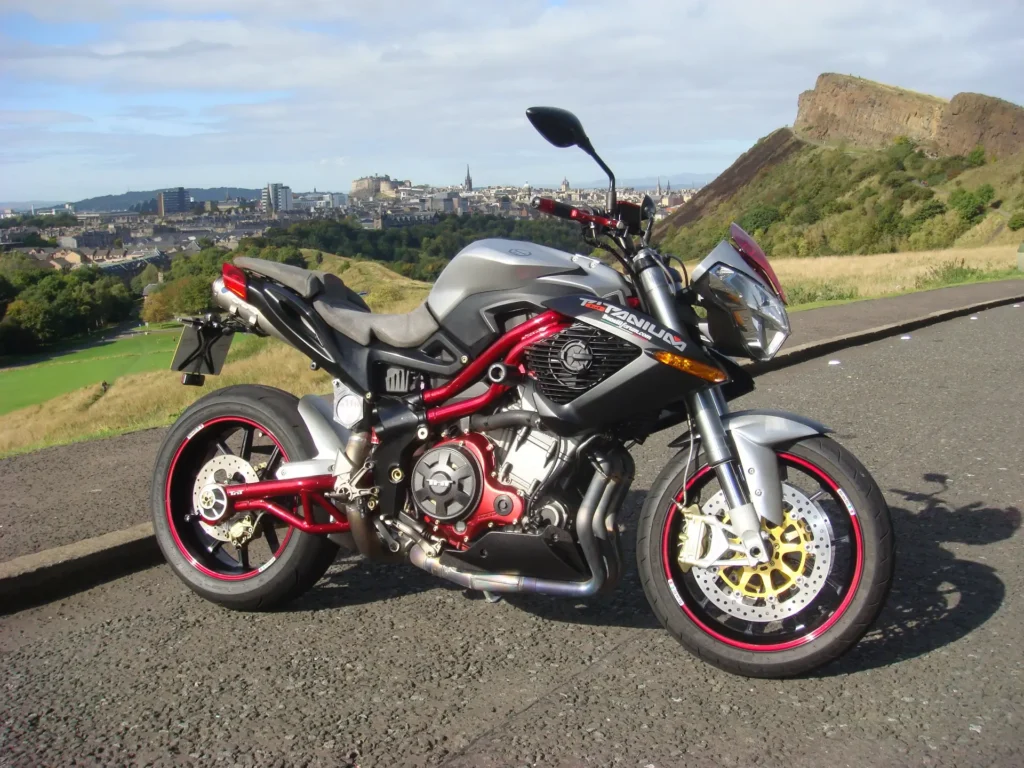
11 – The Benelli TNT 1130 Sport EVO 2007
The Benelli TNT 1130 Sport EVO was the culmination of years of work by Andrea Meloni and the engineers at Benelli. known for its aggressive styling, it was a raw bike with true Italian passion running from headlight to tailpiece.
An evolution of the standard TNT 1130, the Sport EVO focussed on improving agility, and had a more aggressive look, especially with the added carbon fibre bling.
The Benelli TNT 1130 Sport EVO has to be one of the most beautiful bikes ever built.
Derived from the earlier Tornado Triple engine, it had been through many changes. Although the build quality was good in general, the consistency wasn’t, and so reliability suffered until the proud owners who had bought them sorted everything out.
There were no major problems really, most were silly niggles that just made them hard to live with at times.
The big 1130 cc engine produced more power and torque and looked more muscular all around, and it does have a very distinct style and sound all of its own.
I could bang on about specs forever, and it had 50 mm Marzocchi upside-down forks and an adjustable Extreme Technology rear shock, 320mm fully floating discs with Brembo radial calipers and ultra Lightweight OZ forged wheels you wouldn’t get on any other production bike.
It was a bike with passion, built for passionate riders.
The 12-valve DOHC liquid-cooled, 1130cc triple was a fantastic engine. It left the factory on most models with about 130hp, but was capable of more. A power commander and a decent map could give you around 150hp in the real world if the map was focussed on top end power.
The reality is, tuned for midrange power and extra torque, it was easier to ride fast and played to the engines strength.
They used a tubular steel trellis with cast alloy plates for the frame, long before anyone else tried to do it, and that chassis with its distinctive tubular swingarm was a delight to ride.
At its best, weight was around 195kg or 430lbs, but with constant development there were many changes, even within the same model year, so a definitive weight is pretty impossible to give.
The bike would top out at around 150mph if you could hang on, but it was the sublime handling that set it apart. That, and the style.
One owner put it into words well when talking to someone who was interested in buying one. He said “During the time I owned the bike, I had so much fun. The torque, the power, the handling, the riding position, the wheelspin, the noise, the sheer joy of owning it even when it is standing still means that I still miss it”.
Early bikes can have problems but many have had fixes done, and will give you an easy life. From 2006 on things improved and there were less problems with the later bikes.
They have a wild soul and are utterly raw madness compared to many of it’s more clinical Japanese rivals.
They are notoriously thirsty, low speed fuelling wasn’t great from the factory, but will probably have been sorted by now and check that the battery cables have been uprated.
As with Ducati, Laverda and others, they seem to have not considered the concept of multiple start cycles in their calculations when working out wire gauge on the starter cables.
The TNT was unique, and if you are tempted, you should buy expecting to experience some niggle at some point.
They are a high maintenance bride, but they are stunning to ride, and most have long ownership histories full of details about the improvements made.
Most owners are a fastidious bunch from my experience.
Hopefully we will finally be getting this engine back soon too, as long as QJ Motors can get it through Euro 5+ emissions regs that is.
Before I finish today though there are a few bikes that I haven’t included here, so…………
Honorary Mentions
We have some honorary mentions.
The reason they aren’t included is mainly because I have featured the bikes elsewhere, but as always I have to stop somewhere, so I may come back in the future to add more to this list if you would like that. Just let me know in the comments.
Top of the missed bikes has to be the Honda VTR1000 Firestorm or Superhawk, but it did arrive a little before many here.
The Cagiva Raptor and Navigator with the inimitable TL1000 engine could have been included, but I have featured them in other video’s.
Then there are the Aprilia Tuono and Falco, built around another Rotax masterpiece. They are both mentioned in other videos too.
Then there is the KTM 1290 Superduke and all its kin, along with the various Triumph triples. In some ways I would say last of the truly great KTM and Triumph’s, especially after the tribulations going on in the last few years at both companies.