Ayup everyone,
As the rider of a motorcycle, you are the one that is ultimately the one responsible for your own road safety.
Always remember that a lack of experience makes it easy to make mistakes.
You cannot buy experience, but there is a rule that is simple and effective and will always help give you the best chance of survival.
We call it the 8 second rule, but in reality, the longer you can give yourself to react to any situation, the better the outcome will be.
The further ahead you can see and think, the more likely you are to avoid dangers.
Always ride to what you can see. You may know the blind curve ahead like the back of your hand and know where the potholes or ruts to avoid are, But you never know if a diesel wagon happens to have spilt fuel on the road or a quarry wagon has lost some rocks and gravel just around the bend.
Always give yourself time to correct your line and avoid dangers.
If you can see where you will be 8 seconds later, that gives you 8 seconds to react.
Always look as far ahead as you can. At 70mph, you will travel 250 metres or 820ft in 8 seconds, so that should be your benchmark, and if you can see further then that is better.
That means even at 30mph you will still travel over 350ft or over 107 metres in that 8 second period, so give yourself a chance and always give yourself time to react.
According to the government statistics in the UK, the most common road safety factor allocated to motorcyclists in fatal or serious collisions (FSC) with another vehicle was ‘ineffective observation by either the driver or rider or pedestrian’
38% of total motorcycle fatalities, so just over a third, were in 2 vehicle collisions between a motorcycle and a car. That means that 62%, so the majority, of motorcycle deaths were not in a collision with another vehicle.
Extrapolate that, and over 60% of motorcycle accidents are our own fault. Harsh maybe, and yes it isn’t quite that simple, but if even half of those fatalities can be avoided by better riding, then maybe our numbers wont keep dropping so badly.
Incidentally, Ineffective observation by either the driver, rider or pedestrian’ was the most common factor allocated to all vehicle accidents, so we aren’t alone.
The two most common types of motorcycle accident are collisions between cars and motorcycles, and single-vehicle accidents where the motorcycle crashes in a curve.’
I think that the 8 second rule could prevent at least half of those accidents.
Eight seconds means that at 30mph or 50 km/h you need 111 meters or around 350ft to change your speed and direction. At 40mph or 70 km/h you need 155 meters or over 500ft, and at 60mph or 100 km/h you need 222 meters or over 720ft.
Remember, on average, and yes I know it is very different on different bikes, but you also need around 4 and a half seconds to stop from 70mph or 110 km/h.
Do you think you can brake that well if a deer suddenly rushes across the road in front of you?
Which brings us nicely on the the start of todays list.
1. Always ride to what you can see.
Always ride to what you can see, not to what you think you know. It gives you time to correct your line and avoid dangers. The longer you can give yourself to react to any situation, the better.
Always look as far ahead as possible. Choose a line that opens up your view of as much of the road ahead as you can. Taking a wider line in means you can see further around the corner, and that means you will see any danger faster, giving you more time to react.
Read the dangers of the road, whether that is the road itself, other road users, wildlife or the road conditions.
As I said before, you may know the road ahead and know where the potholes or ruts to avoid are, But you don’t know if a truck has spilt fuel on the road or if there is some gravel in the wrong place just around the bend.
Which leads us into point 2.
2. Choose the right speed for the conditions and your riding skill.
When you ride at a higher speed it puts greater demands on your riding skill, gives you less reaction time, and increases the risk of serious accidents.
It really is that simple.
Choose the right speed to give yourself time to react to changes in the road surface or unexpected traffic.
As a general rule, avoid breaking speed limits, they are usually there for a reason. Controlled acceleration and braking help you maintain control, makes avoiding risks easier, and helps fuel economy too, so its a win all round.
I mentioned braking here and that brings us to point 3
2. Learn good braking technique’s.
Good braking doesn’t just happen. You need to learn and practice stopping quickly enough so that it is no longer a knee jerk reaction.
Grabbing a handful of front brake at the wrong time will not end well, and just as speed is dependent on road conditions, so is braking.
Some surfaces are much more grippy than others, having your front brake grab when the road surface has let the front wheel lose adhesion is never good, and yes ABS will help, but learning how to brake well will help more.
There are many encyclopedias worth of people on the internet who will tell you you need to do this or that or the other when you are braking, but to be honest, there are only a few immutable rules and it is how they are applied that can be different on different bikes.
On most bikes in most situations, the bulk of your braking should be done with the front brake, but the contact patch on the front tyre is smaller, and although most bikes have a weight balance around the 50/50 point, loading the front end up before applying maximum pressure on the brake lever is a life saver.
So what do I mean when I say load up the front end?
Well, if you simply apply a good chunk of front brake, the forks dive, the weight balance moves forward accelerating that downward motion, the geometry changes and then when the forks hit the bottom of their travel and stiffen up, the friction coefficient of tyre on tarmac is easily passed and the tyre gives up on its grip.
Feeling that breakaway point is vital, and you need time to process that.
Applying a small amount of both front and rear brake a fraction before you start to increase the pressure on the front brake, means the front suspension will compress more controllably, the bikes geometry will remain more stable, and you are more likely to stop before the tyre brakes away.
Practice in a straight line on an empty car park first. When you have mastered that to the point where the rear wheel starts to lift on you, congratulations, you’ve now learned how to do a stoppie, but more importantly, you can then start to practice with the bike leant over.
Work in figure of 8’s and keep braking and acceleration fluid and controlled. Try to avoid harsh acceleration and braking, but you can gradually increase the speed and intensity of the braking.
Doing it on a field with a trail bike can be less painful and teach you just as many lessons too.
Remember, you need to be able to brake to a complete stop whenever required.
If for example a car suddenly pulls out in front of you, so you need to slow down fast and/or swerve, all that braking practice gives you time to anticipate what may happen and take the appropriate avoiding action.
ABS helps, especially in unexpected situations, but practice your braking technique often and you will never regret it.
3. Learn great cornering techniques and then practice them every ride.
I did a whole video just on cornering so I will link it below and try and keep this short.
Poor cornering will lead to accidents and there is no escaping that fact.
Even on tight twisty roads at low speed it hurts.
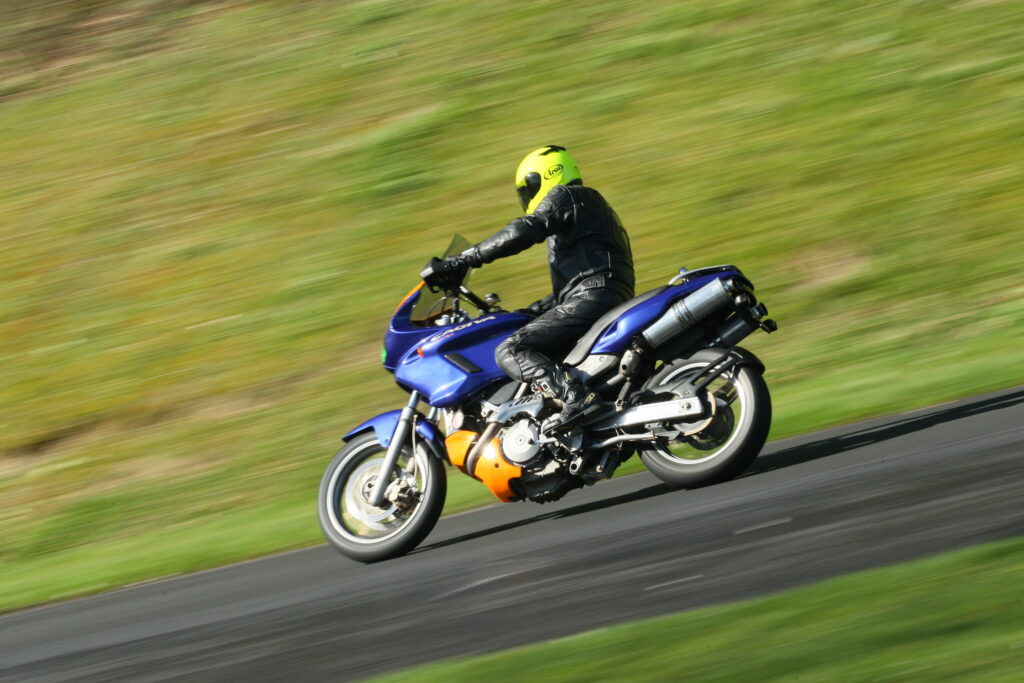
Along with cars, curves are the next most common contributory factor when it comes to accidents.
Learning good cornering techniques will save your life.
Practice maintaining a consistent, smooth line, avoiding potholes, white lines and most of all, oncoming-traffic.
Do the majority of your braking early when the bike is stood upright, then accelerate smoothly through the corner on the line you have chosen to give you the best safety margins.
Any time you may loose going into the corner, you will gain again because you can come out faster.
By thinking ahead, you give yourself time to correct your line while maintaining control through the entire corner.
This is where you will start to need more space for those figure of 8 practice runs.
Remember, always adjust your speed to the space you have, and don’t push the limits when you are on the edge of a cliff or river, it can get messy.
Putting those 3 points at the front of your mind will make every ride easier and more enjoyable.
If you want to practice getting faster at things, why not go and try doing some Moto Gymkhana. You can see from the pictures that not only is it great fun, it will teach you how to control your bike on a whole new level.
Go and do some track days or ride on a motorcross track if you can too. All will teach you invaluable lessons that will translate to better safety on the road.
Point 4 is slightly different, but no less important. It is the reason I have always maintained that anyone wanting to ride a motorcycle should have ridden a bicycle first and learned that, and anyone who wants to drive a car, should have first learned to ride a motorcycle.
We all need to be aware of the abilities and limitations of other vehicles and road users.
Next you need to understand the environment you are in.
4. Understand traffic and read the risks
Learning how to understand traffic movement and reading the risks of the road, will help you anticipate the traffic and detect warning signs sooner. It is probably one of the most difficult things of all to learn, but is a life saver.
Reading the traffic in different countries will be different too.
I find the sometimes very obvious differences striking at times.
In the UK, we have a saying. Ride like every driver is out to kill you, and it really is necessary at times. After a 6,000 mile tour across Holland, Belgium, France, Germany, Switzerland and Austria, I saw more bad driving and potential accidents in the first 30 miles of getting back to the UK than I had seen throughout the whole tour.
Spanish drivers and riders can be mad in the mountains, but because they only have 2 lanes on most of the motorways, they are very good at pulling back into lane to allow other traffic to pass. Something most British drivers seem to have forgotten.
I found riding in Germany a breath of fresh air because you could rely much more on the reactions of most of the drivers.
Even at speed on the Autobahns it meant it was just a more relaxing ride.
Many accidents happen purely and simply because the rider does not anticipate how other road users are going to behave.
By thinking ahead and putting yourself in the position of those other road users, you will see the dangers ahead better and be able to make the right decisions while not taking too many chances.
Everyone’s luck runs out eventually, so don’t rely on it.
Always consider what might happen further along your route and remember the 8 second rule!
I know some of you feel invulnerable, but most of us know otherwise, so……
5. Remember that safety gear matters.
I am not one to tell anyone else what they should do normally, but riding a motorcycle in sneakers, or trainers as we call them here, in a Tshirt, with no gloves or helmet is just plain stupid in my opinion.
A full face helmet with as many approval ratings as possible can save your life, and it means someone else doesn’t have to scrape your splattered brain case of someone else’s windscreen or wall.
Even if you do everything right, accidents can happen, and then the right equipment is your best friend.
Also consider the safety systems on your motorcycle, such as ABS and traction control, as an added bonus. Don’t rely on them, but do make sure the systems are fully working and activated unless you want them off for a reason like riding off road.
When riding in traffic, they can be invaluable, and they are designed to make riding safer.
A helmet, gloves, boots and protective trousers and jacket, can and will reduce injuries in the case of any accident. As can a back protector or neck brace.
If you live somewhere hot, then you will get hot, deal with it. Better to be hot than dead, or sat there with all the skin stripped from your arms and legs or worse.
6. Licence and training
I’ve said all of this and then I thought wait a minute, I’m assuming, so to be clear, go and get yourself a motorcycle licence if you don’t have one already.
In most countries that will include a certain amount of training. Concentrate and learn from the instructors. Ask questions. You may think they are an idiot, but they will have learned many lessons, and will want to pass those lessons on.
Basic training is the very least you will need for safe riding, and a fundamental knowledge of road rules and regulations is something you should consider necessary.
If possible, go and do advanced rider training. Not only will it make you a better rider, it might save you something on insurance too.
Which brings us on to point 7
7. Insurance
Insurance is a legal requirement in most countries although levels available may differ greatly, as may any enforcement.
Cost will differ a lot depending on the motorcycle you choose too.
The insurance provides financial protection for both you and anyone else involved in an accident you are involved in.
Think about it like this, if someone crashed into you, would you want them to be insured?
Treat others how you want to be treated as they say.
Bear in mind that even if you are experienced and feel confident, you still need to learn about any new motorcycle you start riding.
According to statistics about 30% of riders who die in an accident have owned the motorcycle they were riding for less than 45 days.
That is a shocking statistic.
Research seems to show that it can now take up to two years to learn a new bike properly and get beyond that “new bike” period where you are most at risk.
Even experienced riders always have something still to learn.
8. Always do your pre ride checks.
I know, you just want to get out early and ride while the roads are empty, but don’t neglect your checks.
If you know you want to get out early do them the night before.
Oil check, Tyre pressure check and chain tension check are the very obvious ones, unless you have a shafty or belt drive I guess. Yes I know many modern bikes have tyre pressure monitors, but electronics fail.
I don’t even use an electronic tyre pressure gauge to be honest. I use a small pen size mechanical tyre pressure gauge and it takes less than a minute to whip off the cap, push on the gauge, read it and then screw the cap back on.
It can save a lot of messing about and being stuck on the road if something blows later.
Once you learn how much tension in the chain is right, a quick lift of the boot on the underneath of the chain is all it takes to check it.
Oil level checks again are a simple easy task, so just do it.
I always compress the front forks on the front brake and hit the rear brake to make sure it is ok too, but those are the most important things covered.
A couple of minutes before a days riding is not going to ruin your day. A chain that jumps off, a tyre that blows or a low oil pressure light coming on definitely will.
That brings us on to the ninth point on my list today.
9. Understand and maintain your bike properly.
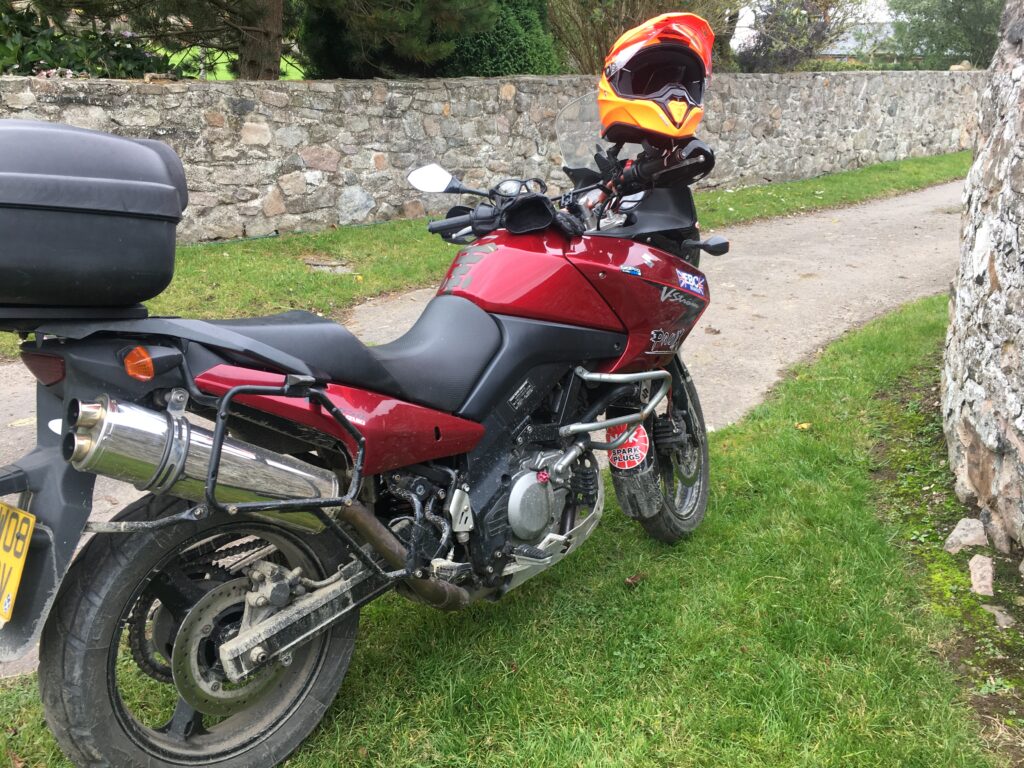
Especially with the onset of PCP deals with locked in service plans, I think people have relied on dealer servicing to an extent where they don’t understand the machine they are riding enough.
Even just going around checking nuts and bolts and other fasteners are tight will make you more familiar with the bike. Get a manual and learn where everything is.
Try and find an old guy who you can learn from if you don’t know what you are doing. Most of them will happily pass on their knowledge for cups of tea or beer.
If something goes wrong, you have a much better idea of how to solve the problem if you understand the basic mechanics of motorcycles, and about your ride and its foibles in particular.
It also has the added bonus of making it harder for dealers to rip you off for silly jobs you could have done yourself.
Next, and sort of last on todays list is a solid piece of advice.
10. Do not ride if you are in the wrong state of mind.
Motorcycles can offer the ultimate escape, and not one of us has never gone for a ride to “clear our heads”.
However, problems in life can affect your focus.
Calm your mind before you go out to ride.
Think, and be aware that you need to be mentally present to ride safely. That is the joy and escape a motorcycle can bring.
They force you to focus and be in the present, but be aware of the fog that not being focussed can bring.
It isn’t always easy to recognise.
Never ride beyond your own ability and do not let other people pressure you into taking risks you aren’t comfortable with.
We all take a risk every time we ride, but be present and alert for danger.
Being passed by another rider can tempt you to ride faster, but don’t take chances. Too often that rider that came flying past will be sat in the hedge a few corners on, and if he isn’t? So what. You will still enjoy your ride.
It isn’t worth it, so don’t submit to peer pressure.
Always think about the eight second rule, and stay within your limits.
Well that’s it for the list sort of, but there are 2 statements I would like to add that you should always remember.
The first is Observation, Observation, Observation, and the second is Practice, Practice, Practice.
These are the Mantras of every great rider.
What would your top tips be?