Ayup everyone,
Well I touched on this subject earlier in the year and it has been a year that proves yet again that I was right to be concerned. And if you are thinking of buying a new motorcycle I urge you to listen on, this isn’t a nice or pleasant subject but it is important. And before any new major purchase you should always inform yourself.
Some of you will know already I have not been shy about calling out various manufacturers and the faults they have thrown onto the market. This is a growing problem and it needs to be addressed.
What I said in the previous video about motorcycle recalls which I will link at the end, is that things were getting worse.
More and more stupid faults were happening. Some were recalled and fixed, but that doesn’t alter the fact that they were released onto the market prematurely.
These faults should have been picked up in the development stage, not after release.
In 2024 during the whole year, there were 27 recalls, and I thought that was too many, especially when you add on the not-recalls that are never recognised by the manufacturers. By September last year there had been just 16 recalls announced.
So far this year, during the same time period there have been 32 product recalls already, that is twice the number of recalls we had during 2024.
That is just plain ridiculous and a sad reflection on the development departments of each and every one of the companies involved.
And let us not forget, this does not include the KTM LC8C camshaft issue, the KTM 790 and 890 air-box seal issue, the Triumph triple gearchange issues and electronic problems, Suzuki DE800 seat trouble and various other problems you will find plastered all over the various rider forums.
For me, this is less about the individual faults that are recalled than it is about an industry wide problem of designing every last nut and bolt down to its lowest possible spec to cut production costs.
And/or a don’t care attitude of directors who have little connection to the world of motorcycles and no care for riders beyond the depth of their pockets.
Before I go on I have to say a quick thankyou for all the support, and especially to the BareBonesMC family on the Ko-Fi page.
You can find more videos there, and on the Rumble channel, as well as the back up channel on here, but for now, grab a cuppa because this is another epic.
Honda were the biggest fail of the year with the most recalls so far.
Yes they recognised the faults and owned them, but 7 recalls when we are only three quarters of the way through the year? Really?
First in March they forgot to put threadlock on the gear-shift lever pinch bolt on the CB650R and CB650R. Seriously though, why was this not picked up in testing? Vibration can cause many issues and is always present. No I wouldn’t have thought it would be such a problem on a 4 pot, but did they not do many miles of riding before it was released onto the market? Or was it as simple as one production run that the torque settings were wrong and weren’t checked?
Then in May, the wires behind the headlight on the CBF125, 250 and 300 were recognised as a failure point.
This one looked very much like a manufacturing fault because the failure was actually where the wires enter the terminal block.
Then there was a defective seal bolt on some of the 750cc, 1000cc and 1100cc platforms, which meant recalls on the CB1000 Hornet S and SPS, the CB750AS Hornet, the Rebel CMX1100A2S and AS, the CRF1100AS, A3S and A4S Africa Twin’s, the NT1100AS and also the XL750S Transalp.
So not just one recall really, that is 6 different recalls in one go.
The seal concerned unfortunately allowed oil to dribble into the path of the rear tyre. So not a minor issue.
As it occurred on only certain chassis numbers this one looks like either some components were out of spec or a new supplier was trialled and failed. But again it is basic stuff. We have been making seal bolts for long enough now to know how to do it, so why did this slip through?
There was a recall on the NC750X too, but that was a tyre issue and so in some ways less about Honda’s fault, but nevertheless it happened.
Then we found out the same guy who did the terminals on the CBF125 and 250 had done the wiring inside the headlight on the CBF125. So they started failing too.
Next it was the SH125 and 150 scooters where the crankshaft position sensor became disconnected which means a major strip down, and last it was yet another wiring fault with the horn and headlights on the CRF1100 Africa twin.
Maybe they decided to buy the looms off Leoni AG and Stefan Pierer told Leoni to design in some faults to damage Honda’s reputation?
If you don’t get that joke you should watch the last video in the KTM saga I did.
Now that would be a conspiracy theory in the making.
In reality, that is 10 recalls, even if we don’t count the defective tyres.
Is that really acceptable?
Next on the list 3 manufacturers all had 3 ish recalls.
Triumph had the worst start to the year with the TF250 switch cube failure that gave us the first self starting motorcycle ever, and with their second recall again being tyre related you could say that doesn’t count.
However, if that doesn’t count, the latest one should count double, because on the Daytona 660 they have now discovered, or at least admitted to, an engine defect that can result in catastrophic engine failure because of inadequate oil flow.
Now I have recently heard that is as simple as they got the length of the dipstick wrong but I cant confirm that yet. If that is the problem I’m not sure whether to laugh or cry at Triumph for that one.
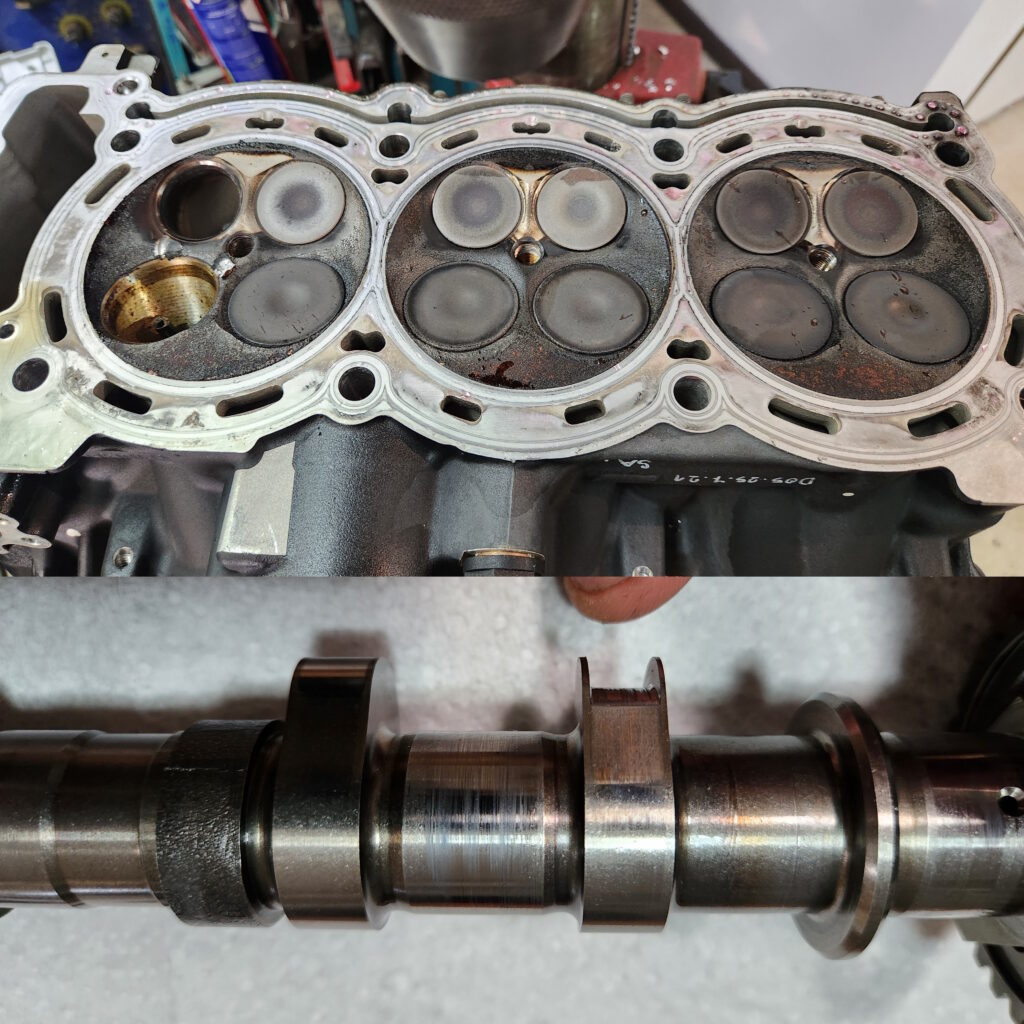
What isn’t included is the problems with both the quickshifter and gearbox output shaft on the 900 and 1200 triples and the ever growing problem of premature cam wear which has also affected several models.
There are more too, and I will be looking at the problems in more detail soon.
For now, Triumph are still trying to wriggle out of taking any responsibility, and have point blank refused to deal with the problem. But they do have form on that approach.
They also dumped a 900 Rally Pro owner in southern Spain, unable to find anyone to fix 2 spokes that had broken despite all their promises about Triumphs ultimate care package.
Next come BMW.
They scored a straght 3 recalls with no tyres involved, and if the Daytona engine recall wasn’t so bad I would have put them in second place.
At BMW, the problems started in March, with an oil filter that gradually unwound itself dumping all the oil on the BMW S1000RR, HP4, HP4 Race, M1000RR, M1000R, M1000XR, S1000R, and S1000XR.
How? How long have we been making and using the same sort of screw on oil filters? What the hell did they do to make such a basic design go wrong?
Then in April it was discovered that the the right-hand handlebar switch on the BMW R 1300 GS, R 1300 GS Adventure, R12 and R12 nine T wasn’t waterproof and that humidity could lead to the engine dying with ignition failure or delayed lighting functions.
I guess they never thought anyone would be going out in the rain.
Then in May on the all singing all dancing top of the range BMW M1000R and M1000XR, A production fault could cause the jet needle inside the steering damper to move out of the screw connection. This caused maximum damper settings to be applied, so the steering gets instantly very heavy.
A production fault? Or lack of testing? Who knows on that one.
But this was on their range topping motorcycle with a retail price of over £22,000 before any extras are added.
Absolutely ridiculous, and inexcusable in my opinion.
Next is a brand you might not expect, again equal to Triumph and BMW on 3 recalls so far.
That is Kawasaki, and despite a good start to the year, recently there have been 3 recalls.
The first was on the EX500 or Ninja 500 depending on your market. A manufacturing error means the clutch release lever may not be properly welded to the shaft, which can break, and make it impossible to disengage the clutch.
Then they forgot to clean the powder coat off the chassis where the earth strap is connected on the Kawasaki Meguro S1 which sadly we dont seem to get here. It is a retro styled air cooled 250.
After many owners and dealers had looked long and hard the problem was finally located and a fix scheduled, but this is another one that is very basic stuff that should have been tested and sorted before release.
Its hardly rocket science.
Next was the Kawasaki ZX6R or ZX636. The crankcase bolts were overtightened, pinching the crank bearings, leading to a noisy crank and eventually crank seizure.
Not what I expect from the company who have always prided themselves on building the strongest engines of any of the big four.
These are basic production errors which I can only put down to production staff being pushed to higher production targets, or I would guess that automated machines weren’t calibrated properly before the production run.
Initially There were 3 tyre recalls too, but then if we add the Triumph and Honda tyre issues that makes it 5 tyre recalls across multiple companies.
As well as the Honda and Triumph issues, Avon, Dunlop, Pirelli and Metzeler all had delamination issues. Pirelli and Dunlop blamed contamination whereas Pirelli and Metzeler just blamed irregular tyre wear.
Whatever the cause, have they all forgot how to make tyre carcasses that don’t delaminate?
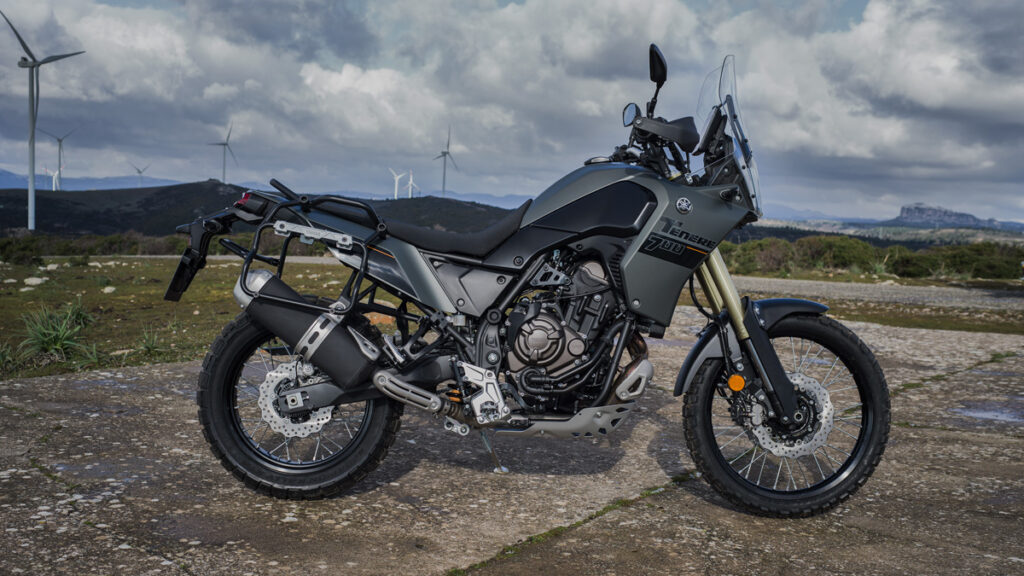
Yamaha had 2 recalls. The big one was on the CP2 engined range, so involved the Tracer 700, Tenere 700, MT-07 and XSR 700 and another bike I will come to later.
In Yamaha’s words, “ A corrosion inhibitor can react with worn friction plate material when hot, to create a viscous substance that can lead to the clutch failing”.
“Clutch can fail to disengage or drag, which could lead to the vehicle unexpectedly moving if a gear is engaged, even with the clutch pulled in.”
Between the lines I read “we tried a new cheaper corrosion inhibitor and didnt do enough testing to realise it was crap”
Then, the Tenere 700 which has always been a pretty reliable bike, had another issue come up.
This one was as simple as the front mudguard kept shaking loose because the screws were either too weak or just not thread-locked. I have had dealers say both, so to be honest, I’m not sure which is the truth of the matter, but it is another basic problem and shows a retrograde step for the Tenere 700.
Next we have 2 from the KTM stable.
The same fault, just on multiple different bikes.
This is all about brake calipers that were simply made from bad castings that should have been spotted in pre production checks.
I talked about this in the last recalls video linked at the end and in the description.
It was an issue on most of the Husky and GasGas dirt bikes from 2022 right up to 2024 with GasGas and 2025 with Husqvarna. Why Husqvarna carried on using them for an extra year is another one that baffles me.
The full list is in the last video but basically most of the Husqvarna FC, FE, FX, HQV, TC, TE and TX models, and GasGas EC, ES, EW, EX, GG, and MC models.
That leads us into another issue that shows the after-market can be just as bad as the OEM manufacturers when it comes to mistakes.
First Tanaki, then XHMT and Zhangxingyue all made brake pads that were contaminated with asbestos. These did all look like very cheap brake pads sold through Ali express, but they popped up everywhere because dealers were buying them to resell.
So the lesson here is don’t buy cheap nasty brake pads, so that one is fairly simple and your own responsibility.
Then we come to the manufacturers that have had just one product recall so far.
Suzuki had some problems with the AN400A Burgman, a scooter with a previously untarnished reputation. The M3, M4 and M5 all had a kink in the fuel line which made it rub against the Vapour Absorber housing, which in turn wore through the hose causing leaks with obvious fire implications.
That seems a daft one when the Burgman has been around so long, but I guess even Suzuki employ some monkeys.
Then we have one from Indian, where a rear suspension push rod assembly was under engineered, causing it to deform under load on the Challenger, Chieftain, Pursuit, Roadmaster and Springfield models.
This one had a knock on effect too, as well as initially affecting handling, it jammed the main wiring loom against the coolant reservoir and rear tyre, and in a worst case scenario, the back of the bike collapses completely.
Now these aren’t the sort of lightweight bikes where you are trying to cut every last ounce of weight. So why did Indian use a sub standard component on the rear suspension of a bike that is already heavy, and likely to have a passenger and luggage strapped to it fairly often. The luggage strapped to it I mean not the passenger, hopefully.
This is an example of how companies just aren’t putting in the hours on testing. If they had, this one would have been found. Replacing one small component would have solved it, so it is less likely to be about overall cost as much as a genuine oversight. But it should have been picked up when they were test running the models.
The only reason for this one as far as I am concerned is simply a lack of testing done.
Then comes Can Am. On the Origin and Pulse they simply didn’t make the battery box watertight, which I would have thought was quite important on a high power electric motor system.
A lithium battery fire between your legs doesn’t sound like a great selling point to me, but I guess they never realised motorcycles get used in the wet.
Then we come to Fantic who had a licence to use the CP2 engine from Yamaha and they fitted it in a 700cc version of their Caballero.
This is the same clutch fault that the Yamaha’s suffered from. The anti rust coating they used simply glued the clutch plates together if it got too hot. Unfortunate for Fantic they got thet series of the CP2 engine.
Then it is Ducati. This one baffles me in all honesty and there are no excuses in my opinion. A rear brake hose between the ABS control unit and rear caliper “can be damaged by heat” they say.
Tell me, how many years have we been making brake pipes and ABS systems?
Yes that’s a rhetorical question. The real question is how on earth did Ducati manage to fit a sub standard brake hose in a high temperature system on their top of the range bike?
I wouldn’t expect a problem like this on any bike, but certainly not on a Panigale V4 that costs north of £25,000 pounds.
They say it can lead to a sudden loss of braking power in the rear wheel brake. No shit Sherlock, and if you don’t know that saying, it doesn’t take a detective to work it out.
How did they miss this one? with all the testing at world superbike levels of speed I can’t believe at least one of the test riders didn’t get the brakes hotter than any of us would on the roads.
Last one today. We finally get a recall from a Chinese bike company. CF Moto found a welded seam on the gear change shaft was cracking. Well at first I thought, ok, I can see how that might not be picked up, but then I thought, why is there a welded seam on a gear lever shaft?
And I looked, in all the parts books and manuals I have in the garage, and on the various 650 Kawasaki twins I looked at, which I believe these bikes were based on, and nowhere could I see any welded seams, or a reason a welded seam would be used.
Why would you weld a seam on a gearshift shaft that creates rotational stress every time it is used?
It will always create a weak point however good the welder is surely?
So that one made little sense to me in the end.
And so even without looking at the faults and flaws that weren’t recognised and recalled, you can see that this year has been possibly the worst year for factory recalls I have ever known.
Why?
And how is this supposed to rejuvinate the industry? How will it attract new riders?
And why should I go out and buy a new motorcycle when so many of them, even the so called reliable ones like the T7 and Transalp suffer from what I think are in general mistakes and problems that should never have happened.
In this age of robot driven automated precision production lines, why are there so many mistakes?
Could it be that fully trained, skilled human tech’s might actually do a better job than robots?
Because that is one of the things all these bikes have in common. They are built in high output automated factories with a minimum of human operators.
Yes humans make mistakes. But those mistakes tend to be one or 2 mistakes in a whole batch of bikes.
Set up the automated line wrong and you get a complete batch of bikes all with the same stupid production error.
Then they have to work out how to deal with it without just scrapping the whole batch.
Utter madness.
Do you think there are more recalls now than there used to be?
Why do you think that is?
And have you suffered at the hands of a manufacturer that doesn’t want to recognise a known issue with a bike?
I would love to hear about your experiences of warranty cover both good and bad.