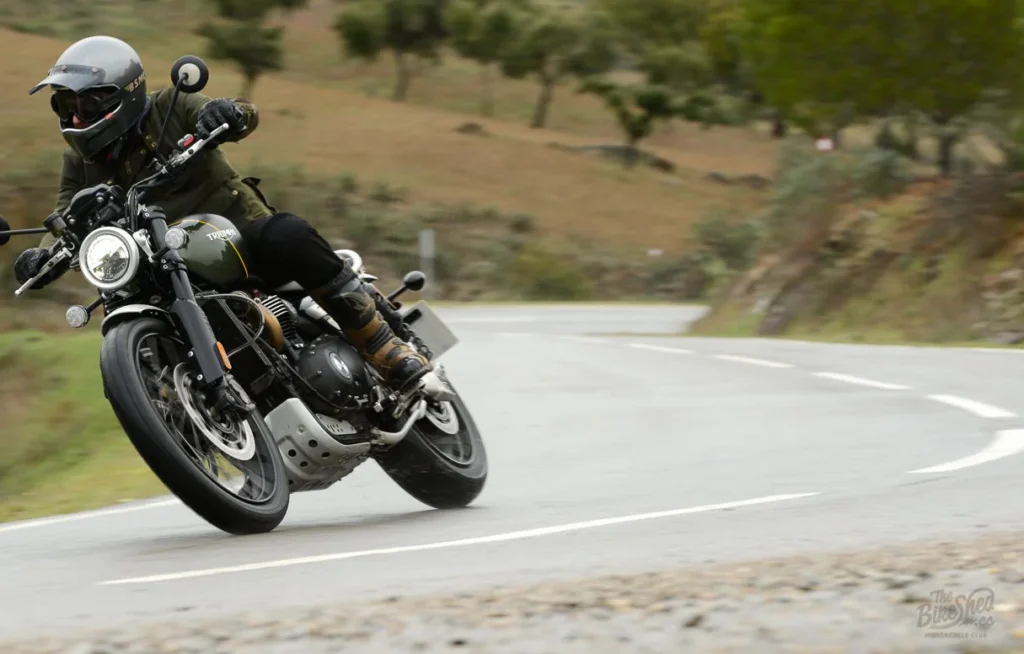
Today with all the motorcycles on the market, we are bombarded with choices of complicated electronic suites and a list of rider aids that makes me wonder how we ever coped without them.
I am not saying that electronics don’t have a place, but I do think the complexity of most systems actually gets in the way of pure riding pleasure, and actually does little to improve rider safety.
Despite all of these electronics, certainly in the UK, accidents and fatality rates are up for motorcycle riders in recent years not down.
For me those two things make certain choices very easy, but as I said, the choices and list of motorcycle rider aids seem endless now.
From ABS and Traction Control, to 6 axis inertial measurements, anti wheelie devices, launch control, quickshifters, ride height adjustment and Rider Modes for every occasion, with options to set them all manually for any occasion the factory might have overlooked.
Before you even turn the bike on you have an endless choice, but within that choice there are 4 really important rider aids that I think are increasingly overlooked.
These are without a doubt the most important 4 rider aids for any rider young or old, yet they never feature in any brochures or advertising, so it is easy to overlook them.
They are constantly updatable on an immediate basis too, so any improvements can be implemented immediately and better still, they can all be transferred from the bike you ride now to your next bike when you buy that.
They even work with bikes on a PCP agreement, so there are no loser’s here.
If used correctly they will improve safety and also consistently drive down the cost of your insurance policy, so they really are a no-brainer for anyone seriously considering riding motorcycles long term.
That initial statement might confuse any new viewers, but for the people that know me, I am sure you can see where I am heading with this.
You see, these aren’t electronic rider aids.
This is about riding skills, and it is just my humble opinion, nothing more, nothing less.
You see, all electronic rider aids, however good, are reactive, so they can only react to a problem or a set of circumstances after it has happened.
The rider aids I am talking about can work pro actively. To pre-empt what you know is coming and help you take the action needed to avoid it.
You might not have clicked, but the rider aids I am talking about are your eyes, your hands, your feet, and your brain.
Because your brain doesn’t have to act reactively. It can be proactive and help you see and feel the problems ahead coming as well as helping you react to avoid them.
The first thing I am going to talk about is your eyes, and observation, because often our first warning comes in as a visual cue.
Maybe you are racing and the guy in front locks a tyre up, you see the smoke and know you need to cut away quickly. But it could just as likely be a dog running into the road just outside your house.
Either way, the sooner you see it, the sooner you can react.
Observation is the biggest single factor in rider safety in my opinion and you should never forget that. I am sure that soon someone will be offering self riding bikes that need you to pay absolutely no attention at all, but that will probably be the day I hang up my boots for good.
Knowing how to react is a different subject, but that is where my comment about constant live updates comes in. Because whether its a lesson learned on a trackday, at a motocross track, or something gleaned from an advanced rider training course, each and every lesson can then be applied whatever the bike or situation is forever after.
An ABS system will work fantastically when compared to the braking effect of grabbing a whole heap of front brake and hoping, but if you compare it to a situation where an experienced rider first loads up the front end so the front brake can then be applied harder and then the rider being able to feel the first signs of a lock up and releasing the brake pressure a little to avoid the lock up, then we enter different territory.
Modulating your brakes is not a hard skill to learn.
You see, you don’t actually have to be Valentino Rossi or Marc Marquez to learn how to brake faster than an ABS system. The ABS system should be there to cover the unexpected. If it is used to cover up the mistakes we make, it becomes harder to learn how not to make those mistakes in the first place.
How can you learn to feel the tyre breaking away when the ABS has felt it before you and corrected it? The easy answer is, you can’t.
Yet now even small capacity learner motorcycles are fitted with ABS.
So we have a conundrum, because the reality is, that if the system itself means riders aren’t learning how to modulate their brakes properly, it becomes counter productive and over time will mean an increase in braking related accidents in my opinion.
And a new lower skill level will becomes the norm.
The same applies with regard to traction control too.
Instead of learning how to gradually feather the throttle in, you just go full throttle and let the lean sensitive traction control and 6 axis inertial measurement device sort it all out.
Learning good throttle control will allow you to wind it on with increasing joy as you reach the breaking point of the tyre but don’t go past it until you can stand the bike up and apply the full force of your right hand.
The system itself stops people learning.
How do you think guys like Kenny Roberts, Mick Doohan and Eddie Lawson got so good?
Yes they had a natural talent by the bucketload that is for sure, but learning how a bike feels when it starts to break away, then learning how to recognise the signs and counter them, will save your skin more times than any traction control or ABS system ever could.
For me, understanding is key. Without it, I can’t learn.
I want to know that applying the front brake slightly before entering the braking zone for a corner will compress the forks slightly which will, in turn, push the front wheel into the tarmac more. That increases the friction coefficient and allows me to apply more brake without the risk of a lock-up or slide.
If I understand the process I can apply it in many different situations.
The same applies with the clutch too.
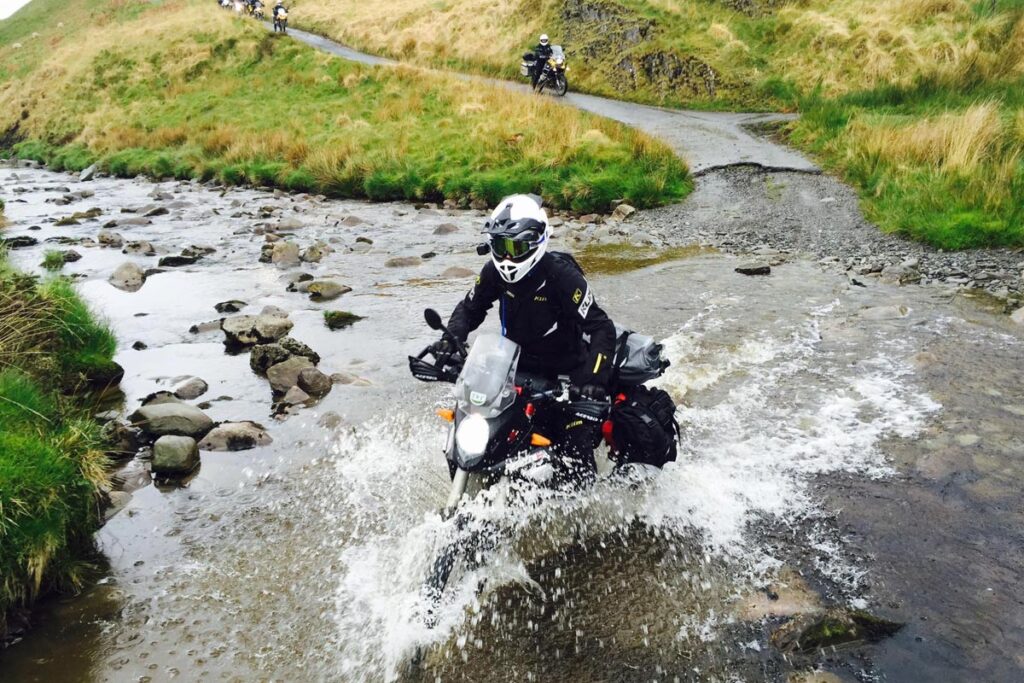
Learning good clutch control can get you out of many situations. Allowing the clutch to slip slightly by partial application will mean smoother take off’s and learning how to match engine speed to road speed will mean when needed you can make fast clutchless gearchanges without the need for a quickshifter.
Feeling the gear lever on your boot and understanding how much pressure you can put on it as you match the revs before you get that sweet sensation as it just pops into the next gear when the revs are right.
All of these things are guaranteed not only to make you a safer rider, but also make the ride more enjoyable.
Yes you can rely on the bikes electronics to do most of this for you nowadays, but ask yourself, is that really such a good idea?
Use them if you want to, but don’t rely on them, because one thing we can all be sure of, is that electronics go wrong. It might be as simple as “turn it off leave it 30 seconds and turn it on again”, but on a motorcycle, by then, it might be too late.
Talking of turning the key on. Whatever happened to turn the key, hit the starter and go?
It was bad enough waiting for a fuel pump to prime when I had never had to do that before, so you can see I am sure that patience is not my strongest point.
Having to wait for the bikes computer to boot up, check all the sensors and set everything before I am allowed to start the bike and ride off, is just a pain in the orifice, and having to doom scroll through multiple menu’s to set things up like I did the day before because the motorcycle has forgotten who’s bike it is does nothing for me.
Outside of adjusting the preload if I’ve got a passenger onboard, I just want to turn the key, hit the starter and ride.
Rider modes used to be called common sense, it was as simple as not using all of the brakes and throttle because it was raining and the roads were slippery. It’s hardlt rocket science and doesn’t need to be. An anti wheelie device was called a back brake and ABS was something you went to see the doctor about.
Now I’m not completely against tech. Self cancelling indicators are one rider aid I would like to see more of again. My first gen RD350LC had self cancelling indicators in the 1980’s so with all the modern electronics on bikes today, why do so few bikes have them even as an optional extra now?
That is progress I guess.
I did say observation was the first and probably most important factor and it is, but it is useless without the second piece of the puzzle.
That piece is your brain. It is the connection between observation and action.
No amount of seeing it coming or riding skill can counter stupidity. Always ride within your limits, especially on the roads. If you want to find out where those limits are, go to a track or off the road somewhere.
The roads are no place to find the absolute limits.
You will need to overcome your own overreactions and target fixation to name just 2 things, but it is all more than possible for any rider.
Practice may never make some people perfect, but it will always make any rider better.
An over reliance on tech will limit your ability to learn the skills that make you a better rider.
As I said at the beginning, use them by all means if you want to, but don’t rely on them. Learn how to brake hard without triggering the ABS light.
Learn how to load up the front end before applying more braking power and how body position can affect everything from acceleration and steering to braking.
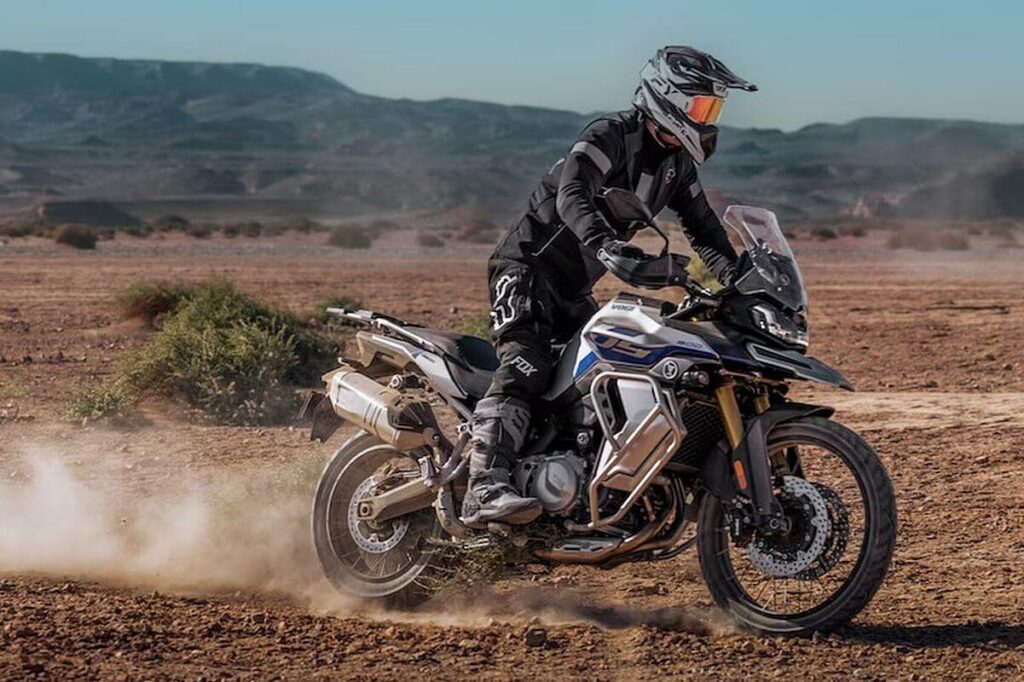
Understand how getting the bike stood up a bit more means you can apply more power or brakes. Going into a corner, that means getting the bulk of your braking done early while the bike is upright and when exiting the corner, the faster you stand it up, the sooner you can apply more power and that will mean better exit speed.
Try to feel the way the tyres interact with the road. Unless you are really pushing it, most tyres these days are good enough to not break away quickly unless there is something else involved. Try to feel when there is any loss of traction, and if there is, learn how to minimise its impact.
If you begin to loose traction at the front and apply the front brakes things aren’t going to end well. Similarly, with the rear wheel, if you loose traction on a corner, don’t try to apply more power or bank it over more. Both will likely end catastrophically.
Equally, don’t shut the throttle off quickly in either situation. Learn to make small adjustments and understand what effect they have. Try to learn the best actions to take before your life depends on it.
And that brings us to the last section of today’s video. The part where you need to be able to make and feel, fast but precise movements, to control brakes, clutch and throttle in ways that make your riding safer, more relaxed, and more enjoyable.
The fun thing is, that all of this will almost certainly make it a lot easier for you to ride faster without increasing the risk of accidents.
It may save your life one day.
Anyway, that’s it for today. I hope you enjoyed it.
Let me know your thoughts in the comments below.
Thanks as always to everyone for all the support.
Try and remember to like the video and subscribe if you haven’t already and sharing the video anywhere you think people will be interested helps us a lot too.
If you would like to help us stay truly independent, you can make a one off donation or join our group of monthly subscribers on the Kofi link in the description. There you get access to a private group where I share videos I just can’t screen on youtube
Join us on Rumble too, The channel is new, but it already has some great content.
And don’t forget, we make the The Best Biker T-Shirts too.