Ayup everyone,
well some of you will know this video has been coming a while now. It is the deepest dive you will hear, into some very serious problems at Triumph, but I would have never guessed how big of a can of worms I had opened when I began the investigation.
It has taken over 6 months to verify and follow the truth of all this so it is a long video, it became a major investigation into what were ridiculous problems, but please watch until the end because you will hear about some the many other people who have also suffered, and because of the copyright strike I have no idea if many people will see this, so please help me get it out there. Share it anywhere you think people will be interested,
People do need to know before they pull the trigger and spend their hard earned cash on any Triumph.
And to put this into perspective for anyone who wants to call me a hater, I have owned multiple Triumphs, and I still have my 01 Daytona 955. But this isn’t about my own experience, That is a whole different story.
It all began with what was happening to someone I knew in Australia. And the catalogue of failures which that friend was having with his 2 Triumph’s, a Speed Triple 1200 RS and a Tiger 900 Rally Pro Aragon Edition.
So two of Triumph’s flagship bikes.
Both had failed in so many ways that I wanted to know how deep the problems went and also to see if I could get to talk to someone at Triumph to get some serious answers, and come up with solutions to try and help this guy.
He bought an almost new, 1 year old Speed Triple with 4,200km on the clock, and a 6 month old Tiger 900 Rally Pro Aragon Edition that had done just 3,200km.
Both were purchased in as new condition, and both had considerable time left on their Triumph warranty’s.
Both were serviced fully at Triumph dealerships and were safety inspected by the original dealerships before the purchase, yet problem after problem not only happened, but at every stage the warranty was brought into question or parts weren’t available.
There was always some reason, or you could say excuse, that meant problems were never sorted out in a timely manner and many were never sorted at all.
But before I go on I have to say a big thanks for all the support, and especially to the BareBonesMC family on the Ko-Fi page and to all the people who have bought one of the many Tshits, sweatshirts, mugs and other merch, you are the people who help keep this all going.
Why not visit the website or the redbubble shop to see what we have, there’s something for everyone.
You get all the blogs on the website if you fancy a read, and you can find more videos in the Kofi group, and on the Rumble channel, as well as on the back up channel here, but for now, maybe just fill your flask, because this is a long one.
Back to this problem, because this story was never straightforward.
After the quick-shifter video which I will link at the end, I got so many other people contact me with different problems it became apparent that something very seriously wrong was happening at Triumph.
Some of you may have seen that I linked a video from Flat Cap Cafe Racer in the States on the community tab. This went into detail about not only the problems he had, but the atrocious waiting times for both parts and repairs.
So I had to look beyond those two bikes I started with, but I have to start with the terrible situation which those 2 bikes have ended up in.
And let us remember some things before I start.
Triumph are good at words and expert marketeers.
They say on their UK website as you can see in the slide that their promise to customers includes that dealers will always use “Genuine Triumph parts and accessories”, “Keep you informed”, “Install new Software Updates”, “Complete Any Safety recall checks”, that “Work Will be Done By Triumph Trained Technicians”, and that “Triumph performance lubricants”will always be used.
Triumph Australia add a few words of their own, with the addition of “Transparent service pricing, Motorcycle health check, Regular status updates, Service while you wait, and Alternative transportation”.
They continue with, “WE ARE HERE TO HELP, CONTACT US and our dedicated Customer Support team are on hand to help you with any questions you may have”.
It provided an email address, saying, “We aim to respond to all queries within 2 working days”.
Also, the Consumer Rights Act 2015 as quoted on Triumph UK’s website reads, “Goods must be as described, fit for purpose and of satisfactory quality. During the expected lifespan of your product” ,Which they don’t clarify, and that “your legal rights entitle you to the following”:
a) Up to 30 days: if your goods are faulty, then you can get an immediate refund.
b) Up to six months: if your goods can’t be repaired or replaced, then you’re entitled to a full refund, in most cases.
c) Up to six years: if your goods do not last a reasonable length of time you may be entitled to some money back.
In one recent email I got a headline which I want you to remember.
“EXPERIENCE MORE. DISCOVER NEW TRIUMPH OFFERS”.
The email went on to say,
“Experience the perfect blend of performance, heritage, and British engineering with a new Triumph. Whether you’re drawn to the classic lines of a Bonneville or the commanding presence of a Tiger, there’s never been a better time to make one your own”.
And that “Every Triumph is a statement of style, innovation, and pure riding pleasure. Whether you’re chasing adventure or carving through city streets, we’ll help you find the perfect match.”
Remember all that Marketing BS when you hear about some of the actual real life experiences that follow.
This began with a message from a guy who had two Triumph’s, both almost new. He had had some issues which to me were quite major, and I reached out to see if I could try and help by talking directly to Triumph here in the UK to make sure they actually knew what was happening with this particular Australian customer.
The first bike involved was a 2022 Speed Triple RS, so this is an expensive bike by most peoples standards, and certainly not what most people would consider cheap throw away rubbish.
It all began on June the 22nd 2023, but the tale is a long one, as is the list of failures.
The original dealers were Team Moto Virginia in Australia and they are registered Triumph dealers.
They had done the initial servicing, so all work and service records were up to date, and they conducted a pre sale Inspection, and service on the bike immediately before the sale.
The customer, who I will refer to as Fred from now on, had heard good things about Team Moto Virginia from other people, but they were more than an hour away so not exactly around the corner.
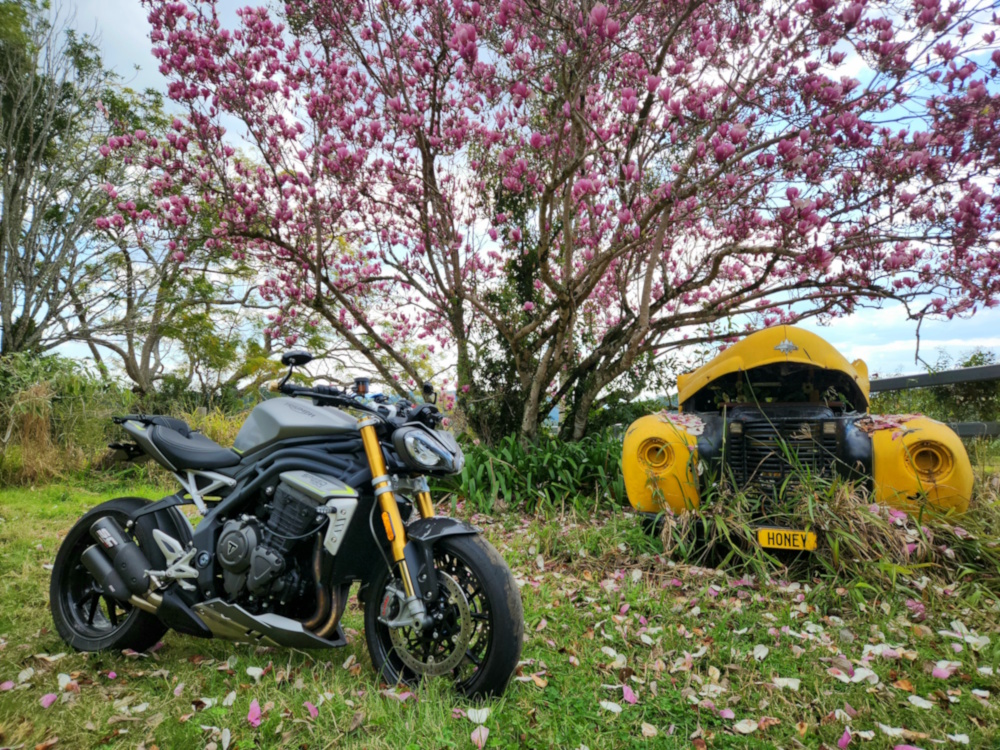
Now you may ask why I’m not using his real name and there is a good reason. This whole debacle is still going on.
Over 2 and a half years later, Triumph are still trying to wriggle out of the repairs and have totally wiped their hands of some of the problems which in my opinion is abhorrent, and they need to be shown for what they are.
The Speed Triple was legitimate, in as-new condition, with just 4,288km on the clock.
It still had the original tyres on, was in great condition, and had chicken strips a mile wide as well as 12 months of the warranty left.
Fred would be using the bike as everyday transport as well as for fun, so he does high mileage compared to many riders, but he works professionally in Engineering with 3 decades of manufacturing and design experience, so he is a skilled engineer who knows how to treat a motorcycle well, so it was well looked after.
The Gear Detent Recall had been done 3 months before he bought the bike, on the 13th of March 2023 according to Team Moto Virginia records.
But less than 3,000km later, the problems began.
On the 13th of September, at around 7,000km, the bike was booked in to have the fuel sensor replaced under warranty, because it had never read full, it would say you needed fuel 50-100km after filling it up.
At the time, Sam Simons, Service Manager at Oliver’s Triumph, Fred’s local dealer, was asked about a clunk he was concerned about too.
When the bike was started in Neutral and shifted to 1st gear, it made a significant clunk. This was beyond the usual engagement you would expect, and was the type of noise in Fred’s opinion that any machine won’t make for too long without some part failing.
It was very notchy to shift gears using the clutch, but with the quick-shifter it wasn’t such an issue. That was, until the quick-shifter failed, forcing him to use just the clutch.
Fred was convinced that the clutch was already faulty, and the video in the garage clearly has the audio of the clunk when Fred shifts into gear.
Then, on the 27th of February 2024 riding in peak rush hour traffic, the Gear Shift input shaft just broke.
It fell and was dragged along the road by the wires, but Fred was only 1 km from the dealership so he rode there stuck in 3rd gear.
Sam the service manager looked at the shaft and says “yeah it’s common on these”.
Such a blasé comment has to say something on its own as to how these Triumph dealers operate.
Acknowledging a fault that COULD have proven very serious and potentially life threatening with such a dismissive comment shows a complete disregard for rider safety in my opinion.
To say nothing of their attitude to the products they sell.
After the shaft broke off Fred was told a new shaft would be about 8 weeks away, so he recovered his bike and took some time to examine the shaft.
After close examination Fred realised that the shaft extended out from the casing, 8 times the diameter of the shaft at the bottom of the circlip groove. This caused vertical as well as rotational forces on every gear-change and created a massive stress concentration at the circlip groove.
Because of his Engineering background, with access to relevant software analysis, he later reconstructed the design in Auto-desk 3D Cad software, and FEA analysis showed that the shaft at the circlip groove was put under tremendous force because of the design.
The analysis indicated that this caused a serious risk of failure beyond what would normally be considered acceptable in engineering terms.
Fred asked Triumph directly in writing how they intend to address this and they simply state that the component has passed their FEA analysis and ignore his question. No solution is presented to stop it failing again.
Some weeks later, the shaft had been replaced and the bike was back on the road, but within a very short time the bike began randomly shifting gears by itself and even shifting into neutral between gears, which on one occasion happened mid corner.
All this, despite the fact the recognised gear detent fault, which was a known problem, had been replaced under warranty.
Then, the quick-shifter began to fail again, without it, the excessive harshness of feeling the dogs engage was still evident.
Can you imagine how downright dangerous that this was? You have a 180HP bike that randomly changes gear mid corner with no warning! That is a scary thought.
And frustrating, because when Triumph called Fred, they said they had found that the issue was with the aftermarket bracket fitted to stop the gear shaft breaking off again.
Once removed it was a fraction better, for a few hours, but after just 200 km, when the bike was hot, the issue got worse again, so Fred asked them to get in a new clutch.
Then on the 3rd of February, the failed quick-shifter was finally replaced under warranty after waiting weeks for it’s replacement.
The clutch was inspected at this point, but the dealers said it was within stack height tolerance.
The dealer, who obviously at this point had no idea what to do, tried a change to a different brand of oil, which is, as you can see from the original list of Triumph promises, not in line with Triumphs own policy and in my opinion was absolutely ridiculous.
At that stage the bike had Penrite full synthetic oil in it, Fred dropped the oil/filter every 5k km’s and the service manager had authorised him doing this.
They both agreed that 16,000 km oil intervals were not a good idea.
This time, the dealer put OEM Castrol in as a trial, it made no difference at all, and within minutes of leaving, the issue returned.
The random neutral issue continued too, and again, within 15 minutes of leaving Oliver’s dealership, it became impossible to find neutral.
A day later on the 4th of February, a year after the Neutral problem first began, they finally ordered a new clutch.
Then on the 25th of February while still waiting for the new clutch to arrive, the engine failed completely, with around 26,000km on the clock.
Fred was unaware it was an engine failure at this point, the engine just stopped from tick-over, with nothing but a gentle click, he called the dealers and was told to just bring the bike in when the new clutch arrived and they would see why the engine had stopped.
At this stage, his other bike, a Triumph Tiger 900 Rally Pro Aragon edition we will come to later, is also booked in on the 14th of April, to have its forks replaced and another shift issue sorted.
The Speed Triple1200RS is then booked in for the following day.
Later that day, Fred goes to pick up his Tiger 900.
The manager Sam is not there, and a workshop staff member Matt, who had previously told him to just “shut the engine off if you can’t find Neutral”, brings out the keys for Fred’s bike.
All is fine until Fred asks him how did they go with the quick-shifter?
The tech says, “it wasn’t in here for that”. Then says we’ve tested this one and it works fine. Fred said yes, sometimes it works, but it was literally booked in for that.
He replies I’m not going to argue with you, it wasn’t here for that and we don’t have a sensor to put on anyway.
Fred tries to show him the email from the manager, confirming it would be done, but he refused to even look at it, and starts talking about the shift linkage being the cause.
Fred then asks him that “if it’s the linkage, how come it only does it at high RPM, and that when they reset electronic adaptations it stopped doing it for 2 weeks?”.
But Matt the staff member just walked away, back inside the shop.
Fred started putting his gear on to leave, but then Matt returned, obviously not happy, he says alright we’ll fit the sensor, which if you remember he said they didn’t have, he then takes the bike off Fred and wheels it inside, no apology or explanation at all.
Then the manager Sam walks in from outside of the Yard saying “You are upsetting his staff”. In a condescending and very patronising tone.
Fred was trying to remain respectful, as he needed the bikes repaired, and he didn’t want to jeopardise that, so he had been very careful about what he said, and how he said it.
Fred said “Sam I was ready to leave, I was putting on my motorcycle gear, he came out and had a go at me! then just took my bike back in”.
Sam the manager then says “only you are having this type of trouble with the bikes” and that “perhaps Fred shouldn’t bring his Tiger here anymore”.
Here may I remind you, over a year previously in February 2024, he had said “yeah it’s common on these” about this exact fault, but apparently he didn’t remember about that, but I guess its hard to keep track when you spout so much rubbish.
Fred didn’t say that, and tried to stay calm.
But next was the suspension, and Fred reminded him that an independent suspension specialist said his forks were the worst they had ever seen on a new bike, and that another Showa workshop had seen a number of Tiger 900 cases identical to his in their workshop, and that his other bike, the Speed Triple, was booked in there the very next morning.
That all seemed to change his attitude.
There was some other talk about the shifter on the Tiger, and Fred reminded him that the issue stopped when he reset adaptations, to which the manager replied “I’ll grant you that, that’s a fair point”.
Anyway, back to the Speed Triple. The day after all of this fuss, on the 15th of April, the Speed Triple is trailered to their dealership to have the clutch fitted and to cover his back, Fred took 2 witnesses with him this time.
At this time Fred is still unaware of any engine issues, just that the bike had simply stopped.
When he entered the Managers office to deliver the keys, Sam, the manager, says “morning, are you here for round two?”
Fred replies “can we please not go there Sam”, and just delivers the keys and tells him I’ll wait to hear from you, thanks, and leave.
Later that day the manager Sam calls Fred, saying “we can’t turn the motor over, it turns about 90 degrees each way and locks up, but leave it with us”. Fred thanks him for the call.
A week later on the 22nd of April, Sam called Fred again, saying “we found the problem, it has broken an inlet valve”. He says “it obviously happened at idle, as we can only see one dent in the piston”.
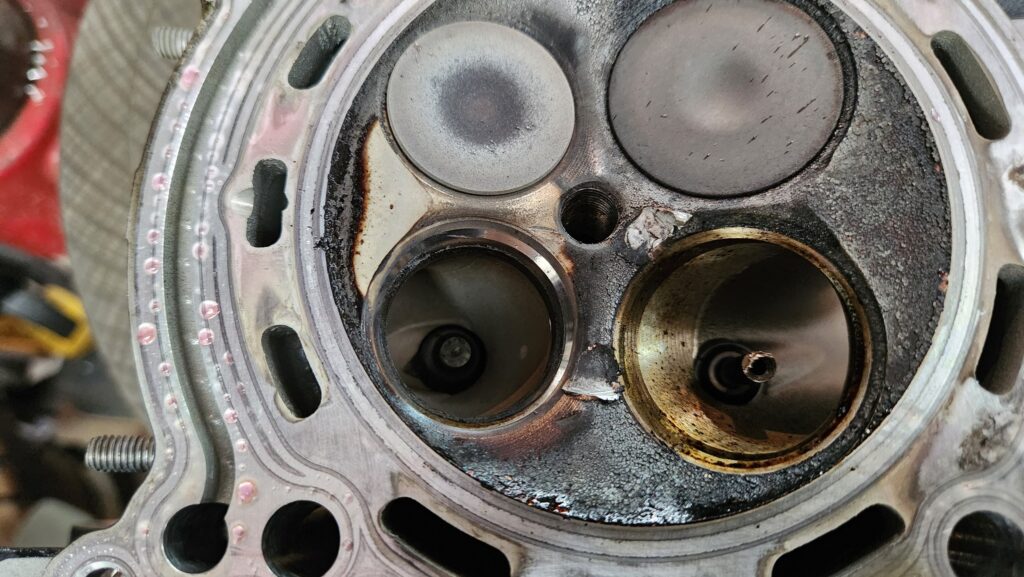
Fred asks where we go from here? Sam replies “I’ve forwarded the images of the broken valve to Triumph and their position, basically, is it is out of warranty now so not their problem”.
The manager continues saying, “you need to come and pick-up your bike because we don’t have the resources or the manpower to repair it”.
Reluctantly he agreed to pick it up with the trailer and set off.
The bike was recovered and again he takes 2 witnesses with him to cover his back.
Then he discovers that not only does he now have a dead engine, but they hadn’t fixed the clutch as was scheduled and covered by the warranty.
So the Neutral issue still wasn’t sorted and the bike had stickers saying no oil, no gasket. The battery has also been disconnected, but to avoid arguments, Fred left with no other real options, and trailers the bike home.
Remember, the clutch repair was to solve its neutral selection issue that been a problem for about 10,000km, this started long before it ran out of warranty and it had all been well documented as you have heard already, and agreed that the work would be covered by the warranty.
Triumph had removed the clutch previously and confirmed the stack height was within tolerance, so in reality none of this was wear related.
At this point Fred thinks it is probably a plate that is warped, but whatever the cause, it wasn’t replaced as had been agreed.
Fred then contacted the Office of Fair Trade, their position was that the Neutral selection issue was not fixed inside the warranty period, so the warranty should still stand.
The fact the engine failed before the dealer could fix the the issue makes that problem the manufacturers problem.
The Office of Fair Trade contact Oliver’s, who just say, “they no longer want Fred’s business and Triumph can’t force them to take his bike”.
The Office of Fair Trade say that Triumph claim they have not been directly asked to fix my bike, and state that I must take it to another dealer to give them the opportunity to fix it.
The next dealer Fred approaches declines to take my Speed triple, in writing, because it had been worked on by another dealer. So Fred emails Triumph UK, who refer it back to Triumph Australia.
Triumph Australia still claim they have not been asked to do the repair, even after being made aware that 2 dealers had refused to look at the bike.
So officially Triumph now considered the matter closed.
A few days later Fred decided to submit the case to the Office of Fair Trade.
On the 17th of May, Andrew Buckley called Fred from the OFT and said he would look into it, and Fred emailed him a pile of the evidence on the 19th of May.
On the 10th of June, Triumph reply, claiming t”hey have not been asked to fix the bike”, and the Office of Fair Trading suggest I seek legal advice or go to The Queensland Civil and Administrative Tribunal
At this point on the 13th of June, with one bike left in a state where it won’t turn over and serious doubts about the other, Fred approaches the manager at another Triumph Dealership at Springwood, and initially the conversation seems to be going well.
Then on the 19th of June Fred calls and gets a different manager, Ethan, they discuss the problems for about 48 minutes, and Ethan agrees to send Fred an email he can respond to, but the email never arrives.
Fred calls and asks for his contact details again on 2 separate occasions, but he doesn’t get them.
On the first of July, The Office of Fair Trade suggest that Fred submits the problems with his bike using the dealers digital booking system.
Fred reminds them he has already done this once, but he tries again.
Just a few hours later Triumph reject the work by email.
Remember, the Owners Manual clearly states maintenance should be carried out by an authorised dealer to ensure the motorcycle has a long, safe and trouble free life”.
The manual also claims “Triumph, strive for superior reliability and safety”.
But as you can see this certainly wasn’t Fred’s experience, and as you will hear later there are many other people suffering similar problems.
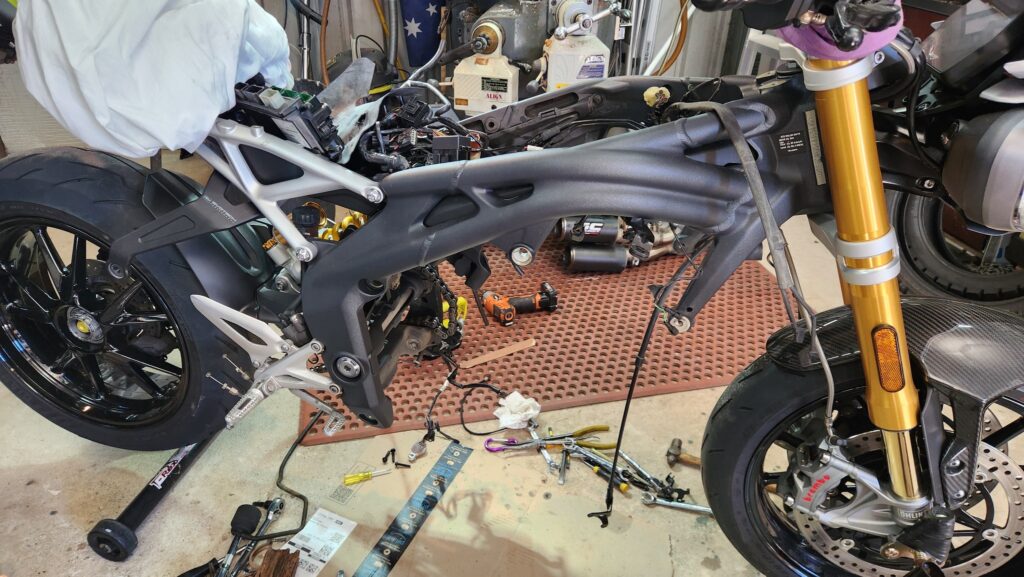
Finally on the 31st of August Fred reached a point where he felt he had no choice but to pull the engine out himself, and do the work in his own workshop at home.
It is only then that the full extent of the damage really came to light.
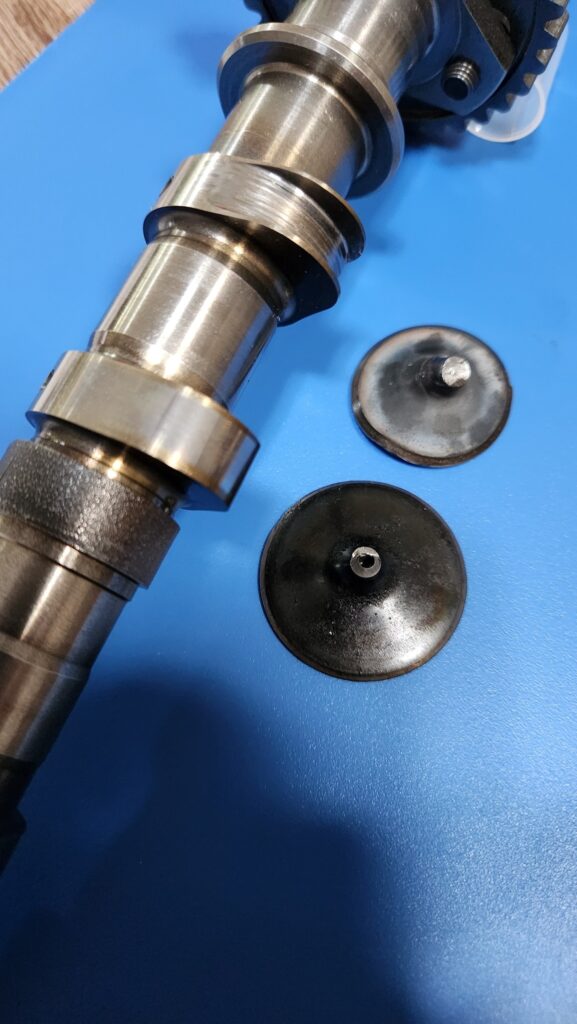
He finds the cam damage you can see in the pictures for the first time, One cam lobe has been decimated although the rest appear fine. Fred sees what appears to be evidence of lean fuel mixture on 1 cylinder, and richer running on the 3rd cylinder on the opposite side.
Now bear in mind the bike wasn’t tuned, it had the original headers, cat, breadbox muffler and air filter. The only the mods to the engine were the slip-on mufflers that had been both purchased and fitted by the original Triumph dealer, and this is shown in receipts.
The bike had had been fully serviced by Triumph, but they obviously thought a remap wasn’t necessary for the slip on silencers, which is another ridiculous decision.
The service intervals were 16,000km and 32,000km for the major service. But in addition, every 5,000km the oil was changed using Penrite Full synthetic oil.
This was agreed as mentioned earlier, with the service manager, who had agreed that 16,000km intervals was just too long.
Fred had kept Photo proof of every service that had been done in between the Dealership services on file too.
Then, after further disassembly, he found the broken inlet valve on cylinder 1, along with a bent exhaust valve on the same cylinder. Inevitably there was also additional damage caused by the valve failure.
At this point, I personally reached out to Triumph in the UK. They refused to comment themselves and just put me in touch with Triumph Australia importers Peter Stevens.
Now I had been informed Peter Stevens Importers had gone bust, as reported in MCN Australia, but Triumph assured me this wasn’t the case, but I got no response for 2 weeks from Peter Stevens crew.
Then, just after I did the video on the quick-shifter failures, I got a reply saying no they hadn’t gone into liquidation, but they considered the matter with the Speed Triple 1200RS concerned closed.
I asked for details as to why they were not dealing with it, and was dismissively told that they had already discussed this and had no further comment. Since then, both PSI and Triumph have refused to reply to any of my messages.
At this point, Fred, who teaches engineering at University level, said to me, “welcome to my world”.
Now it gets more complicated here, because Fred’s 2nd bike, a Tiger 900 Rally Pro Aragon Edition was also having problems, but he was left with no choice but to strip the Speed Triple to try and fix the engine.
I’m, going to carry on with the Speed Triple story first, but I will come back to the tiger later.
Before we get to the complete strip down, the CAD analysis of the gear-shift mechanism was done and results were in.
You can see in the files shown that the 2 circlips both create stress points that are potential failures because the shaft itself is just poorly designed.
To take the stresses involved, even without the quick-shifter, either the selector shaft needs to be made from a larger diameter rod, or the overhang from the casings made considerably less. The quick-shifter just makes the problem worse.
The bending and twisting forces exerted on the shaft, take the OEM parts to their absolute limits and beyond.
There is no excess strength to make sure there are no failures. It looks very much to me like they have deliberately built the shaft to fail in my opinion.
It is just strong enough, on most bikes that don’t do high miles, to outlast the warranty, but beyond that it is a crap shoot.
Bear in mind this is the same gearbox selector system that is used on most of the big triples, so is a problem not isolated to just one model.
The next step for the Speed Triple RS was a total strip down. Parts were ordered, but when things arrived the ring-set just didn’t seem right.
When measured as you can see in the pictures, the gap size meant that as soon as it is bedded in, it will be on the service limit.
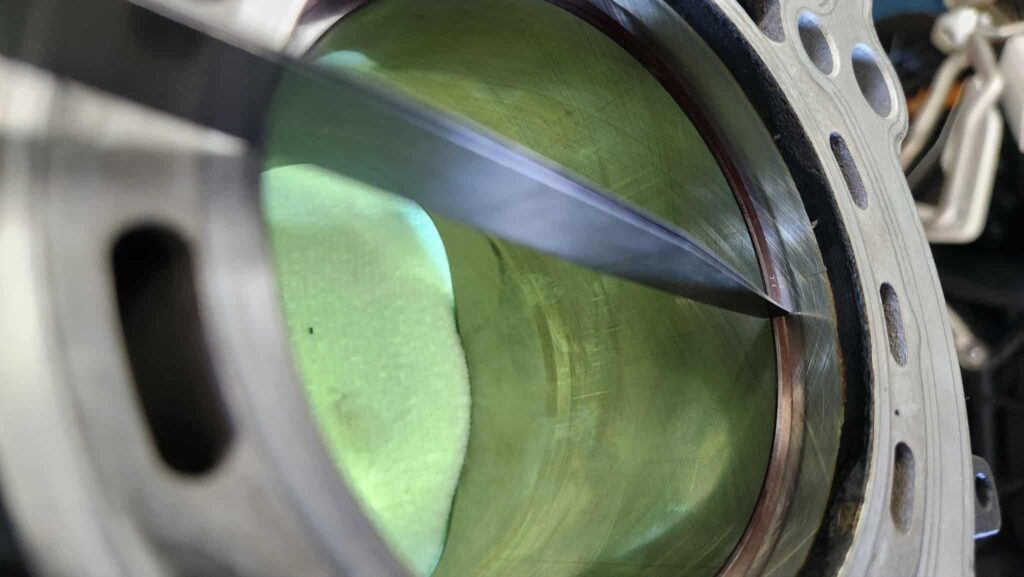
To be clear, you can still see the factory honing marks on the bore so this is not about wear. Other than the obvious problems, most of the engine looked good inside.
On the top ring the size was 90.03mm which is at the very top of the factory tolerances spec. Spec for gap size is 0.18 to 0.25mm, and the gap was measured at 0.35mm, so it is in fact gapped oversize from the factory.
On the second ring, the spec sheet says that the gap should be 0.5 to 0.65mm, but measured gap was 0.7mm. Again, gapped oversize from the factory.
When Fred goes back to the Triumph dealer to discuss it, he is dismissed with the comment, “Take it up with Triumph”.
Despite all Triumph’s efforts to make it impossible to get the barrels back on without cracking the cases to get to the con-rods from underneath. Fred eventually finds a way.
Following factory procedure would mean replacing all the torque to yield bolts on the con-rods, plus all new bottom end gaskets, and with zero parts available in Australia, that might be a long wait.
I will come back to an issue with the torque to yield bolts later, but with 6 weeks to wait for parts, Fred and a friend do eventually figure out a way to get the block back on without splitting the engine cases, but this is with the insight of years of spannering and working on many engines. For most people it just wouldn’t have been possible.
The sneaky way to get the barrels on without splitting the engine went as follows.
From under the oil pan there is a small hole, you can access the bolts on one Con-rod through this hole. Then if that piston and rod set is assembled on the bench, you can lower the other 2 pistons onto the rods in the block. From there, the first set can then be bolted on pre-assembled from underneath.
The next realisation was that doing the head gasket on one of these engines also causes issues, because the base gasket shares the same bolts, so again the cases have to be split.
This has all been documented on the Failed Triumph’s Facebook group so go take a look, it will hopefully help a lot of people faced with the same problem.
The real investigation work begins trying to figure out why a single cam lobe destroyed itself.
The first check was the oil port adjacent to the worn lobe, but it was fine. Not blocked or damaged in any way, so attention moved to the camshaft itself.
Unlike most of us, Fred has access to some serious machinery for testing and the first step was to wire cut the cam to do some analysis and testing.
There are lots of pictures and I will try and time them all properly, but its not easy, so bear with me.
When cut, the samples were mounted in a Bakelite puck to bake them, then they are put face down on a series of polishing wheels with 10 different grit grades, until you get down to a final 0.3 micron diamond grit finishing wheel.
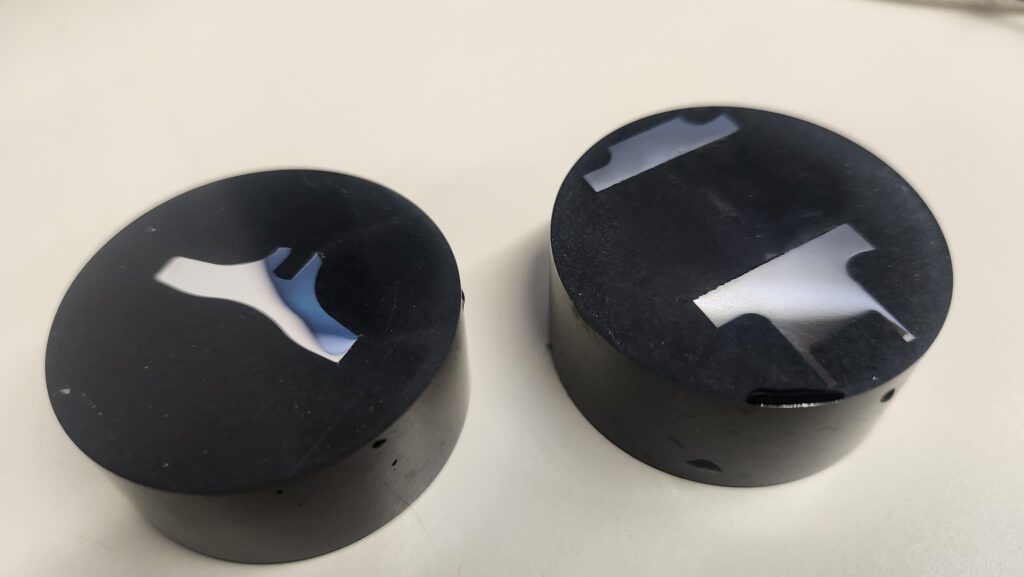
The final finish is better than chrome on flat areas as you can see in the pictures.
After that, the surface is treated with an appropriate acid, and the type of material dictates which acid is used.
After it is acid etched, the grain structure stands out much more, so it becomes possible to see how big the crystal structures are, because they will be visibly very different in the hardened areas.
Initial testing was done and results came in.
Rockwell C, or HRC hardness is a standard measurement when testing the hardness of hardened steel, and it measures the penetration depth of a diamond cone point on the material.
Preliminary hardness on the cam surface measured about 57 on the Rockwell scale, and a drill bit for comparison is around 62, so it’s definitely hard. This is about as hard as you can get with induction hardening, so the lobe hardness didn’t seem to be the cause of the failure.
There was a concern when looking at the grain structure that the hardness was perhaps not deep enough, but this was borderline and the lack of wear on the good cam lobes didn’t seem to support that theory.
When measured, the hardness in the camshaft was about 2.5mm deep, more than deep enough to do the job.
The cylinder head specialists who did a head inspection said there were no marks on the valve to suggest it was tight, so it seemed very unlikely valve clearances were out of spec, so the search continued.
The only explanation that seemed to fit the bill at this point was that the exhaust valve was seizing, causing an increase in the force needed to open the valve, which in turn led to the premature wear on the cam.
But not to miss anything, Fred then did an oil pressure check. He machined up some custom fittings to do the measuring accurately and again, oil pressure was good and within spec.
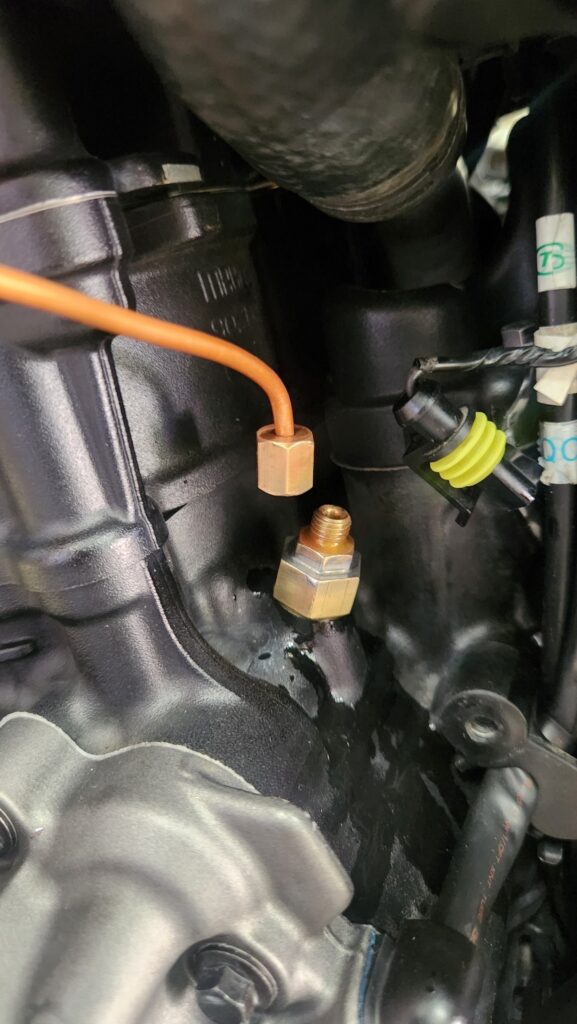
Things were all pointing to the valve itself, and I have to say as soon as I saw the first pictures I was aghast they had used a hollow stem valve on these engines, but thinking something and knowing are 2 different things.
Fred began material examinations on the valve itself next. What he found was almost certainly the root cause of all the problems.
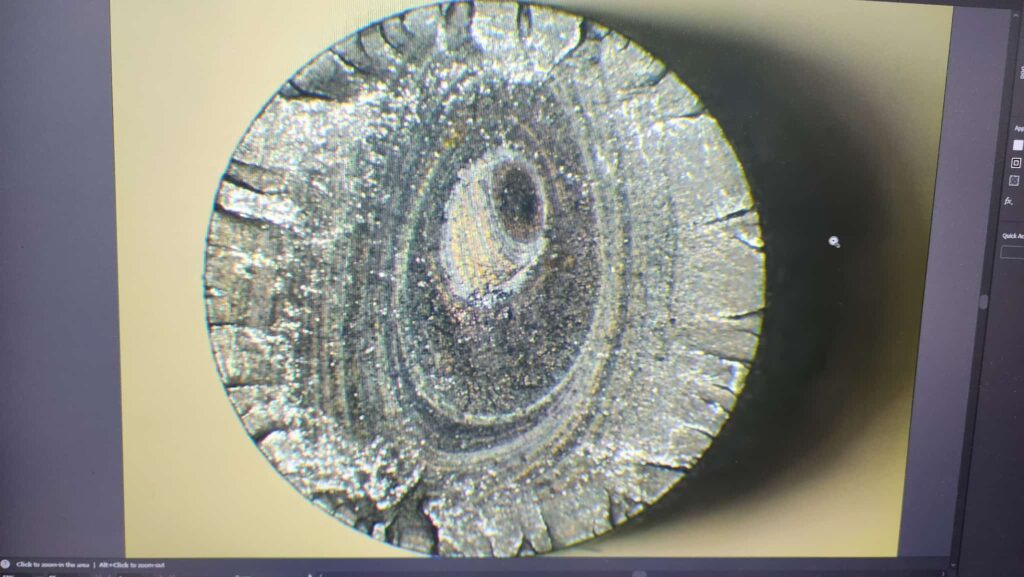
The exhaust valve stem was absolutely full of cracks.
The inlet valve also had about 5 cracks up one side. So the conclusion was that the failure began with a weakness caused by these cracks.
When the exhaust valve stem was viewed under a microscope, there were over 20 separate cracks in it. So to me, the question became was it a poor metallurgy issue, or simply bad quality control.
Had the cracks been there at assembly and not spotted? Or did they develop over time, because the metal chosen was not up to scratch.
Fred’s honest answer to that question was that he simply wasn’t sure.
But what he was sure about was that if this could happen to his engine, it could happen to anyone’s.
The engine had a very easy life. It rarely worked hard, with more that 99% of his riding being commuting back and forward to work.
Interestingly, when it came to opinions on the valve design and material integrity, Fred consulted a number of material failure professionals he knows and they were all in disbelief that the exhaust valve on a road bike had a hollow stem.
The fatigue was clearly visible, and the valve had obviously been deteriorating for some time.
Now we come back to those Triumph Torque to yield bolts on the con-rods
Fred bought some, built a jig, took them to the 14nm plus a 210 degrees turn that Triumph specify. Then undid them and re-checked the spec.
They did yield, but only by 0.25mm. What that means is that despite the instructions never to re use them and always to buy new ones, Fred asked himself, was it safe to re-use them?
When tested the steel had a yield strength of 1,460 Mega pascals with a hardness of 489 on the Vickers hardness scale. It actually took 11mm of stretch after the bolt had yielded in order to break it. That means the stretch of 0.25mm is of absolutely no consequence, and really isn’t even worth considering.
To put that into perspective, an Allen head bolt or Socket headed cap screw made from 1200Mpa steel is immensely strong and 1460Mpa stretch bolts are even stronger.
Trying to explain how strong that is more easily, if you move the decimal point over to get a Kg per mm rating, it is 146Kg per mm strength rating.
With the size of the bolt, that means it would take 5.4 tons of force to break it.
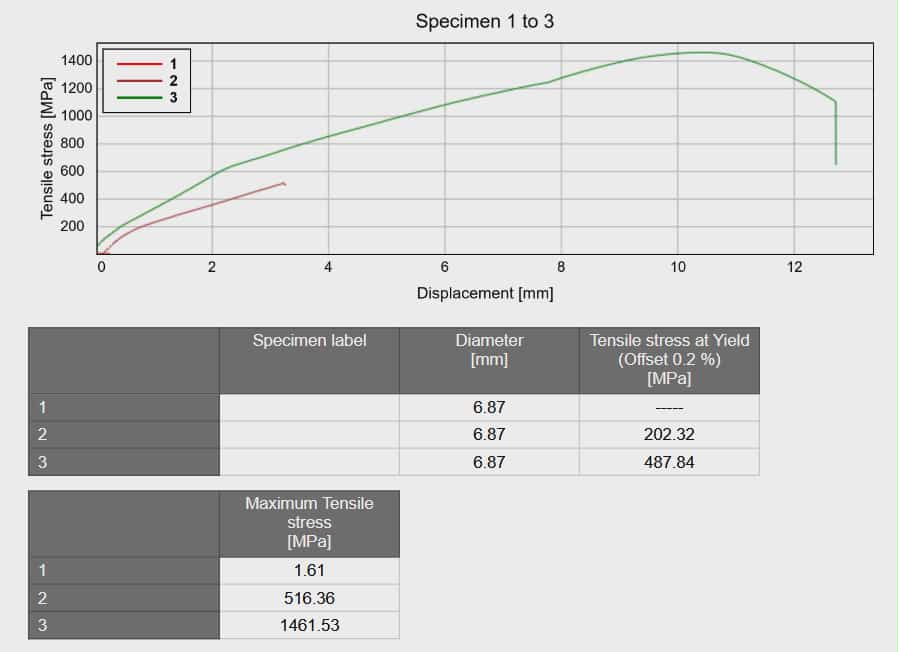
Yes, the bolts yield, but they have so far to go before failure that you could re-use them several times, and if like Fred there are no bolts available individually, but only as a set complete with conrod at 500 Australian dollars per cylinder, re using them just makes sense, because as Fred tested them, the extra 210 degrees of rotation specified only stretches the bolt by 0.25mm, so when it takes 11mm to break it, you are well within safe limits with only about 2% of the stretch used.
Then, as everything was going back together, Fred noticed yet another problem.
Where the air box housing sits, the wiring loom is trapped and even on a bike so new, the insulation on the wiring loom has been rubbed through.
Initial thoughts were that it fed the coil packs and possibly radiator fan, but regardless, it needed addressing.
When Fred had the Quickshifter failure fixed, they told him that they had to repair the wiring on the harness side of the Quickshifter plug, so that was 2 wiring issues already.
If it hadn’t been for the other debacle’s, because the bike was still so young, Fred would have been shocked about what could have caused the harness damage, but in the end, he assumed the staff at Oliver’s had caused it, but this second issue obviously made him consider if it was poor wiring from the factory.
In the end, to solve a repeat of the problem, Fred ground much of the webbing away on the air box so it wouldn’t happen again. The air box is strong enough and the webbing is complete overkill really.
Interestingly, the filter from before the bike failed, which had only been on for 800km, was still on the bike.
You can see what was left in it in the video (see Red video of oil)
The engine was flushed, just hoping all the inevitable debris stayed in the filters, and as far as Fred could see it hadn’t caused any damage.
Fred happened to be visiting his local suspension expert, an old school specialist Fred described as a great guy, his workshop was just 200m from the Triumph dealership, and he just said, “in all seriousness, the staff at that dealer shouldn’t be fixing toasters, let alone motorcycles”.
And that I am afraid is my own experience with Triumph Tech’s. Some of the Triumph dealership staff I have known have been beyond useless.
The only really good one I knew had the franchise taken off him.
Anyway, back to Fred’s Speed Triple, because despite the engine being rebuilt, there was still the issue with the gear-change And clutch.
On close examination, Fred finally found what he is now sure is the source of the problem.
The torque assisted clutch has a spring clamping plate in the clutch housing, and it simply had too much clearance, allowing the clutch springs to move outwards at high RPM due to the centrifugal force.
Over time the springs had worn the top-side of the pressure plate as it rotates into position.
The springs hold the clutch in the clamped state of the torque assist mechanism, this is why there was always a problem getting into neutral, and as you will see from comments in many posts on the various Triumph Facebook groups, this is a range wide problem that is just passed off by dealers as one of those “It’s a Triumph, it’s just what they are like” problems.
Initially, 5 minutes with WD and a Dremel and the issue was improved, but it would take some thought to solve completely.
Bear in mind here that although the Triumph trained professionals couldn’t find or fix the fault, it took Fred less than 2 hours to find the problem and work out a fix.
Fred machined up some spacers as an experiment and so far it appears to have finally solved the problem once and for all.
There is about 5mm of clearance on the stock springs as you can see in the pictures. It allows the springs to move outwards when the clutch is spinning and is yet another example of either engineering incompetence, poor quality control, or in built problems.
The 2 faces of the pressure plate, ramp into each other, and the more torque that it is asked to deal with, the more it tightens, which is good in one way for a 180HP engine, but not so good when the basic mechanism doesn’t work right.
When we last spoke, the run in period was underway on the newly repaired Speed Triple and after 3 heat cycles to give it plenty of opportunity to spit any fluids or lube out after the build, the riding began again.
Luckily for Fred, as the Trident 660 they had given him as a loan bike for the time the Tiger was in the workshop, was just not to his liking at all.
Having said that, on this occasion, he was finally given that promised courtesy bike.
So, now we come to the tale of the Tiger, and don’t forget, this is a Tiger 900 Rally Aragon edition, so another top of the range limited edition bike.
Part 2
This story began in December 2023. The bike was still under warranty with a full service history at licensed dealers.
Mileage was at 26,000km.
The last service, including a valve inspection, was at 19,200km, with oil and filter changed again, 4200km after that. At this point the bike had 2 years unlimited km warranty left.
The Tiger again had only minor modifications, a rear luggage plate, panniers, two additional USB charging sockets and a GPS. Nothing performance related.
A high grade Uni Filter air filter had been installed because of the local dusty conditions and the filter was maintained at approximately 4 times the OEM specifications for the paper air filter.
The bike did have an adjustable lower shift lever though, that allowed the distance between the foot peg and shift lug to be increased by 30mm to allow for Fred’s thick soled adventure boots, but that was fitted pre sale and covered by the initial checks.
The bike also had the same gear shift input shaft support fitted to the Speed Triple in order to try and stop the gearbox selector shaft breaking.
Fred hadn’t actually fitted any of these, they were fitted before point of sale and so were included with the bike as purchased and in this case should have been covered by the 2 year warranty.
As the selector shaft had snapped on Fred’s 1200RS, the selector shaft support was a welcome bonus.
Apart from these items the bike was completely stock, no aftermarket exhaust, and no tuning.
The issues first started less than a year later in 2024.
The first issue was when Fred noticed considerable play in the Showa forks while fitting a new front tyre at around 7000km.
The axle could be pushed or pulled forward and backwards approximately 4mm, and he could clearly hear the bushes at the top clunking inside the fork tubes.
Obviously this was concerning.
When he looked he could see the chrome tube distorting the fork seal, so the movement was considerable.
On his first visit to the dealer who sold the bike, Oliver’s Triumph, The service manager was away for the day, but the owner of the company was at his desk and Fred asked him to take a quick look.
The owner of the shop pushed and pulled the axle forward and backwards with the front wheel off the ground and said that it was just a little bit of clearance.
Fred said he could hear it clunking from where he was standing, less than 2 metres away.
The shop owner didn’t seem too concerned, and at that point Fred already had worries about how the interaction was going to go.
Concerned about the safety of the bike and having such an indifferent response, Fred took the bike to the independent motorcycle suspension specialist he knew.
They were alarmed when they felt the play, saying it was the worst play they had ever seen in a near new set of forks.
They showed Fred a set of forks from an Africa Twin with 60,000 hard km’s on them which they had in for rebuild, and these had less than half the play of the ones on the Triumph.
The play on the Tiger’s forks was measured at 0.21mm of movement where the stanchions entered the fork seal.
So on the 12th of December 2024 the suspension specialist gave Fred the details for his Showa contact in Sydney.
The Showa specialist confirmed in writing that the maximum allowable movement in a Showa fork was 0.04 to 0.05mm measured where the stanchion leaves the seal.
Fred told them that his had 4 times that amount of play, but that the Triumph dealer was saying that it was perfectly fine. To this, the specialist confirmed that he had actually seen a number of Tiger 900’s in his workshop with the exact same issue.
In his words, “this scenario is not coming to Triumph cold, they know about it.”
In Late Jan 2025 Fred went back to the dealer with this information, they agreed to pull the forks apart, but only took photos, they said that they took no measurements, then said there was nothing wrong, no substantial wear was discovered.
How no wear could be found when no measurements were taken is another baffling one to me, but maybe they were psychic.
At this point Fred chose to take it up with Triumph directly, sending them the email from the Showa agent, stating what they as the manufacturer said the acceptable movement was.
Only then did Triumph confirm they would replace the forks. But there were again no parts in stock, at either the distributors or dealers.
Then came the shift issue.
This first appeared at higher throttle positions, and only when shifting into third gear.
At lower revs Fred could ride for a month and it would work fine.
If he rolled on in first gear up to half revs it was OK, but if he took the power up to more than 60%, it would shift to 2ndfine, but then, on multiple occasions, it would simply refuse to shift into 3rd.
After doing this 3 times in less than 2 weeks, and at other times refusing to shift into third at all, the dealer agreed to look at both issues.
While the Triumph dealer looked at the forks again, they reset the electronics for the adaptations and the shift issue went away, for 2 or3 weeks, but then it slowly returned again.
Fred informed them that the problem had returned, and the service manager said, in writing, “it’s the quick-shifter shift sensor” and that “he had started a case with Triumph and would have one there for when the new forks arrived”.
The front forks claim had now been accepted, and they were due to be replaced, but they were awaiting parts.
Then the real trouble began.
Having dropped the bike off in the morning to have the forks and quick-shifter changed as agreed earlier in writing. Fred went to pick the bike up that afternoon.
All was going smoothly, a normal pleasant experience, but the service manager was away.
The guy who had previously told Fred to simply shut his Speed Triple 1200RS off at the lights if he couldn’t find neutral, came out to serve Fred, but things were normal.
He walked Fred outside to the bike, saying “all done, we’ve just taken the forks out of the box and installed them, you will have to set them up to your preferred settings though”, Which wasn’t a problem.
Then Fred asked “how did you go with the quick-shifter?”
He said “it wasn’t here for that”.
Fred’s heart sank again and he said “sorry, it was”.
The Employee continued “I’m not going to argue with you, we don’t have a sensor here anyway”.
Fred said “it was confirmed in writing from the service manager, can I show you the email?”
The member of the staff completely refused to look at the email and then started talking about the adjustable shift lever being the cause of the problem.
Fred asks “if that is the cause, how come it only does it at high throttle positions? and only in 3rd gear?
He then added, that the adjustable shift lever had been on there when they reset the electronics for the digital adaptations the last time it was in, and the issue went away for 2-3 weeks.”
Continuing, Fred said “how about I remove it, but I’m quite certain if I change that shifter back the issue will still be there.”
The member of the staff said nothing, and simply turned away and walked back inside the shop.
Fred thinks at this point that everything is over, and begins to get ready to leave, seeing no solution.
He starts putting his riding gear on, and was just about to throw his leg over the bike, when the same employee returns, noticeably agitated, and says, “fine we’ll put another shifter on it”, he grabs my bike and rolls it into the workshop despite having said earlier, “we don’t have a sensor here anyway.”
If this sounds familiar, remember, something very similar had happened with the Speed Triple 1200RS.
Fred is just left standing there with his gear already on ready to leave, the staff member doesn’t ask. He just wheels the bike away.
He stands there, totally bewildered.
He turns and see’s the service manager walking towards him, and then the manager proceeds to have a go at Fred again for stirring up his staff.
Fred says, “I was leaving, your staff member was the one who was unprofessional, he refused to even look at your email stating what works were to be done.”
Then the service manager says “other people don’t have issues with their bikes, it’s just you.” and then says “As far as he is concerned there was nothing wrong with my forks.”
Fred reminded him that they were inspected by an independent specialist, and that the manufacturers, Showa, had confirmed that they were not within spec.
Fred also reminds him that the last time he reset the digital adaptations settings, that the shift issue immediately stopped for at least 2 weeks, adding, “so how could it be the adjustable shift lever?”.
The service manager says, “yes, that’s a valid point”. Then told Fred not to bring his Tiger 900 to them any more.
At this point as I said earlier, Fred reminds him that his Speed Triple1200RS is booked in the following day.
The manager says, “oh, yes”, I’d forgotten about that.
Fred left, absolutely sure after all of this he was never going to use the business again.
He removed the shifter immediately when he got home, test rode the bike, but as he had suspected it made no difference.
Because of the complete bullshit at the second Triumph dealer, Fred chose to take his Tiger 900 to an independent motorcycle mechanic for it’s 20,000km valve inspection.
The report stated, no problems, no adjustment needed, all gaps within spec. However, 3,700km later, Fred notices a light tick, down low on the left side of the engine at the front. It only appears when hot, never when cold, and it is not on the timing chain side of the motor, which some people have had.
Looking at the engine diagrams and listening, it appears that the sounds is coming from the area around the balancer shaft, and Fred’s first thought was maybe it is the balancer shaft bearings.
With little choice, Fred takes it to Team Moto Triumph, the same dealer who had rejected his Speed Triple repair.
He went early one Saturday morning before they got busy, so their service department could have a quick look.
They listen, and agree it is not on the timing chain side, and it shouldn’t be there. He then shows them a click in the forks that had started, and the video of the bike refusing to shift into 3rd gear.
They book the bike in with the promise of a loaner bike, but the appointment is nearly 2 weeks later.
When Fred arrives, another considerably less helpful guy is there, he says “we have you here for a 20k service?”
Fred says no, not at all, it has a tick in the engine, a gear shift issue, and a click in the forks. That’s why it was booked in for 2 full days.
He says “well we can’t go pulling your bike apart without all the bits to put it back together, we will take a look, report it and wait for Triumph to approve it, then we can maybe fix it another time”.
Fred leaves the bike with them, but hears nothing, and returns as scheduled two days later.
After standing around waiting when he first announced his arrival, Fred eventually asks “Is there a problem?”
The guy says, “Yeah, kind of, do you have your service history” Fred said “yes, I showed you the book when the bike was dropped off”,
He continues “our tech is questioning the oil quality in the bike”.
Fred produces the full service receipt on his phone, and the guy takes the phone, then proceeds to take a photo of the screen.
Fred says “why don’t I just email it to you, I have nothing to hide here, I’ve given you all the information.
The guy sees it’s got Motorex 10w40 oil in and then says “that’s not poor quality oil, I probably should have seen this before writing my report.”
Now that is as close to an admission of completely making shit up as I have ever seen and I think at that point I would have blown my top.
Fred however, tried to remain calm.
When the employee showed the report to Fred it said, “it’s the timing chain tensioner making the clicking noise”, That “poor quality oil is thin and affecting the engine, stopping it functioning normally.”
It also states “there are clearly tooling marks on the triple clamps, the forks have been worked on.”
Fred says to him, my bike has been here 2 days, you didn’t call, email, or text. If you had, I would have told you the forks were replaced 3 or 4 months ago by Oliver’s under warranty.
The response? “what do you mean?”
Fred says “those are new forks making that clicking sound, and most of my riding has been commuting to work in the 3 to 4 months its been used as my daily ride while the 1200RS had been off the road with a blown engine”.
The employee then says “he’s sent his report off to Triumph”. But adds that they have reset adaptations to see if that fixes the shift issue.
He then adds, “you aren’t pulling up hard enough on the shifter”, but Fred reminds him about the video showing the shifter crushing the top of his boot and still not shifting.
After reading the report, Fred feels like he is deliberately being thrown under the bus.
At no point did anyone at the dealers contact Fred to try and clarify any of the details contained in the report before it was sent.
He felt that despite discussing it all with the guy who was there when he booked the bike in, that the details in the report portrayed him in a very bad light, and that if the dealership had contacted him at any point Fred could have supplied all the details and not had to stand there for half an hour defending himself against a report that had already been sent, and then trying to correct statements in it that were blatantly wrong.
Remember, the report had already gone to Triumph.
Yet again, Fred left another Triumph dealership thinking it was just a disgraceful service.
After he left, he made it just 5km down the road before the shift issue appeared again, 3 failed attempts to shift, yet again.
He pulled over and emailed the service department from the side of the road, but he never got a response to that email.
Despite his own thoughts on the matter, in an attempt to solve any idea that the oil could be at fault, he got the engine oil changed at 4100km from the last service, this time using Penrite 10w40 Full Synthetic oil. But as expected, there was no improvement to the engine tick.
After no correspondence for a week and a half, he calls the dealer again and leaves another detailed message with a different member of staff, because he is told the service manager is busy.
More time passes, the tick is getting louder, and now it is also there when the bike is cold.
Eventually another 2 and a half weeks later, he speaks with the store manager on the phone. Then 2 days later goes into the store again, asking why no one has been in touch.
He is told that the service manager was told to contact me, but had obviously failed too.
Fred gets no further trying to discuss the details about what will be done about the increasing number of problems that still haven’t been solved.
After 5 weeks and 4 days of silence, on the 23rd of September, Fred resorted to a mass email. Contacting the store and copying Triumph aftersales service UK, the office of Fair trade, and 3 media companies into the email.
After quoting Australian consumer Law, he asks if they intend to honour his warranty.
Then, finally, the dealers email seemed to start working again, and they respond saying, “They will rebuild my near new forks and will order parts for my gearbox to try and trouble shoot it”, but there is no mention of the engine tick in their response.
He thanks them for their email, and reminds them that resetting adaptations made the shift issue worse this time, and asks if they think there could be an electrical element to the problem?
When asked if they intend to explore the engine tick, and if they will honour Triumphs promise to provide alternative transport as this is his primary transport because his other Triumph has a failed engine? He gets no response.
8 weeks after his bike first went in, no work had been done, he had not even been able to book it in for the work.
The engine tick was getting worse, and as it was now summer, it had got hotter, and the problem was getting worse.
It reaches the point where Fred thinks to himself, when it comes to Triumph, you can’t complain about the service because there isn’t any.
The warranty ends on the 1st of December, and needing things in writing after so many broken promises, Fred sends another email to try and find a solution.
It goes to the service manager Ethan, saying “Perhaps ordering an entire new gear train to accelerate the repair is best practice here. Fred even offered to pay for the restocking fee of any unused components if needed to get things moving”
Fred continues, “I think that an element of this shift issue is an electrical fault. 95% of the shifting faults have been with the quick-shifter, even after a new quick-shifter was fitted, it is not affecting engine power and the problem only happens in the higher throttle positions. It has never happened below 30% throttle”.
Regarding the engine tick he says, “I imagine there will be further detailed discussions after the engine inspection is conducted to find the source of the engine tick, but please be aware of the comments made at your dealership previously, the Motorex Semi Synthetic was removed at 4000km and it was replaced with Penrite full synthetic in an attempt to solve the problem, it did not solve the issue, instead, I would suggest it has got steadily worse over the following weeks”.
To pre-empt other excuses he continued, “For the record, both of the oils used exceed the specification required in the Triumph owner’s manual”, and that “the tick started approximately 2900 km after the previous major service, where the valves where found to be within the manufacturers specification, and that no adjustment was made at that time”.
Fred, desperate to cover his own back, also makes it clear that “If the outcome from the engine tick inspection reveals that I have played some part in that issue, I will require clear evidence of that. I would like clear images or video with no ambiguity, and I will require a statement in writing”.
At this point he adds, that if he is shown to be at fault, he will happily pay for that repair, but if he is paying the bill, he will require any and all failed components from the repair to be returned as they will be his property.
The response said, “The plan is as follows regarding your bike Fred, Triumph has approved us to rebuild your clicking forks by replacing the internals. While the bike is here, we are going to inspect your gear selector mechanism & shift drum in depth. From here we will flag any problem parts found to Triumph, so that they can look at approving further repairs.
They continued, “there will be some parts required to repair your bike, some are already on the way, others will need to be ordered as they are identified. I don’t control the production of these parts nor the location from where they come, but I will do my best to get them here in a realistic time”.
“If you would like to, then you may leave your bike with me while I wait for your fork components to arrive, this may be better due to how unpleased you are with it. This allows me to get straight into the repair as soon as the parts arrive, and begin the engine investigation regarding your gear shift problem too”.
Now this is where I got to before Dakar, and I got so depressed hearing this tale of woe I was hoping for some better news but sadly, it got worse.
On the 900 Rally Pro, PSI the Triumph importers were now claiming that they had never been informed about any of the 3 separate issues on Fred’s bike.
Then they said the dealer only told them about the forks.
They also said the parts for the forks were delivered to the dealer on the 28 October. But Fred hadn’t been contacted by the dealer since then.
So you have dealers blaming the distributor and the distributor blaming the dealers and both effectively accusing the other of lying.
But try and put yourself in this position, there were 3 verbal conversations, and 3 separate emails sent detailing all 3 individual issues, yet PSI still the claimed complete ignorance on the issue.
So Fred contacted the office of fair trading again to challenge Triumph. He detailed the report sent from the Service manager to the office of fair trading saying their tech had seen Fred’s bike jump out of gear, knew it had fork issues, and that an engine tick had been reported.
All 3 issues were well documented. Fred’s conclusion, was that they were simply utterly immoral people.
And remember, at this point Fred had been waiting since August 15th for the Rally Pro repair, and Triumph were saying that the dealers had at least some of the parts needed, but bear in mind also, that everyone knew that the Warranty was due to run out at the beginning of December.
At this point, the office of fair trading began to lean on PSI, the importers, and miraculously the dealer now contacted Fred, saying they want to get the bike in as soon as possible to do the work.
So, exactly 3 months after it was in there for 2 full days of inspection. Now they want to start looking at the gear shift issue and the engine tick.
The only parts they had ordered were to rebuild the new forks. So, assuming they actually found the other issues, there would be another inevitable wait for new parts that would begin all over again, and remember that warranty ran out on the 1st of December.
As I mentioned there had been other cases of noisy engines, although many of them were about noises on the opposite side of the engine. However, as happens, one day out riding, Fred’s brother met a guy with a 900 that also had a tick that he described as exactly like Fred’s.
In the end that issue was tracked down and described as a valve issue, Triumph replaced the head, and sure enough the noise went away.
So again this wasn’t an unknown issue, and this is part of the problem.
Triumph consistently ignore known issues and simply hope that too many people don’t challenge them until the bikes are out of warranty.
That way it can be blamed on previous owners.
When the Tiger did go in to the dealers, at least Fred finally got a courtesy bike, but as I said before, the Trident 660 simply got put away after 2 days, because the Speed Triple 1200RS was finally up and running again, thanks in no way to Triumph I might add.
When the Tiger was dropped off at the dealers, they said very little.
Fred described it as all feeling very uncomfortable.
One employee pulled out the paperwork and said he couldn’t believe how many notes there were, then he saw a note saying manager only to handle the matter, and went quiet.
4 working days after Triumph had received the Tiger 900 Rally Pro, the only correspondence was asking what the last valve inspection gaps were, other than that, nothing.
In the end, 2 and a half weeks later, with no communication, when Fred called, he was told they had found it had a split throttle body seal.
Not an obvious source of the noise, but possible I guess.
What it could mean though, is that when riding in such a dusty environment, there was the potential for one of the cylinders to have suffered dirt ingress.
Now we know already how much KTM like that excuse to wriggle out of responsibility, but the hope was that Triumph wouldn’t use the same tactics.
The bike had the fork rebuild done, but some of the clicking was still there, and with regard to the ticking from the engine, there was still no news of a repair schedule.
More time goes by and I message Fred again to see if he has heard the bike running yet, and if indeed replacing the seal had solved the noise from the engine.
Sadly, he was still sat waiting, with the only news, that they had ordered seals from the UK, because there was no stock in Australia.
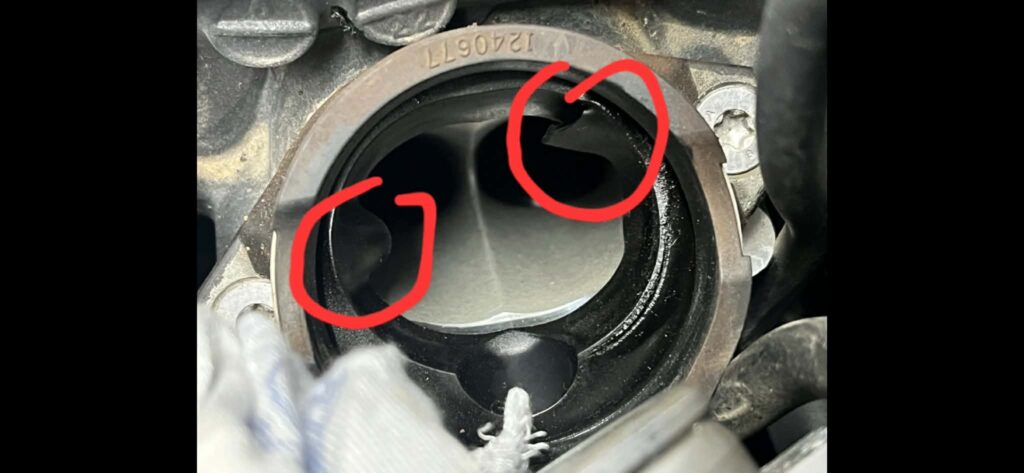
It was then that Fred told me that they had only found the failed seal after he had been made to agree to pay for a cam inspection to look for the engine tick.
The valve clearances had been done at 19,400km, so Fred did wonder if at this point Triumph were looking to try and throw another registered mechanic under the bus, but they refused to do any further work unless he paid for the cam inspection.
With the warranty date looming, Fred felt he had little choice in case a total rebuild was needed. So he reluctantly agreed to pay.
The valve clearances were all perfect and as recorded in the 19,400km service.
Then, although that the seal would not have been touched to do the valve clearances, or in a standard cam inspection, they reported that they had miraculously found the failed seal and sent pictures.
At this point, knowing the seal had never been touched, Fred’s only thought was that somehow it had left the factory like that.
He simply couldn’t figure out how or why it could have split. It is a nitrile rubber seal after all, so oil cant crack it. The only way he could think it could have happened, was improper fitting at the factory.
At this point no allegations were made, and Fred’s question was simply would he be made to pay for not only the seal, but also the head strip and any consequent work.
Time was still ticking away on the warranty, and after 6 weeks in the dealership, Fred asked again for a finish date for the works on his Tiger 900 Rally.
It was only then that Triumph dropped the bomb, and blamed the delamination of the seal on the independent service centre who did the valve check.
At no time before this had they pointed the finger. But now they they were officially blaming them in writing.
They then said finally, if Fred wasn’t happy, to come and pick up the bike.
Despite all the questions, at this point Fred still wasn’t sure if they had done any of the other warranty work at all.
So all together, Fred had waited 9 weeks for them to even reply to his first report of the 3 separate problems he was having, then another 6 weeks for them to not only blame it on someone else, but also to charge him for work that was never really needed. So a total of 15 weeks waiting for them to refuse to replace a cheap seal that had almost certainly been fitted wrong from the factory.
And of course, by now the first of December had passed and any warranty had officially expired.
On closer inspection when he saw the bike, there was no evidence of abnormal compression on the seal, in his opinion, there wasn’t even a way to apply the force needed to cause the seal to fail on the bike, so it wasn’t a case of improper installation, it was simply down to a poorly made or badly fitted seal.
In reality, there was still no proof this was actually anything to do with the ticking sound from the engine either.
There was absolutely no evidence to support any of the allegations made, but in Triumphs final letter they laid the blame clearly on the local independent service centre Fred had used to get the valve check done.
This is someone with years of experience servicing and tuning bikes, and yes they did do the 20k valve inspection. But as I have said, that seal is not touched and certainly not removed from the bike to do the valve check.
Even the official Triumph workshop manual doesn’t say to remove it, and no mechanic would see any reason to.
There was also no evidence of removal on the heads of the bolts either.
That was when he got the news that Triumph didn’t have any spare seals, and there was a 6 weeks wait for parts to be shipped from the UK.
This again is where Fred is in a position that most of us aren’t. He knows and has access to many industry specialists, and he took the seal to a friend who is an industry level specialist with a PHD in Polymers. He examined the seal and described Triumph’s position as truly laughable, saying “As a mechanic you can’t cause a Nitrile or Butyl rubber seal to absorb engine oil”.
Because there were no seals in stock globally, the bike remained at the dealer for more than 8 weeks in the end, Fred missed his entire Christmas holiday period which is peak riding time in Australia, and he had to cancel multiple planned trips.
Then the news came that Triumph were saying that the parts would now not arrive until the third of March 2026.
This is a part used on multiple models, and they were listed on the sites of several dealers, yet Triumph themselves said they couldn’t get them for over 3 months.
So if anyone else needs a Throttle body transition seal for any Tiger 900, Street Triple and others, you may be in for a wait.
Interestingly, only one failed, not all 3.
So there was an impasse, with Fred left with yet another Triumph lemon and a job to do that he should never have had to do, still not knowing what has or hasn’t been done to his bike, and still waiting for parts.
After he got the bike back, straight away he got an idea of the quality of the work that had been done.
After turning on the fog lights, the dash lit up with a fault code.
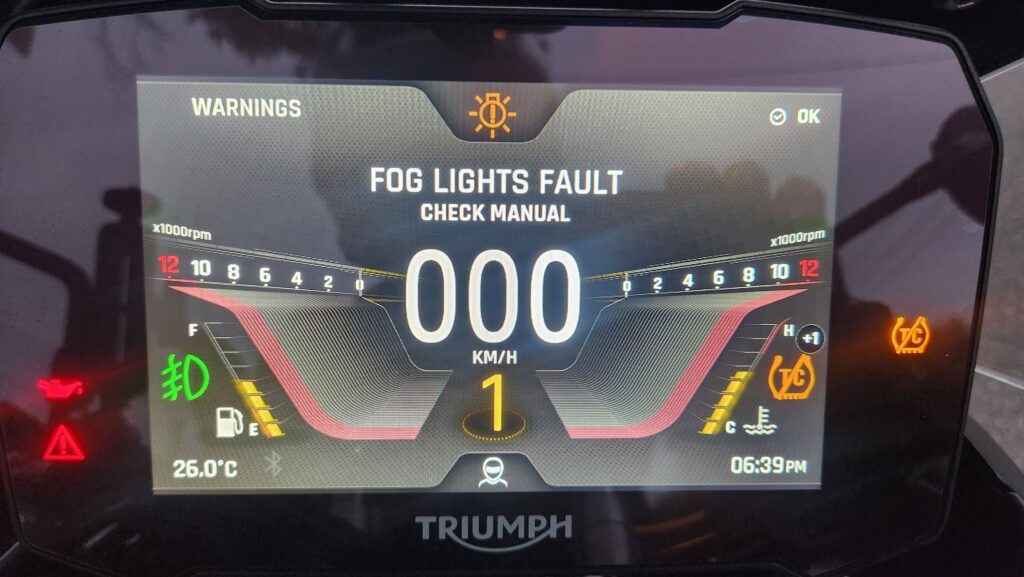
On inspection, he found that when the engine bars had been re-installed, they had trapped the wire to the fog lights under the mounting lug, damaging the loom and shorting the system to earth, causing the fault code.
The next problem he found was a Broken central windscreen runner, then came the real doozy.
Those top of the range front forks that had been rebuilt again after already being replaced once, would simply not adjust. Neither the compression or rebound damping adjuster would move at all, and remember, in the employees words “they are set to factory spec and will need adjusting to suit your riding Fred”.
So they had taken a brand new pair of forks that were clicking and obviously faulty, but working, rebuilt them, and managed to do it so wrong that they made things worse.
What a service.
The rest my friends will have to be a story for another day.
With time short and parts delivery time stretching into months on anything, the rebuild may take a long while.
But as you have heard, this is a complete failure by Triumph, PSI the Australian importers, and the 2 Triumph dealers that were involved in the servicing and warranty work on these 2 Flagship bikes.
This reinforces what many have experienced, flat cap cafe racer in the USA had a 15 month wait for parts, and this is mirrored by the experiences of many others.
There is another couple on here from the UK, who both had the same Tiger 900’s. His was more rattly than hers to say the least and when asked to look at it, Triumph just said its fine mate don’t worry, they do that.
Is this OK for a company who market themselves as a high end brand?
Triumph PSI and the various dealers had so many chances to put an end to this sorry tale it is ridiculous, why did they fail? I will let you decide that.
But that is just the tip of the iceberg.
Here are links to their videos.
The list of people asking for solutions to genuine problems with Triumph is astounding, and the number of video’s about long waits on parts and poor service from Triumph’s dealers just keeps getting longer.
Marcus Berry had problems on a Rocket 3 Storm, another range topping bike. He had a valve seal go with just 1500 miles on the clock.
Triumph said they were replacing the head under warranty. But the bike had been at the dealers for over 4 weeks with no communication. So he began to question if it was more than the seal.
Then he got a message that they had to order the stretch bolts from the USA as the UK was out of stock.
They said they didn’t want to rush the job to make sure it was as good as new and the cylinder head bolts are torque to yield bolts as we have discussed, so they are supposedly single use items, and as the Rocket 3 has a longitudinally mounted engine, it would definitely be an engine out exercise to remove the head.
But it meant another brand new bike failed and was off the road for weeks waiting for parts, and it left a customer who no longer had confidence in the bike or the company.
Matt Jones ordered spares from fowlers, one of the better dealers in the UK, but still had to wait a few weeks as they were on back order, so that reinforced the fact that these problems are not one off’s.
When Marcus went to talk to the dealers about the Rocket 3, they said the problem was the valve seal. When they showed it to him he could see it had been pinched.
The Service manger said that triumph have sent a complete replacement head. However he was told the piston sleeves needed to be removed when they re-fit the head, which seems bonkers to me. And all of this on a range topping £25,000 bike that had done just 1,500 miles.
So another example of poor quality control or mistakes made on assembly at the Triumph factory, poor parts supply, and a less than stellar service.
Removing an engine disturbs a lot of components too, the cooling system, wiring loom, drive shaft, fuel system and more. Leaving lots of opportunities for the dealer to make mistakes and gremlins to creep in later.
Unless the dealer is studious, this type of work also runs the risk of scratches to the frame, engine and ancilliaries too, its easy to pinch wiring, especially on a CanBus loom, and that it is a big issue with such a heavy engine.
Even the best mechanics have to take their time, and time is something most dealers just dont allocate enouigh of.
On such a new bike it is a problem that just shouldn’t happen.
Gi Varlamov needed an engine rebuild which wasn’t Triumph’s fault for once, but when it came to buying new shells, he was told they were simply not available to buy as shells alone, only in a complete conrod assembly. So instead of 3 sets of shell bearings, he had to buy 3 conrod assemblies at £450 each which included 3 con-rods gudgeon pins and top shell bearings that he just didn’t need.
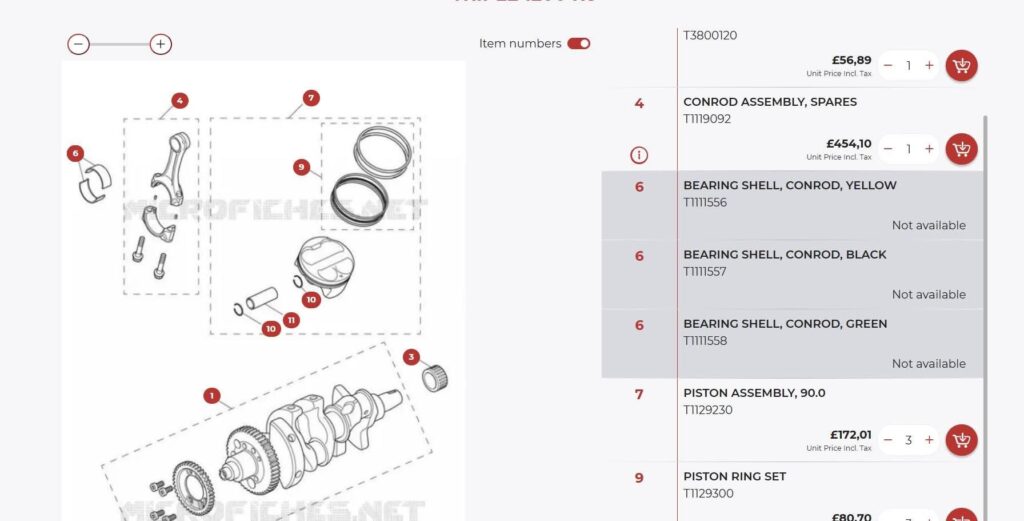
And the list of woes continues.
Bud Mcarthy also has a Speed Triple. After some work the coolant needed topping up again. He added coolant to the expansion tank to the full line when it was cold as stated in the service schedule. Then the nightmare began, and he just couldn’t get any straight answers from Triumph.
The first issue was that after filling the system and starting the bike, the coolant was blown out of the expansion tank, and it appeared to be steaming.
Then the transmission issue light came on.
He kept checking the engine temperature gauge and it didn’t go higher than 27, but normally it never went above 24, what these numbers represent was beyond all of us.
And to be clear, Bud said the bike didn’t run or shift any differently. But he couldn’t stop the coolant from overflowing.
In the end it managed to melt the top of the expansion tank and the stopper.
He replaced the stopper and tank, and after tried again but had the same problems. Even after he flushed the radiator until any bubbles had stopped and the level stayed consistently at the top of the rad cap opening. When he put it all back together, it just started steaming again.
Then he lost his fuel gauge, and the engine light came back on.
It seemed like he just couldn’t get the coolant level right, whether it was filled cold or hot.
All he wanted from Triumph was to know exactly what the process of filling should be. Is that so much to ask?
Shanthur Sharan Rao Had just purchased a used 2021 Speed Triple 1200 RS that had done just 2,000KM and was asking what common problems he should be aware of.
The first response he got was to check his VIN with the Triumph website for pending recalls, and this is one of my pet hates.
Triumph should be more open about their recalls and publish them, not hide them behind a VIN number shield.
There was a comment about the stand being too tall and talk of a fan issue where the coolant can start boiling out of nowhere, which tied in with Buds problems.
He was also told to make sure to check every single part the dealers removed during servicing/repairs.
That owner had repeatedly had problems where the bike came back after servicing with loose screws or missing parts.
It happened so often that they had to eventually bring in a specialist to take down details of every part to reinspect and mark everything back to factory specs after a complaint to Triumph HQ.
Sel Dixon commented that on the Speed Triple the slow speed running is rough because it runs lean, and that the suspension is a bit firm even when backed off, but that one is subjective, what isn’t, is that as he affirmed, the screen is slow to boot up, and the radiator fan comes on every time you stop because it runs so consistently hot.
Amedion Teo added again that the stand did leave the bike in a very upright position, something that shows that even the most basic design elements hadn’t been thought through properly.
He added again that the Triumph quick-shifter was “not so smooth”.
Tseng Chung-Kai has a Speed Triple with just 1000Km on the clock and was already on his second quick-shifter and commented to pay attention when it begins stick. Note “When” it begins to stick, not “If”.
Richard Shepherd was less understanding. His story after buying a brand new 2023 Speedy was that it had been riddled with load of problems with the engine and he called it an absolute pile of crap.
Video added https://www.facebook.com/reel/1754751281852639
Paul Oconnor’s advice was to fit a Racetorx quick shift support that was under £50 and easy to fit. His words, “this alleviates but doesn’t solve the selector shaft issue” and it again shows Triumph’s disregard for what are consistent problems across the range.
His advice was to get the suspension set up and fit a Healtech servo delete with a re-flash to the ECU.
This bugs me too. If I am buying a new bike, should I really need to add parts and re program the ECU for it to work properly?
And I’m sorry but using the excuse of emissions regs is getting tired now.
Then we had one of those polarised interchanges.
Paptua Justin said “Change the quick-shifter they had recalls on them”. My mechanic suggested I change to the Translogic quick-shifter” adding, “I know they are on the expensive side but I’m hoping for better results”
Which I think is a reasonable comment from a disgruntled owner, but what he got was a challenge from Colin Lyders saying “ If you haven’t had a failure, why would you change it?” and “ I’ve never had a failure on the quick-shifter on my 2021 build. It did have an intermittent issue for a while, but I fixed it without having to replace the unit itself.”
Now first i would say that preventative maintenance and replacement of parts with known issues is a good idea if you are doing any amount of mileage, think KLR Doohickey etc. But then you get the comment saying “ I’ve never had a failure on the quick-shifter on my 2021 build. It did have an intermittent issue for a while” etc., now just think about that, at least start a new sentence before you contradict yourself were my thoughts.
“I’ve never had a failure” and “It did have an intermittant fault” are 2 totally contradictory statements, or when did an intermittant fault become not a failure?
Daniel Bailey added in line with Fred’s experience, that the gear selector shaft can snap because the extension is set way too far out from the bike, putting loads of downwards rather than rotational force on it, and bear in mind this is someone not at all connected with Fred who I was talking about earlier.
He added “There’s a little support bracket you can get for it”.
So you can see these are far from isolated cases. If it is so common that the aftermarket has delivered a solution even though Triumph didn’t, or wouldn’t, it is a common enough issue to make it worthwhile for the aftermarket to tool up and make it.
On a slightly different note, Benjamin Farr asked “What is the preferred combo of exhaust/cat & box delete/ECU flash? Because he had just picked up a 2025 Speed Triple RS 1200 and wanted the exhaust louder than stock, but not crazy loud.
He added, the bike runs a little rough under 20 MPH too so I want to improve that”. And this is a very good case of do your research first, before you buy.
Some bikes these days make it almost impossible to tune them.
Matt Bittman replied “I thought they had a new encrypted euro5+ ECU and it hadn’t been cracked yet, so it might not be possible at all.”
Dave Keightley added, “The rough running lower down on mine was improved when the chain was changed. It had only done 600 miles but was a rusty mess”.
So we have yet another example of quality components.
Will Buckley‘s answer was more positive in some ways, but showed another weak point, talking about the flat spot that just shouldn’t be there on a 1200cc triple.
He said “I got a pro race exhaust installed, it removes the mid box and rear box but keeps the cat, they installed a healtech servo delete and it keeps the ecu happy. I have better power, better sound and the flat spot at 2k is gone, id say it’s about 10kg lighter too, so it wins all round” but he didn’t say what year his bike was.
Ross Johnson added “I think the rough ride under 20mph is partly because they run taller gearing to satisfy the emissions control. The best change you might make is to drop the front sprocket one tooth, but doing that without causing errors and the electronic controls to be compromised is the challenge.”
And here lies one of the problems too common in many modern bikes.
The electronics are so intertwined with sensors on every system of the bike, that as soon as you change anything, it has a knock on effect that isn’t always good for rider, bike, or both.
A series of questions came to Ross’s comment, but it was obviously never straightforward when it came to any changes.
Nihat Balkan talking on one of the forums said, “I need some advice with my 2024 Speed Triple 1200 RS, which has only done 8,200 km.
When I open the throttle hard, the bike hesitates for a second, like a quick “pıt pıt” or mini traction control cut in, but it feels more mechanical than electronic. Power drops briefly, then comes back strong.
No warning lights, no fault codes.
Chain is clean and lubed. Happens only on sudden throttle, not when I accelerate slowly.
So I immediately thought about that 2k flat spot again, but there were other ideas.
Daniel O’Connell said “It sounds to me like it’s the IMU ensuring you don’t pop a huge wheelie”.
Then came a long discussion detailing how to get to the anti wheelie controls on the menu system, because Nihat said there was no antiwheelie control on the bike, but Daniel said all post 2021 bikes had it.
The consensus seemed to think it was as simple as turning the traction control off, and that there was no way of turning off the wheelie control without turning off the traction control. But David Janowitz asked if it was a Speedy issue, because his did the same.
There were other comments about the lag on the ride by wire throttle, and then Jack Tupp said his Explorer was doing the same thing and went into more detail.
He said “It started off round 20,000km, just happening now & then but became more common, happening with every twist of the throttle.”
His began at low rpm between 2000 and 3000 revs, not in first and second, sometimes in the middle gears, but more so in fifth and 6th.
No error codes.
He had spent considerable time chasing this. He had checked stuff like coils, Tps, fuel pump and 2nd butterfly’s, as well as an off bike injector service, The fuel pump filter was also replaced, which interestingly Triumph again only sell as a complete pump for 400 Australian dollars, but you can buy 12 of the filters for 40 Australian dollars from China and it is the exact same part.
In the end after having the tank on & off 5 or 6 times, he put new plugs in and for about 3,000km all seemed fine.
Then came the but, because the same problem came back, not every time, but at least a few times on every ride.
He also said that trying to get code information and indeed any information out of triumph for his bike has been impossible.
Because the problem went away for a little while after changing the plugs, it could be that, but if so, the question becomes, why did the new plugs only last 3,000km?
If it was a resistance issue, what could change the plugs resistance in such a short time?
The coils could have an issue, but the specs he did get hold of checked out right, and unless he can get confirmation of the exact coil specs from Triumph he can only work on the specs he has. And here again is the crux of the matter. Triumph would rather just sell you a new coil pack than give you the specs.
Nihat was still having problems and getting nowhere. Everything tested the same with the traction control turned off and and in a quick chat with one of the techs in a very busy service department was told “Thats not the plugs and is a serious issue, you need to book it in”.
So another wait began.
Do you see a pattern? Bikes off the road or compromised running, waiting for parts or a very slow idea of service times and diagnostics.
And a FORK YOU attitude to anyone who has the audacity to want to do any work on their bikes themselves.
Next, at the service, Nihat was told if the problem was caused by the spark plugs, the rev counter would fluctuate at idle, and you’d also hear a slight abnormal noise. So another contradiction and still no proper diagnosis.
Alex John Dedes asked for advice because he was looking at a 2022 1200 rs with 2500 miles on the clock.
He asked “Please list any issues you’ve come across during your ownership, including recalls and everything in between, along with common issues. any advice or heads up would be much appreciated. First triumph, previous bikes, 2013 hornet 600, 2021 mt09.
Michael Hunter said, the fan had an additional heat sink put on it to stop it failing and there was an update for engine timing to reduce heat on his 2023 RR model.
Cory Nicholson said he had almost 10k miles on his and the only issues he had suffered were the servo cables throwing a transmission fault when he first got it.
It was resolved by throwing the servo motor in the trash and getting a servo buddy. But then he had the quick-shifter fail which had to be replaced.
He continued, other than that it’s been absolutely solid.
And I think this is where we become part of the problem.
People accept that within 10k miles, that it is normal to have to replace items like a quick-shifter, and deal with electronic gremlins that can never be traced because none of the techs really understand the technology they are being made to work on.
It is ridiculous, and unfortunately I only see it getting worse.
Gareth Jones had a rear light that kept going off. A replacement from Triumph was astronomical, but he got one off ebay for £50 luckily.
Andy Gordon added that he had the same quick-shifter failure very early on, but it was replaced free. It had been in for 2 or 3 software updates on his 21 plate, but that he had now got a 24 plate with 2000miles on and so far it had been trouble free.
And so it should at sub 2000 miles i might add.
Glynn Oxley said he had no problems apart from the quick-shifter, and as it’s a known issue, Triumph replaced it for free anyway, even though it was out of warranty.
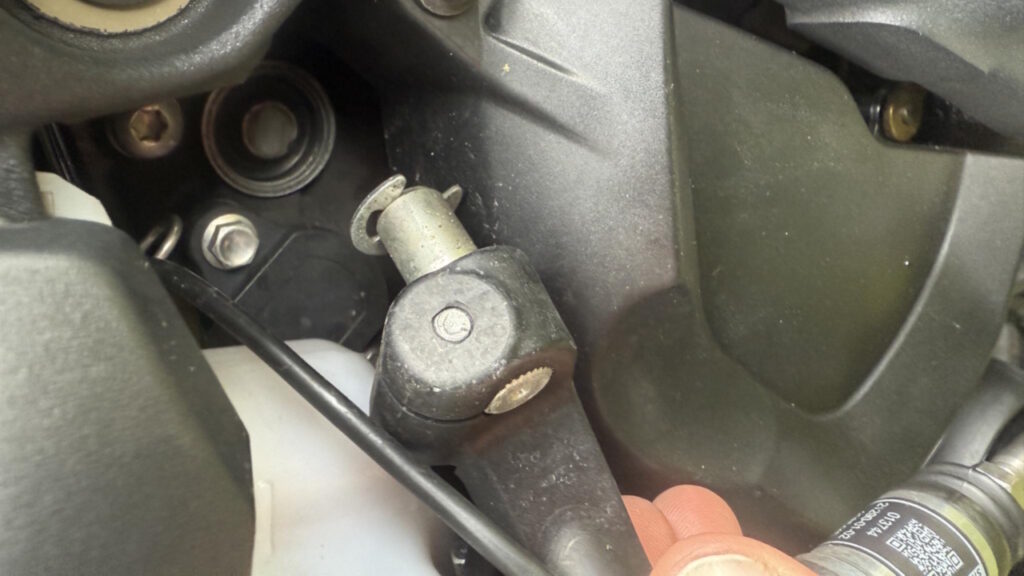
This happened before all of Fred’s issues so does show prior knowledge by Triumph, and the lack of a consistent response is just wrong in my opinion, when one guy gets things replaced no questions, and another hits a brick wall even trying to discuss the issue, something is going very wrong.
Kevin Gray had the detent spring done on a recall in the UK but afterwards the clutch seemed to be grabbing on release. He asked if anyone else had suffered this problem, and I thought about Fred’s adaptations in the clutch again.
Kevin had only taken the bike in for the heat fan shield to be done, and they told him the detent spring had to be changed at the same time.
2 people immediately jumped in with the question “what recall” and that is again caused by Triumph being less than great at announcing recalls.
It is down to owners to check if their bike needs a recall in general, many dealers just don’t want to check the records.
Chris Way repeated, “I’ve got the same but only when it’s cold. Once it’s hot the clutch is fine”.
Is that OK?
Colin Lyders said “yeah mine’s the same”.
Alan Youdale weighed in with “Yes, The issue is part number T1179696, The coating comes off and the clutch becomes grabby. Just fixed mine”
So we have a whole pile of low mileage Triumphs that are having many similar if not identical problems, some have been fixed, others not. So a real lack of consistency when it comes to responses from Triumph.
Bad engineering like hollow valve stems and elongated selector shaft overhangs. Poor quality parts badly fitted in the factory and a don’t give a damn attitude by Triumph and their network of chosen distributors and dealerships, and a particularly nasty distributor in Australia to name just one.
In the last video about the quick-shifter there are so many comments from people about other different problems on various different models, if I listed them all this video would never get finished, so do go and look through the comments on the video yourselves. Make your own mind up.
This is a manufacturer that trades on its British heritage, but builds its bikes in Thailand and India. And if you are one of the people who is still in denial about that, and believes it is only the low end bikes in the range built there, try watching the video where Itchy Boots first enters China and meets the guy who is helping her navigate and explore the country.
He is riding a Triumph 900 Explorer and grins widely as he says it is made in Thailand. He also talks about how it is too heavy and that he will be replacing it to, but that is a different story.
Triumph trade on talk of quality and service, but all too often, it doesn’t back that up.
They also loves using non standard size parts so they can charge a fortune for simple bearings and seals, and then doesn’t stock enough, so there are often long waits for parts.
That doesn’t mention their love of non standard “special tools” either, or electronic software guarded by a battalion of firewalls to prevent anyone doing anything to them without a serious battle.
The astronomically priced Triumph branded clothing and extra’s that they sell to unsuspecting idiots who can’t see past the marketing bullshit. Because after all, they aren’t just a brand, Triumph is a lifestyle as the so often tell you.
One guy on another 900 Rally Aragon edition had spokes come detached at one end during a tour of Spain, and Triumph simply said no one in Spain could sort it out, so the bike had to be left there, ruining a Holiday, and adding to the problem because they refused to repatriate the bike under their comprehensive care package, necessitating a return trip to collect what was another expensive new bike.
Numerous people have suffered with bad cams on the new Bajaj built 400’s at very low mileage, and the list goes on and on.
These are not isolated incidents, this is a systemic problem, and for once we can’t blame venture capitalists in a publicly traded company, because John Bloor is still the 100% owner of Triumph, and shares aren’t publicly traded, at least for now.
But something is going very wrong.
As a long time Triumph owner I know what their bikes can be like. The bikes CAN be a joy to ride, but there is always a BUT somewhere, and often that BUT means a long time looking at a useless piece of metal wishing it was a running bike again.
I do think we as riders are in some ways Part Of The Problem too. Many people do low average yearly mileage and so a lot of bikes are out of warranty before major servicing is done, and before any major work needs doing, or big problems are discovered.
The number crunchers work out how many failures are considered acceptable, and the companies rely on the bikes being sold on before problems come up, so it becomes harder to place the blame squarely on the shoulders of the manufacturer, and yes I said companies, because this isn’t as simple as a Triumph problem.
It is becoming an industry wide issue.
We as riders accept failures too easily!
Why is it considered OK that the Triumph quick-shifter is just built badly? And that the selector shaft is so feeble it needs an aftermarket support so the quick-shifter doesn’t snap the shaft off?
Companies extending service intervals to stupid levels so they can shout about it in marketing literature is an issue too, and people believing a 15,000 mile gap between oil changes is OK just shows how ignorant they are.
Leaving any bike engine 15,000 miles between oil changes is sheer stupidity in my opinion.
So, in the title I ask what the FREAKIN HELL is going on at Triumph, and from all these tales I can only imagine what conversations are happening in the corridors of power there.
One thing I can say and will, is that they have a marketing department that I despise and a catalogue of products and level of service that not only falls a long way short of what they say, but shows a complete disregard for the riders who pay their wages and bonuses every year.
Remember, more doesn’t equal better, whether that is different models, branded clothing or extras.
You can draw your own conclusions on this one, but I for one can never see myself dealing with them again now.
This has taken months of digging around and I tried so many times to get Triumph to comment I simply gave up in the end.
Triumph UK just passed me over to Triumph Australia, and PSI the importers there were just impossible to deal with.
They have an atrocious attitude, and did have from my very first contact with them, hence why I have no shame in naming them, or Team Moto Virginia, and Olivers Triumph. Both of these dealers and Peter Stevens Importers, showed a disregard for customer service, and a level of ignorance and incompetence that is hard to fathom.
When Triumph allow this to happen in any country, they only have themselves to blame when customers walk away.
And I’m sorry if this has offended you and your pride and joy, believe me, I wish these issues were less common and I could still wax lyrical about the build quality and performance of Triumph motorcycles, but this is the real story, and it needs to be said.
Does it mean every Triumph will suffer the same fate?
No of course not, but just as LC8C engine owners, Triumph owners should be aware of the risks involved in any purchase. These faults are just too common.
Top shelf Showa forks should not cause these problems, and quick-shifters should not limit the life of your clutch selector shaft. Any more than dealers shouldn’t shear a wire when they are putting your bike back together, and that’s not even going into the use of hollow stem valves and non reusable bolts.
If you are going to use hollow stem valves, at least do it on both sides of the engine so it CAN rev faster, and be honest about how often they will need replacing.
Personally, I would say poor quality control, poor metallurgy, and basic design flaws all play a part here, and in this case and others, the back up from both Triumph and the dealers was on a whole new level of bad as far as I am concerned.
So there you have it.
This is what you are buying into if you buy any new Triumph, even a new top of the range bike, so be prepared.
Yes, they CAN ride great, but that, is only part of the story.
I know there will be some challenging comments on this one and I will as always try to reply to them all, but be patient, it can take time, and remember to be courteous.
I have thick skin, but Youtube doesn’t even let many comments through if they consider them less than courteous, and if you cant be civil, it is usually better to keep your mouth shut.
I do look forward to reading about your experiences, both good and bad. And I will reply as soon as I can.
Thanks for watching, especially if you got right to the end.
I know this was an epic, and I appreciate that it isn’t the nicest video to watch from an entertainment perspective, but we do need to get problems like this out into the public eye, or they will keep getting worse.