Ayup everyone,
Well I’ve had various conversations in the comments and have seen a few rant videos recently about how expensive motorcycles are these days, and in some ways I agreed with them, but it made me think and so I decided to look at the reality of motorcycle prices rather than just going by gut instinct and ranting along with the rest.
The results were a surprise to say the least.
First, I have to state the obvious, there are some motorcycles out there that I do consider massively overpriced. I will come to that, but I want to look at a cross section of bikes and maybe more importantly, at the industry as a whole.
We do have a mad licencing system in the UK these days which isn’t helping to attract young riders, but I said a few years back in the videos linked in the description that I thought the industry could do more to attract young riders, and that there was a dearth of small affordable bikes.
Things have begun to change since then, and I welcome that, but I thought it would be interesting to look at the issues around the affordability of motorcycles.
Every man and his dog seems to shout about motorcycles being expensive, but are they really? Or is it other factors that make them seem more expensive?
I’ve mentioned the UK licencing system and to be clear it is expensive and not helpful in attracting new riders. The latest limitation on CBT repetition is an interesting one too, because on one level I completely agree with it, but on another it means people who genuinely can’t afford to pay for an A2 test can only ride for 2 years.
If someone fails their car test consistently, they don’t have their provisional licence taken away after 2 years, so why does it happen with bikes? It is yet another thing that threatens the entry of new riders into the world of motorcycles.
But for now, lets concentrate on the bikes, because as has been talked about many times, motorcycles were once seen as cheap affordable transport for many, and for the majority of us that developed into a life long passion.
Have the days of cheap affordable motorcycles gone? Or is it still possible to see motorcycles in that way?
Is it simply a shift in perspective that is needed?
I will look at bikes from different era’s to compare the changing tide of motorcycle pricing, but let us remember, that the 70’s and 80’s were the years that the Japanese turned the worldwide market upside down, so I will be looking at prices of Japanese and European brands. I will include some US pricing as well as the UK, but I have to rely on research for that, so if I get something wrong, correct me in the comments but don’t crucify me, I’m only human.
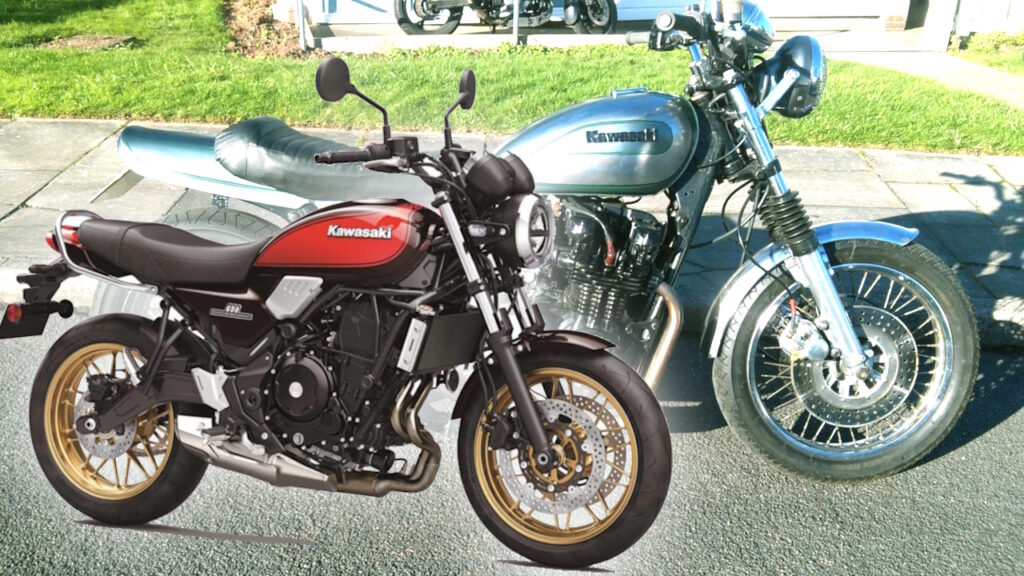
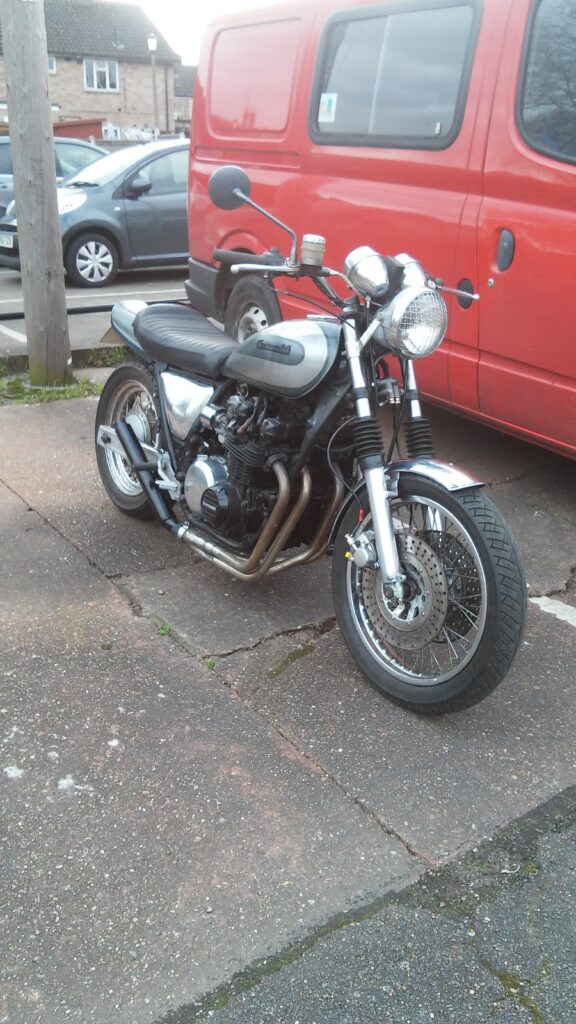
Let us start with a fairly average example today. The Kawasaki Z650 is a solid reliable bike today in exactly the same way as it was when it first rolled into our showrooms back in 1976.
Now, in the UK the prices start at around £7,800 and in the states it looks like around $9,000. Accounting for inflation that £7,800 would have been the equivalent of around £850 in 1976, and in the states the $9,000 figure would have been around $1,600.
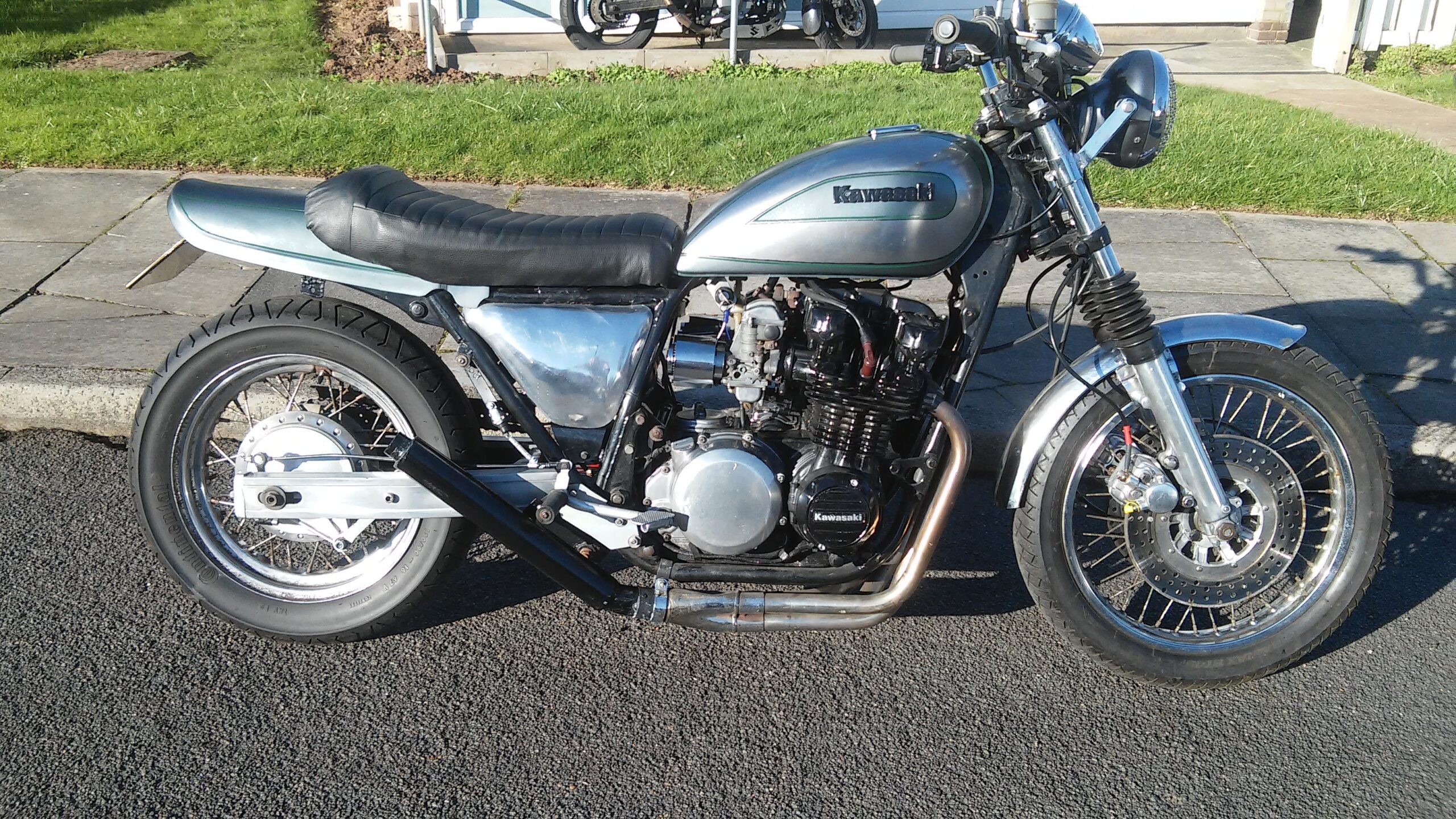
That difference is caused in part by the different inflation figures, but let us look back and in 1976 when the first Z650 was released, it had a retail price of £1,075 in the UK and in the USA it had a retail price of $2,000.
And yes I know, the old air cooled Z650 was a 4 pot and the new water cooled one is a twin pot but the reality is that stock they produce around the same power and for once the new version is lighter.
So, again accounting for inflation, the price of the old Z650 would be around £9,800 in the UK today, and about $11,300 in the USA.
That wasn’t actually what I thought would be the result of this little experiment in maths to be honest, so I thought I have to try a few more bikes to see if that was just an anomaly.
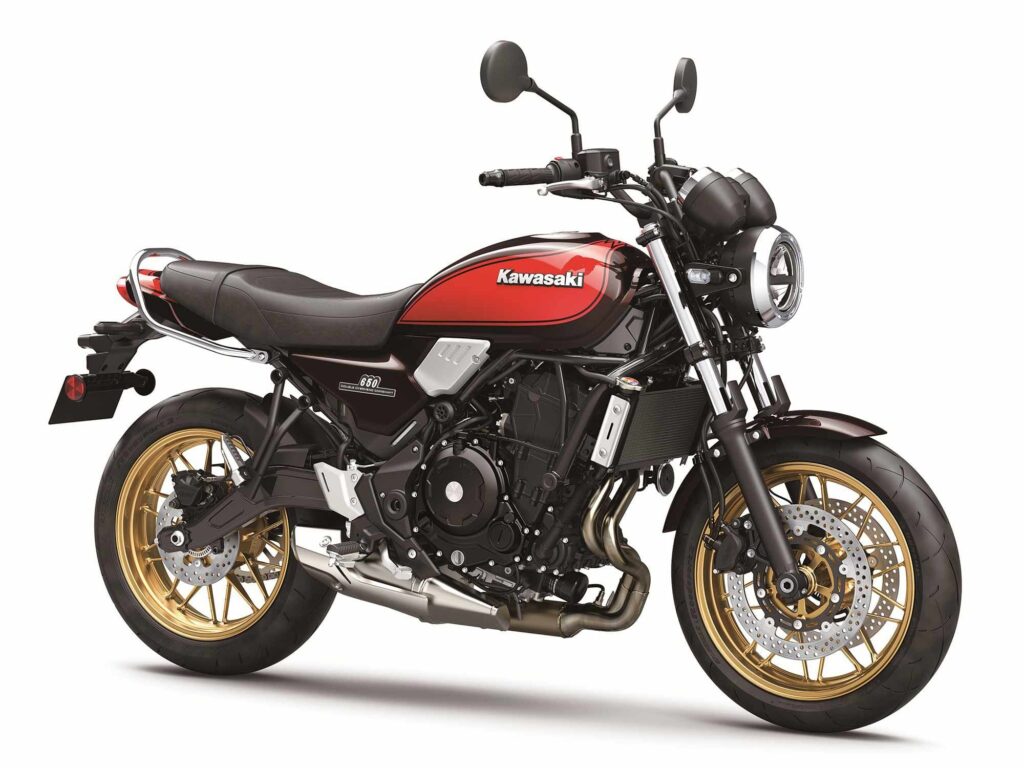
But a question. Would you pay almost £10,000 or $11,300 for a 67HP 210kg air cooled 4 pot 650 today? Even one designed by the genius that Ken Inamura was?
If you could get a lighter cheaper twin pot that produced the same power for £2,000 or $2,300 cheaper, would that one be your choice?
My next thought was to compare the various 400 singles today with the fantastic Suzuki DR350, and I have, but I did come up against the woeful search engine results we are left with today and it wasn’t easy.
There was a time not so long ago that finding the MSRP of a bike from the 90’s wouldn’t have been so hard, but now it just assumes I actually wanted the answer to a different question, and no matter how hard I tried I could not find retail prices for the first few years of the DR350’s production.
Eventually I found an RRP in the UK of £2,299 in 1992 and in the USA an MSRP of $3599 in 1993. Today that would mean £6.080 in the UK and $8,000 in the USA.
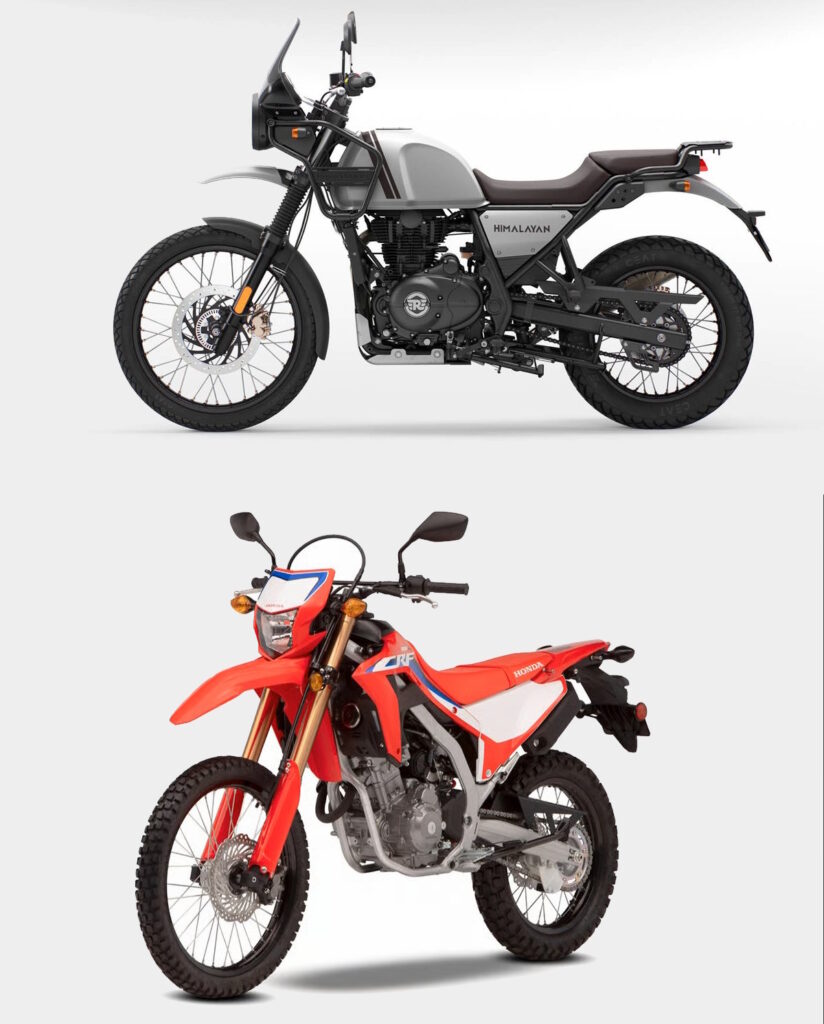
Today we have the Honda CRF300 at £6,000 in the UK and around $6,000 in the USA , the Royal Enfield 450 Himalayan at £6,000 in the UK and $6,000 in the USA, and the Triumph Speed 400 at £4,995 in the UK and $4,995 in the USA, so the one thing that is consistent, is that smaller capacity bikes are cheaper in the USA than they are in the UK.
Why is that?
Make of it what you will, it means that believe it or not, all the small capacity singles I’ve mentioned are significantly cheaper now in real terms than the very budget friendly Suzuki DR350 of the 90’s would have been.
You can see by now this wasn’t maybe going the way I had expected and both of the bikes I had started with were Japanese bikes built during the years we called them Jap Crap, so I had to try again, and this time I thought ok, let us think of 2 European bikes to compare and I went for the Moto Guzzi V7 and the BMW R90.
In 1975 the BMW R90 came in 2 variants and as far as I can find out, retailed for around £1,800 in the UK and just over $3,500 in the states but that took some finding and I can’t guarantee its 100% right.
I guess if it is then that is a good example of how sometimes we get things cheaper than the USA.
What it would mean is that today in the UK the BMW R90 would be £19,000 and in the USA, around $21,000.
In 1973 the Moto Guzzi V7 retailed for around £1,200 in the UK and about $2,500 in the states but again that took some finding and I can’t guarantee its right.
What it would mean is that the old Moto Guzzi V7 today would cost around £18,500 in the UK and $18,000 in the USA.
Today the latest Moto Guzzi V7 retails at £9,000 in the UK and around $11,000 in the USA, and the BMW R12 nine T goes for £14,500 in the UK and $16,500 in the USA.
So all my ideas of bikes being more expensive today than they used to be has been well and truly blown out of the window across the street and past the next town.
How wrong we can be eh.
Yes, bikes like the Ducati Panigale V4RRR SSP12 special gold series carbon edition is expensive. At around £90,000 or $100,000 it will make a big hole in any bank account, but it is just a rich boys toy and not really very representative of anything.
Back in 1975 that would have been £8,400 in the UK or $16,800 in the USA.
So if we think about the £1000 price tag of the Z650 when it was released, the Ducati would be over 8 times the price of the Z650 both here and in the states.
Today you could get at least 10 of many bikes and very many more of others for that price.
Most of the higher end bikes back then were sub £2,000 here and certainly below $3000 in the states, unless we are talking MV Agusta or one of the other really exotic brands.
That would price them around £21,500 here, and $18,000 in the US today, so a pretty solid equivalent of today’s pricing I would say.
Today I can buy a solid reliable 650 single adventure bike from Voge for £5,000 brand new with all the luggage and the brand new model 600 twin cylinder version comes in below £6,000.
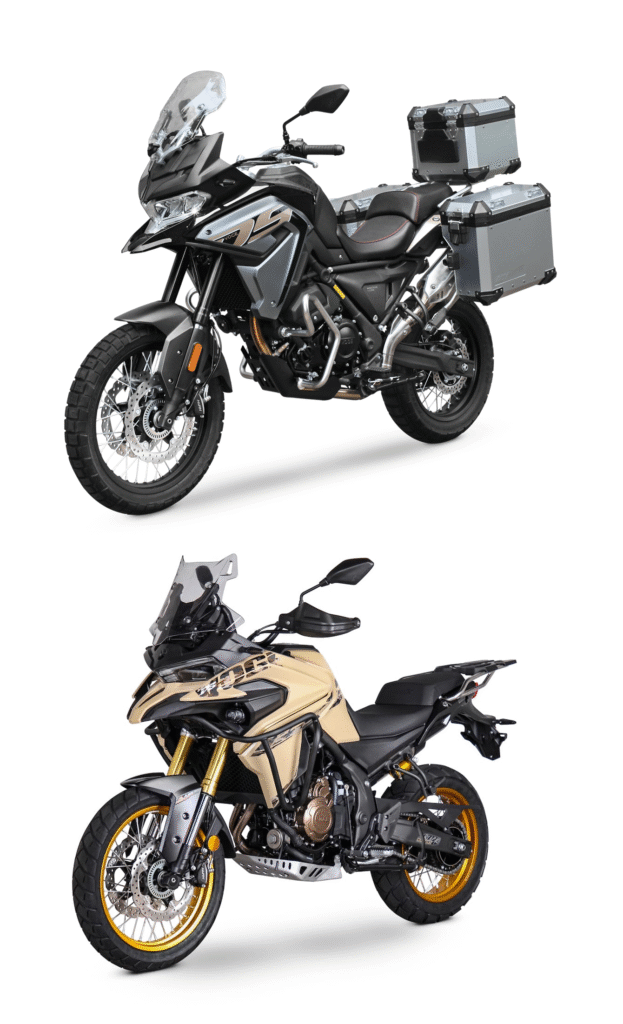
In 1976 that would be £460 to £560, so around half the price of the Z650 and about a quarter of the price of the BMW R90.
So what is it that makes it seem to us that buying bikes is so much more costly than it used to be?
Because I do think that is the most commonly held opinion among the many bikers I have spoken to about it in recent years.
Well, one thing I noticed was that during the calculations covering the early 70’s I kept getting some very extreme conversions, and then I realised that in the UK there was a lot of political turmoil at the time with what was described as runaway inflation, so that did probably affect some of the UK pricing results, and it got me thinking.
Then when I was doing one of the calculations, the inflation calculator I was using, proudly announced that since 1975 the UK pound has lost 90% of its value.
Now my initial thoughts were surely that can’t be right, but it made me dig and I ended up down a very deep dark rabbit hole.
Just as when calculating averages, inflation can be calculated in different ways to achieve different results depending what the agenda of the people doing the calculating is. What it showed me is that both here and in the states, and I assume most other countries, it is not just the level of inflation that has affected pricing, but the loss in value of all the currencies we have been using over the past 50 years plus. Yes the 2 things are related, but the cumulative effect is the killer here.
When I actually tried to find some definitive figures about how much the dollar, pound and others have lost in real value terms over the years it was surprisingly difficult to be honest, but I guess there are some numbers that the powers that be don’t want talked about.
Beyond that, obviously over the years we have had the use and expansion of the credit system and financing deals for everything, including motorcycles. I was brought up with the idea that if you wanted something badly enough you saved, often making sacrifices, until you could afford to buy it.
Now, pretty much any man, woman or adolescent can get a finance deal on any motorcycle they want. Dealers have become little more than finance brokers much of the time and maintenance and servicing beyond basic plug and play tasks are beyond the skill levels of the techs they employ, who I won’t call mechanics because most of them aren’t.
They plug the laptop in, the laptop says this part wrong, they swap it and hope the fault goes away and repeat ad infinitum without really knowing much about what they are really doing.
And yes, there are exceptions, but they are getting rarer by the day.
That brings us to what I can only call a sense of entitlement. You see, back in the day very few of the people I knew bought new bikes. We couldn’t afford them in general. We were glad to pick up that cheap wreck and do it up because that was the only way most of us got on the road. We started on small bikes and gradually worked our way up.
Now people have been convinced that the only way of owning a bike is to go and sign on the dotted line of some PCP agreement which means they will never actually even own the bike, and they are sold bikes that are far too big for a beginner. This can often put people off long term because the learning curve is so much steeper.
So the customer gets a bike they have paid a lot of money for, and it is restricted until they have passed their test, and by then the PCP agreement is up and they either want another different bike anyway because they are already on the roundabout of credit.
That means they never have the chance to develop that same emotional attachment we did, but that is a different story, but it means they are always looking at bigger more expensive bikes than they actually need.
And the marketing teams of the various companies feed that urge constantly.
Back to the question of how expensive motorcycles really are though, the elephant in the room is something that is again much less talked about than many economic issues and that is the value of our wages.
The reality is that in the past, wages were always linked to productivity, but with the advent of automated manufacturing and computer control systems the per person productivity has skyrocketed, but that wasn’t and still isn’t reflected in most peoples wage packets.
Inflation has consistently risen throughout the world, even when it is not rising so quickly. The prices never seem to go down do they? Just the quality. So there is no respite from the deficit created by that increase. Add to that the fact those figures are constantly manipulated to try and create a feel good factor and you begin to see how much the cumulative effect really is.
One year with a 5% inflation rate is one thing, but ten years with compound inflation means that any money we have is worth less and less every second it is in our possesssion.
Then we have the fact that even in the good years, over the last 50 years plus, wages have NEVER risen in line with inflation.
So, Prices of everything always rise faster than our wages rise, AND the currency they pay us in, is worth less each year too.
Production has been streamlined and costs cut to keep prices just in reach, but instead of complaining about how expensive bikes are these days, maybe we should be asking the question, “why do motorcycles feel more expensive today” instead.
They feel more expensive, not because they are, but because we are getting paid less and less in real terms every year, while all the time being convinced we are better off and that we need bigger and ever more expensive motorcycles in order to really have fun.
I call that Bull crap.
So maybe next time you go to say “motorcycles are so expensive these day” maybe we should all really be saying, “why are our wages worth so much less than they used to be” instead.
I will leave you with that thought for today.
Cheers for watching.
I can’t wait to hear your comments