
Today we have another epic. I am going to look at the big players in the motorcycle industry and how the big Japanese manufacturers sit today in the changing world of motorcycle sales.
Honda, Yamaha, Suzuki and Kawasaki as the big four have been seen as the dominant force in the motorcycle industry for a long time now, but it wasn’t always like that.
To start I will look at the changing face of the industry and who the big players have been over time.
This historical context will show you that despite what you might think, the dominance of the big four has fluctuated a lot since they began to flood western markets in the 70’s and 80’s.
They may once have been the biggest 4 motorcycle manufacturers on the planet, but are they still today?
Do they still hold the biggest influence globally?
After that, I will look more closely at both global and UK sales in the last year or 2, to try and understand better where we are heading, and what the future holds for the industry we all love so much.
A quick reminder if I may, try and remember to like the video if you enjoy it, and subscribe to the channel if you haven’t already.
Sharing the video anywhere you think people will be interested helps us a lot too.
I will explain how you can help support the channel more later, but for now, Let’s dive in to see who really are the big four now.
A historical analysis
I will put a link to a video of the changing tide of motorcycle sales in the description which goes back much further, but here I will begin in 1970, just as the Japanese were growing.
Back then it was actually Royal Enfield who had the biggest overall cumulative revenue. Partly because they had been going the longest and partly because of the vast market in India, where the company traded independently.
Second biggest was Harley Davidson and the difference was quite small. Kawasaki had initially taken a big chunk of the market and sat in third, but it may surprise you that their future partner, Bajaj, were sitting comfortably as the fourth most profitable motorcycle manufacturer in the world.
Piaggio sat in fifth because of their massive scooter sales network, and their deal with Bajaj in India, but that was soon to end. Suzuki came in sixth, just ahead of Honda in seventh and Yamaha in eighth.
BMW and then Ducati rounded out the top ten, and I find it interesting to see that even back in 1970, you could say that Bajaj were one of the most influential manufacturers in the industry.
By 1975, Bajaj had grown to become the second most profitable brand behind Royal Enfield, with Harley Davidson dropping to third place and Honda climbing up to fourth.
Yamaha were in fifth now, and Kawasaki had been pushed down to seventh, with Ducati rising to a surprising sixth most profitable motorcycle company.
With the top ten finished off by BMW, Piaggio and Suzuki.
By 1980 Although Royal Enfield still sat at the top, this was almost solely based on the sales through the 50’s and 60’s. On the success of the 900SS, Pantah and Darmah, Ducati had risen to become the second most profitable brand by the end of that year.
Bajaj were in third and Yamaha fourth, with Harley in fifth, Honda in sixth and Kawasaki in seventh.
There were no changes at the bottom, with BMW, Piaggio and Suzuki finishing of the top ten again.
It may surprise you that even in 1985, with a fairly minor market outside of India, Royal Enfield were not only still at the top of the table, but were now extending their lead when it came to profitability.
They still sat at the top, but Harley had climbed back up to second on the table.
Ducati rounded out the podium in third followed by Honda who had jumped up to fourth and Yamaha, fifth.
BMW moved up to sixth on the table, with Kawasaki seventh, Piaggio were down to eighth, with Bajaj ninth and Suzuki at the bottom in tenth again,
by 1990 Honda’s continued growth had finally taken them to the top spot as the most profitable motorcycle company, finally passing Royal Enfield’s cumulative sales which had slowed down dramatically.

Hero, bouyed by their partnership with Honda were now in second with Enfield pushed back to third.
Yamaha were fourth, and a newly relaunched Triumph brand jumped into fifth.
Kawasaki were sixth and Ducati had dropped down to seventh. Harley were down to eighth, Bajaj ninth and Suzuki down in tenth still.
The re entry of Triumph pushed Piaggio out of the top ten and did shake the market up, but by 1995 there were more changes.
Yamaha wanted the number one slot, and a push through the early 90’s meant that they took the number one slot. That pushed Honda down to second and Hero down to third. Kawasaki were fourth and Triumph fifth, and these 5 were all well ahead of the rest.
Bajaj, Royal Enfield, Suzuki Harley Davidson and Piaggio finished off the top ten, all with very similar cumulative profits as you can see in the slide.
The top five remained the same up until 2000, with Yamaha, Honda Hero Kawasaki and Triumph still significantly ahead of the rest.
Bajaj were closing in sixth and Suzuki were up to seventh. Then came Piaggio, and then BMW came back in ninth, with Harley Davidson close behind, pushing Royal Enfield out of the top ten after many years at the top.
Finally, in 2005, we saw what we call the big 4 at the top together.
Yamaha were still just ahead of Honda, with Kawasaki third and Suzuki up to fourth. It had taken over 30 years of dedication and determination, but the Japanese were well and truly established at the top at this point.
Hero were the closest in fifth with Triumph loosing ground on the leaders in sixth.
Bajaj, Harley Davidson and BMW were all all close behind, and although Piaggio hung on to their top ten spot, they were falling behind.
By 2010 Honda were back at the top with a significant lead over Yamaha in second and Kawasaki third, but Hero were back in the top four ahead of a resurgent Harley Davidson in fifth and Suzuki were the big losers being pushed down to sixth.
Bajaj, Triumph, BMW and Piaggio finished off the top ten this time.
2015 saw Honda extending their lead and only Yamaha could keep pace with them in second. Harley followed in third and Hero were still fourth, but now it was Bajaj up to fifth.
Triumph were sixth ahead of Kawasaki and BMW, with Suzuki down to ninth place ahead of a new face in the top ten. KTM had finally entered the big league.
2020 saw no changes at the top with Honda leading Yamaha, followed by Harley and Hero. Kawasaki and Suzuki were fifth and sixth, followed by Bajaj, and BMW.
TVS pushed their way into ninth, and the big orange machine was still in tenth.
Bearing in mind these are cumulative figures, by 2024, before the announcement of the debt pile at KTM, the big orange machine were still showing at the bottom of the top ten in all time profits, but we know now that wasn’t reality.
Honda and Yamaha were still way ahead at the top. Hero were third but now Bajaj were up into fourth. Harley were in fifth slightly ahead of Kawasaki, with Suzuki in seventh and BMW eighth.
TVS and KTM sat at the bottom of the top ten, but this is where I will start looking at the yearly sales figures rather than the cumulative profit.
Recent yearly analysis
This yearly analysis will help us see where the industry in now rather than looking at the historical figures.
In 2024, global sales meant that Honda were still the undisputed leader. They sold 19.4 million units, showing a 6% increase from the previous year.
Hero MotoCorp were in second spot with 5.9 million sales, up 6.9%, and Yamaha were in third place with 4.6 million units sold, that was up 4.2%.
In 4th we got Yadea, the big Chinese manufacturer specializing in electric vehicles, Yadea experienced a slight decrease in sales, but still sold 4.3 million units. That was down 13.0% on the previous year.
TVS came in fifth with 3.7 million units sold, up 12.6%, and Bajaj were in sixth place with 3.1 million sales, up 9.3%.
Suzuki held onto seventh place with 2.0 million units sold up 6.1% and Mexican giant Italika broke into the top 10 with 1.3 million units sold, showing a significant increase of 35.8%.
Zongshen occupied the ninth spot with 1 million units sold, up 3.4% and Royal Enfield finished off the top 10 with 948,000 units sold, up 5.1%.
Profitability is a complex issue, especially when you have company structures that are intertwined.
Voge may make a loss, but that would just change the overall profitability of the Loncin group, Norton have made massive losses, but that is on the investment that TVS has put into the company, building new factories and investing in the production of a whole new range.
I do have some, but not all the profitability figures, and they can be misleading. Especially with anomalies like the overstocking and pre registering of non Euro 5+ bikes in December 2024. This increased the sales figures massively for that month, which inflated the years figures, but it has had the effect of flooding the market, and so dealers have been discounting to try and get rid of the overstock.
The brands I do have figures for profit for in 2024 are as follows.
Ducati reported a revenue of over €1 billion Euros or $1.16 billion dollars, for the third consecutive year. That gave them an operating profit of €91 million Euros or $106 million dollars. That equates to a 9.1% profitability rate. While revenue was slightly down from 2023’s record, it demonstrates continued strong performance.
Harley-Davidson delivered diluted earnings per share (EPS) of $3.44 and an operating income of $278 million, with an operating margin of 6.7%. But global motorcycle shipments were down 17%, and the company’s Q4, unlike with the European brands, saw a significant revenue decline and some serious operational losses.
Despite this, Harley-Davidson Financial Services (HDFS) segment saw increased income, but then MoCo decided to sell part of that off.
Dealer inventory levels have decreased though, which is positive.
Yamaha hit an all time record high for revenue in 2024, but experienced a drop in operating income for the first time in four years. This was blamed on increased costs and adverse market conditions in certain sectors.
Revenue was 2,576 billion yen or around $17 billion dollars, an increase of over 161.4 billion yen, equivalent to $1.0 billion dollar increase, up 6.7% compared with the previous year.
For 2025, Yamaha are looking to increase that net income, with revenue expected to reach 2.70 trillion yen, which equates to $18 and a quarter billion.
Kawasaki Heavy Industries who don’t feature in the top ten, also reported a record business profit of 143.1 billion yen or $968 million dollars for 2024 and anticipates even higher profits in 2025, but you can see from that comparison how much of a small player they have now become. Yamaha generate 18 times the profit of Kawasaki when it comes to motorcycles.
In summary, while brands like Ducati and Kawasaki demonstrated strong profitability and growth in certain areas, the overall motorcycle industry faced many challenges in 2024. Many companies experienced both declining sales and profits.
However, with many new manufacturers entering the global market this was all but inevitable among the more established brands as their market share is watered down among other new brands.
The UK and Europe.
If we combine the EU+UK market, it grew by 1.3%, but the UK was the worst-performing of the five biggest European markets, with a 4% drop in overall sales.
Italy and Spain saw the biggest growth, with Italy’s sales increasing 5.3%, and Spanish sales up 6.1%, while Germany saw a 2.7% drop in sales, and France also saw a 2.2% drop,
The biggest drop of all was in the sale of electric bikes which just didn’t take off anywhere except France. France saw the market grow by 2%, but that is only when measured against a 2023 drop of almost 15%. so it was still 13% down on the 2022 figures.
Germany’s electric bike sales were down a massive 46%, and in Italy they were down 30% and Spain down 25%, so to all intents and purposes, the electric motorcycle market in Europe looks all but dead now.
Looking at Global Motorcycle Sales for 2025
In the first quarter, we got the highest sales figures from any first quarter ever reported for the global motorcycle industry. However, only half of the top 10 brands reported sales growth, So sales are obviously being split between more different companies than has happened previously.
Remember though, these figures are the number of bikes sold during the first quarter of 2025, not the profit made.
Honda remains the undisputed leader with 4.9 million sales, up 5.2% on 2024. Their fastest growing market was in Mongolia, where sales were up an unbelievable 7500%, so I am guessing they have just entered the market there. Bosnia was also up 312%, and Chile up 165.3%.
So despite everything, Honda are still breaking new ground.
Hero come in second, with 1.36 million sales, down 2.1% on 2024. New growth for them was in Latin America, with 131.4% growth in Argentina, 112% in Colombia, and 68.4% in Peru.
Yamaha: were third with 1.15 million sales, 2.0% down on 2024, but they had strong growth of 87.6% in Nicaragua, 83.3% in Moldova, and 81.8% in Albania.
I think it will come as a surprise to many that it is actually the TVS Motor company from India who come in fourth with 962,262 sales, up 9.4% on 2024 figures.
They overtook Yadea to claim 4th place, and Vietnam, Argentina, and Peru were their biggest growth markets.
In fifth, despite the lack of sales of electric bikes in western markets, Yadea from China had sales of 781,543, that was down 5.7% on 2024. The EV specialist is struggling in its domestic market but its foreign operations grew by 54% despite the drop in European sales.
Bajaj were sixth with 729,258 sales, 1.9% down on 2024. Their fastest growing markets were Indonesia, up 367%, Brazil up 249%, and Poland up 200%.
Suzuki had a bad year in 2024, but came in seventh with sales up 2.7% at 507,510.
Royal Enfield in eighth had sales of 273,002, 22.8% up on 2024 making them the fastest-growing brand of the Top 25.
Haojue from China sit at ninth with 262,821 sales, down 4.0% on 2024 and
Italika from Mexico finish off the top 10 with sales of 254,113, up 2.9% on 2024.
The market I know best of course is the UK.
Here themarket had declined from 2022 to 2023, but only by 2.5%, from 116,534 sales in 2022 to 113,589 sales in 2023.
This was mainly blamed on the cost-of-living crisis and high interest rates. Results had looked much worse, but in December 2024 the market saw a massive 114% surge in registrations compared to December 2023.
This Anomalywas caused by manufacturers pushing dealers to pre-register non-Euro 5+ compliant stock before the sales deadline.
This late surge pushed the full 2024 years registrations up to 116,399, a 2.5% increase over 2023 figures and almost up to the 2022 sales figures.
Overall, sales were up 0.1% on 2023. This seems to indicate the decline had been stopped, but it couldn’t yet be seen as a recovery.
Several major dealer groups, including Completely Motoring, Thunder Road Motorcycles, Pidcock’s, and Marsh Holdings, all went into administration in late 2024.
The reasons given included rising interest rates, reduced consumer spending, the seasonal nature of the business, and low profit margins on the increasingly popular small-capacity bikes.
This is not what the manufacturers want, but there is a “genuine shift” towards smaller-engined, cheaper bikes in the UK market.
In the first half of 2024, the list of top-10 bikes over 125cc contained five sub-500cc single-cylinder machines.
That is a significant increase from two in the 2023 top ten.
Affordability, is the driving force here, with lower running costs being the biggest driver.
Company reports show that they see aging riders are getting disillusioned with heavy, overly powerful and expensive motorcycles and are moving to smaller capacity bikes.
Segment by segment performance was interesting too.
Adventure Bikes were once again the most popular category in the UK, sales were up 11% on 2023 figure, but it was surprisingly the Sports Bikes sector that showed the best growth, with a strong comeback after years of decline.
Sales were up 16.7% on 2023 figures, but that growth was driven by an up turn in sales of smaller capacity sports bikes. It was bikes like the Suzuki GSX-R125 and GSX-8R that were the ones driving the new sales, not the litre-class superbikes that used to rule the market.
Sales on Naked Bikes were down 11.1%, pushing them down below adventure bikes in the popularity stakes.
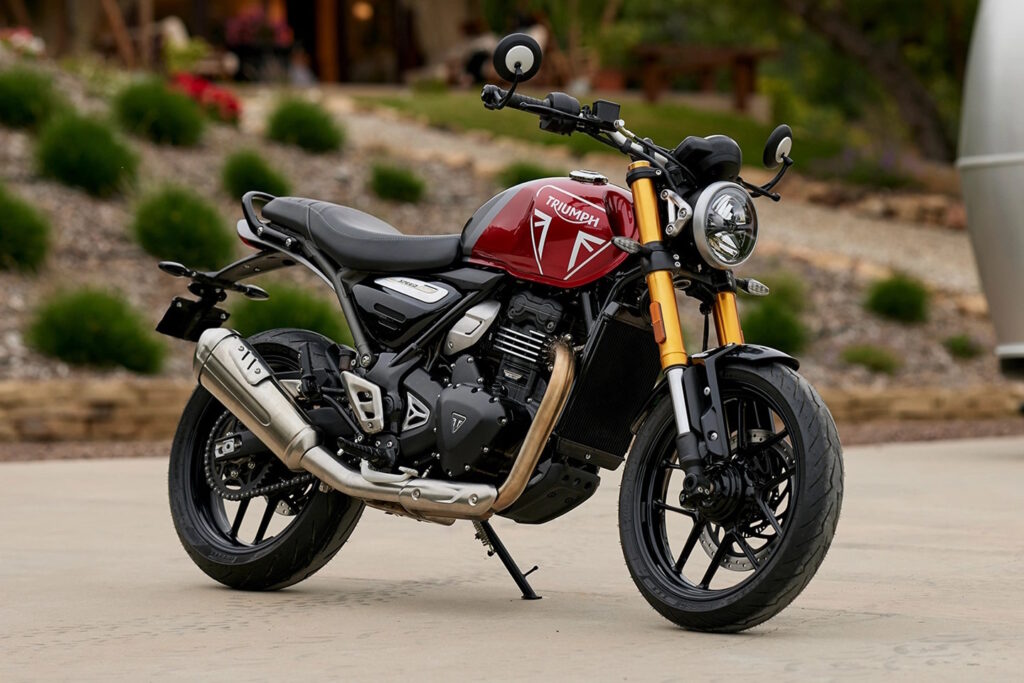
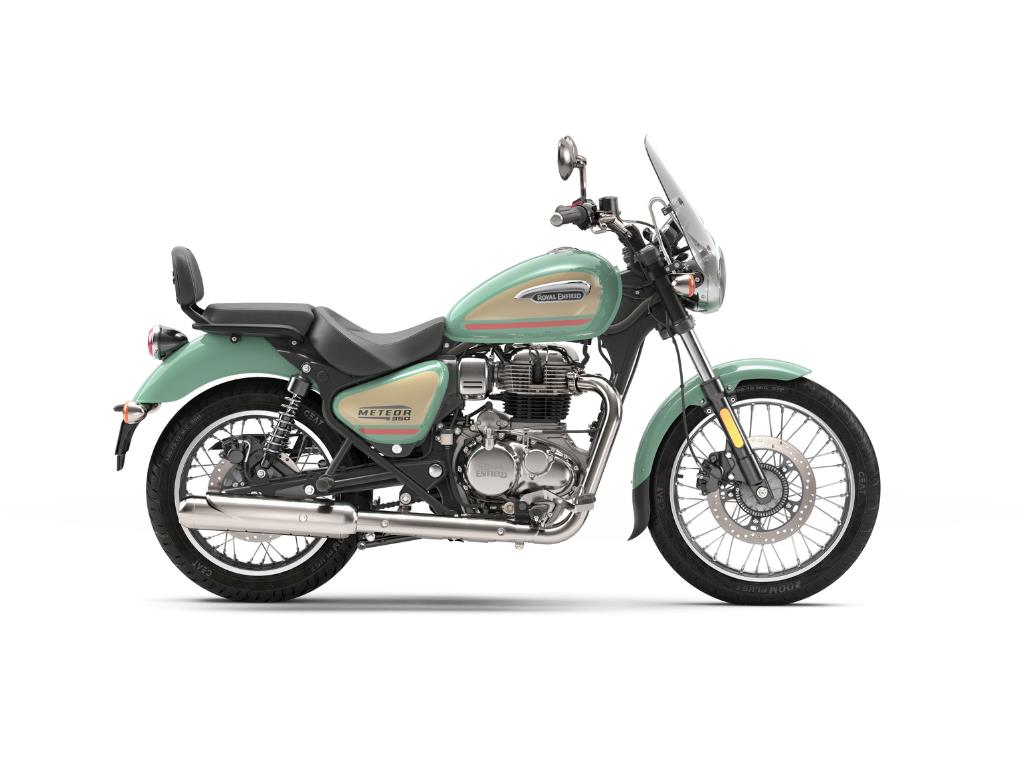
Modern Classics saw growth slowing too. The best-sellers here again are now small, single-cylinder models like the Triumph Speed 400 and Royal Enfield Meteor 350.
Electric Motorcycles suffered a “nightmare” year in 2023 with a 37.8% drop in sales. They showed a small recovery in early 2024 with 10.4% growth, but with sales figures of just 1,188 units between January and April, they still generated less than half of the sales they did during the same period in 2022.
Here, the decline is blamed on reduced government incentives and competition from the largely unregulated e-bicycle market.
Model by model, the best selling bikes on the UK market in 2023 were as follows.
First, selling 4,013 units was the Yamaha NMAX 125 scooter
Second, selling 3,209 units was the Honda PCX 125
Third, selling 1,771 units was the Honda CBF 125. However, first of the big bikes came in fourth, sort of.
You see in fourth was the BMW R 1250 GS Adventure selling 1,697 units, but then in fifth we have the BMW R 1250 GS which sold 1,153 units.
That means if counted them together, that would mean 2,850 units sold, which would have put them in third, but technically here I have to count them separately.
Next, in sixth place was the Honda NSC 110, selling 1,103 units. While in seventh the Honda CB 750 Hornet sold 1,017 units.
In eighth comes the Royal Enfield Hunter 350, selling 946 units, and Triumph managed ninth on the Street Triple RS selling 912 units. The top ten is finished off with the Benelli BN125 selling 881 units.
So of the top ten, only 4 were above 500cc capacity.
For 2024 I have to rely on figures for the First Half of the year for now.
Here I will concentrate on the bikes above 125cc capacity.
The BMW R 1250 GS Adventure came in first, selling 1,324 units.
Second was the Triumph Speed 400 with 1,135 units sold.
Third the BMW R 1300 GS sold 1,000 units.
And fourth, the Triumph Scrambler 400X sold 900 units.
Below that we have;
The Triumph Tiger 900 GT Pro selling 549 units in fifth
The Yamaha MT-07 selling 485 units in sixth.
The Royal Enfield Meteor 350 selling 452 units in seventh.
The Triumph Street Triple RS selling 428 units in eigth
The Honda ADV 350 A-R selling 426 units in ninth, and
The Royal Enfield Himalayan 452 selling 365 units in tenth.
This shows a big swing towards the smaller capacity bikes compared to previous years, but that is exaggerated by the newer crop of sub 500cc motorcycles now on the market.
For 2025 the old guard seem to be concentrating on new financial offers to try and stimulate the market.
BMW are offering 2.9% APR finance on the outgoing R1250GS Adventure. Suzuki & Triumph are offering 4.9% APR deals on many models, and Kawasaki are offering deposit contributions and vouchers up to £3000 to clear the stock they pre registered.
All of the manufacturers are offering deals of some sort. With discounts everywhere.
Ducati have got most creative. They are rolling out what they call an “Accelerate” deal, where customers pay 50% upfront and have no payments for two years, with the option to pay the balance, return the bike, or trade-up after the 2 years have run.
So sadly we still see the big manufacturers paying more attention to finance deals than producing the motorcycles people really want.
Is it any wonder we are loosing so many dealers when all they have become is financial enablers and not motorcycle aficionados, with a knowledge and passion for bikes?
QJ Motors, the Keeway Group and Loncin are leaning heavily on UK importers MotoGB for this year and as I started to talk about in the Chinese MV Agusta and new Adventure bikes videos, it is becoming a crowded and competitive marketplace now.
We have had a distorted view for many years now when it comes to the motorcycle industry. Giants like TVS and Haojue are all but unheard of in the western world, but are huge on the world stage when it comes to numbers.
Sales in China, India, Mexico, South America, Africa, and Indonesia are massive compared even to the USA and Europe combined, and it is those markets that will now drive the industry much more than the western markets.
Hero, Haojue, TVS, Loncin, QJ Motors, Bajaj, Keeway, and Zongshen are just some of the big companies that will be fighting the more recognised brands for a place in that top ten best selling motorcycle manufacturers.
Many have also entered partnerships with the bigger players. Giving them access to new tech while giving the likes of Triumph, KTM, BMW and others, a way to bring new models to market, faster and cheaper.
Some of these companies don’t enter the cumulative charts I showed at the beginning yet, simply because they are newer companies, but mark my words, it wont be long before some of them become much more recognised on the world stage.
Looking at future trends
There is without doubt a significant shift happening in the global motorcycle industry. While Honda is unlikely to be ousted from its top position in overall sales volume, its dominance is being increasingly challenged by several of the fast growing Indian manufacturers, including their old partner Hero.
Honda’s sheer scale and proven ability to grow, make it a certainty to be the biggest brand by volume in 2026-2027.
However, the data clearly shows that the global market now is “dominated by Indian companies.” Hero and TVS are best positioned to capitalize on this trend and will be hugely influential.
Royal Enfield will also continue their steady march into western markets. They have the advantage of being a few years ahead of the rest when it comes to setting up dealer networks, spares supply and servicing.
Enfield is driving the growing trend for “modern classic” and small-capacity motorcycles in developed markets and it’s growing influence will make it a much larger player in the future, just as it was in the past.
TVS and Hero will become even more dominant players. Their influence is growing not only because of their massive sales volumes, but also their strategic partnerships. They are also clearly focussed on the world’s largest growth markets, and Bajaj have made a statement with the effective purchase of KTM.
We also have Mahindra. Their purchase and investment in resurrecting the BSA brand is another big statement.
Remember, just as there was in the Japanese market of the 70’s, there is a lot of internal rivalry going on here. One thing is for sure, it has to be good for the industry.
These brands are fundamentally shifting the industry’s centre of gravity towards India.
If you look at the historical figures you can see how much of an effect the Indian market has on the global market.
The past partnership between Honda and Hero in 1984 helped Honda top the table in world sales, and since its dissolution in 2010, has seen Hero steadily rise in the ranks.
Hero could be set to make an even bigger impact now, as they finally begin to expand into other more lucrative western markets, where the margins aren’t so tight.
Bajaj, Piaggio and Kawasaki all benefitted from their partnerships in the 60’s and 80’s. All succeeded in increasing sales at the time.
To name a few that are happening now, Hero have a partnersip with Harley Davidson, TVS with BMW, and Bajaj with KTM. They are all looking for solutions outside of China and the Indian brands are ready and waiting.
What it will mean is that as well as the new 450GS from BMW, we will be getting at least one if not 2 Norton versions of the 450. Built in the same factory by the same people.
It means we could have some exciting times ahead, with rivalries matching those between the big four Japanese manufacturers in to pre 2000 era. Those rivalries led to some amazing innovations and real progress across the industry and I hope something similar will happen over the next few years.
Suzuki are still clinging onto their top ten spot, but they are now focussing much more on the sales of smaller capacity bikes in the Asian subcontinent.
On the number of sales alone, Kawasaki have been well and truly pushed out of the top ten, and although profit is still better than many, they are becoming a much smaller player when it comes to the global market.
Then of course we have the wave of huge motorcycle brands like Keeway group Loncin and QJ Motors expanding globally from China. They will challenge for places within that top ten soon.
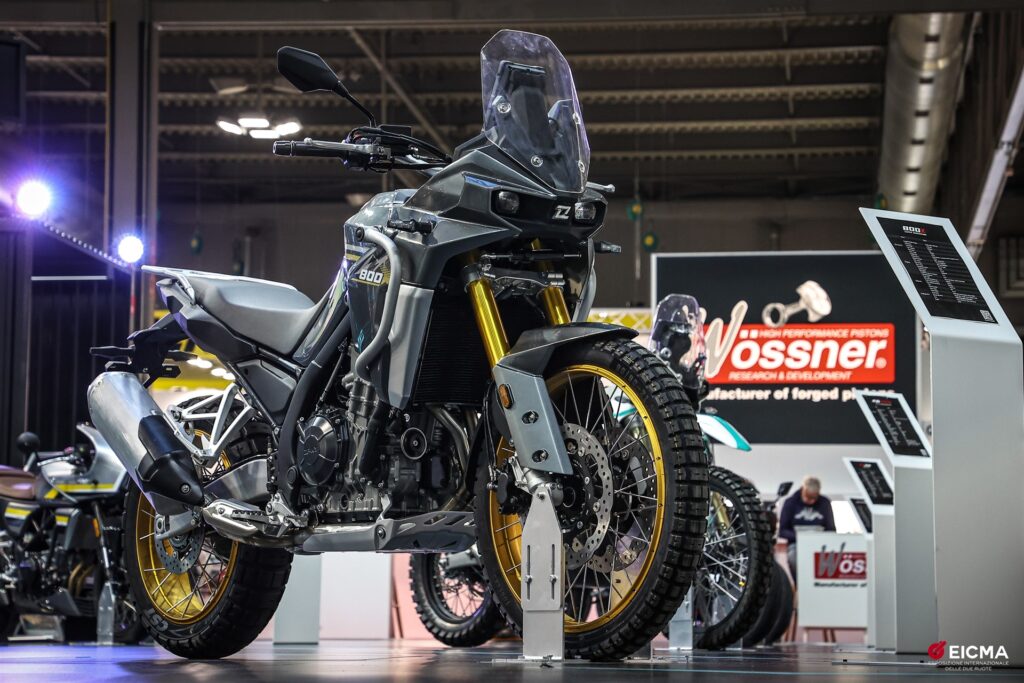
There are also the many niche market brands who influence the market in a different way. Kove, AJP, Sherco, Beta, Rieju and SWM will never reach the top ten, but all of them continue to carve away at the market within their niche, and their successes will drive changes within the ranges of the bigger motorcycle manufacturers.
Personally, I think Hero are the company set to make the biggest waves in the near future. Their experience at the Dakar and the racing experience and technical expertise of SpeedBrain, mean they are in the privileged position to have real world-beating motorcycle designs to integrate into their range, and a full team of factory riders that can test those machines far beyond any riding that any of us are likely to do.
I will be looking at Hero and the new bikes they have on the horizon in a dedicated video soon, so keep your eyes peeled.
Who do you think will be the big winners and loosers in the next few years?
As always I look forward to hearing your comments below and you know I reply when I can.
Try and remember to like the video and subscribe to the channel if you haven’t already and sharing the video anywhere you think people will be interested helps us a lot too.
If you would like to help us stay truly independent, on the Kofi link above you get access to a private group where I share videos I can’t screen on youtube. There are videos anyone can watch there, but you can make a one off donation or join our group of monthly subscribers for access to other videos that only the channels patrons can see.
Join us on Rumble too, There is some great content that I just cant share on youtube.