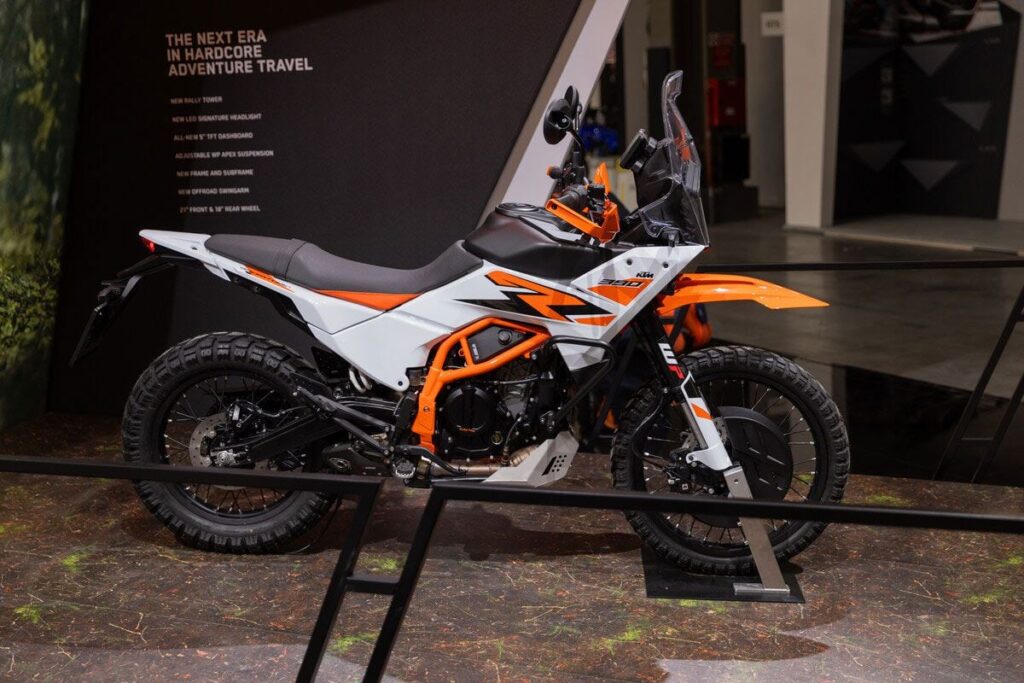
Well while we are still bombarded every day by a marketing storm of new KTM models for 2025 and now talk of a brand new KTM690 Rally, all is not as it seems at KTM.
And after the furore of reopening the factory in march, production has been stopped again, CF Moto have announced KTM dealers will not be distributing their bikes, and the workers in Austria are back to being paid for just a 30 hour week by the Austrian government.
This was a video about all that had happened after the last extraordinary shareholders meeting, but the day before todays EGM, major announcements were made, so I will start by looking at them, and then talk you through the lead up to what I think is the final death knell for a company who should, in reality, not be in the position they are now.
In the Austrian publication Die Presse we got the headline
KTM stops production again and production will not resume until the end of July.
GP One added that only 4200 units had been made during the restart and then Ride apart weighed in with KTM Stops Motorcycle Production Again, Saying It Doesn’t Have Enough Parts, so the bad news is confirmed by several sources now.
The search for investors continues to fail, and on Wednesday evening: Shortly before the shift was due to start, now CEO Gottfried Neumeister issued a video message to all PMG employees that all work must stop and all the production lines at KTM would be shut down completely.
So far KTM or Pierer Mobility Group should I really say, have completely failed to pay back the 600 million euros in debts agreed with its creditors, when it restructured its business after nearly going bankrupt. That in itself would be cause for concern about the brand’s future, but as you will hear, there are many more problems than that.
After a highly publicised restart to production at its Mattighofen factory last month, it is shutting down the whole factory again.
Initially they said that would be until the end of July.
News of another shutdown
The news came directly from new CEO Gottfried Neumeister and the employees received the news on Thursday morning via video message.
It read
“Due to serious supply chain problems, it is impossible to continue production as planned. The parts stocks were only enough for around 4,200 motorcycles to be built, and now there is a lack of essential components.
Production in Mattighofen will therefore be suspended until 27. July.”
KTM has still yet to state what models those 4,200 motorcyles were too, but you will hear more about that later.
According to the report, the problem is that KTM has not been able to source critical components for its motorcycles. Because when production stopped last year, no new parts orders were being made. And when production began again, the parts suppliers that KTM once worked with weren’t really willing to trust that KTM could pay its bills.
Rumour has it that many would only work on prepayment terms and that hadn’t been accounted for when the production restart was scheduled.
Neumeister continued with the statement,
“To avoid terminations, KTM is taking drastic measures, and from 1. May to until the first of July, a new agreement provides payment for a 30-hour week for around just 3,000 employees.
Wages will be adjusted accordingly.” So on a positive note that means layoffs are unlikely, at least for now, but the time bomb is ticking.
KTM can only hope that production will resume in July, but that is dependent on securing the money to pay back creditors and finding enough money to persuade parts suppliers to start resupply again.
But KTM says it can’t come up with the money to pay back those same suppliers, so it is likely to continue to be a major hurdle.
You can see from the press cuttings that the headlines and the reality bear little resemblence to each other and Reaching the truth is harder than the rear suspension on a hardtail chop, so I decided to look at some of the contradictions in an effort to get to the bottom of what is really happening.
You see, while the insolvency period passed the restart was announced and the rescue package agreed, the money is STILL not in place.
No investors have been found and any talk of promisory notes seem to have disappeared into the ether.
The announcement said that supply of several key components had failed. The employees were faced with empty parts shelves when the restart was initiated and no replacement parts have been delivered.
Then we got the announcement from CF Moto that KTM dealers would no longer be selling their bikes, so we can only surmise that the critical components that aren’t available are engines, and the relationship with CF Moto has now broken down.
After all, why should CF Moto supply parts to a company that already owes them money, has told them they will only get 30% of the value of the shares they have, and can offer no assurances that future bills will be paid.
What is really going on at KTM?
So what is really going on at KTM you might ask?
What is the truth behind all headlines?
To find that out we need to look deeper.
On the 17th of March we had an article from Kronen Zeitung that there were still many questions about the KTM comeback.
In theory, KTM were to begin production on a single shift pattern funded by the 2nd 50 million euros put into the administrators account by Bajaj Autos,
This would in theory be enough to start the production line again and was to be held in addition to the 300 million needed to pay the existing shareholders the 30% agreed value of their long held shares.
But in the background, talks to find all the money for the insolvency agreement is not going well.
Still, the only money in the administrators account is the original 50 million put in by Bajaj. So there is still 250 million to find just to keep the wolves at bay.
This money should have been in the administrators account by February the 25th, but now it seems an extension until May the 23rd had been given to find the rest of the money.
The official ramp-up phase of production was to begin, and KTM were emphatic saying the assembly lines will be gradually ramped up.
They said four production lines were to start on a single shift pattern, and that full capacity was is expected to be achieved within the next three months, so by mid-June.
They said the first stage would be marked by the delivery and inspection of goods, various pre-assemblies and the start of sample and prototype construction.
But remember, the R&D department hasn’t been working since november.
The first bikes, we were told, would then have been rolling off the production line around the 20th of March.
Gottfried Neumeister, the now CEO of KTM AG and Pierer Mobility AG, announced that In parallel with motorcycle production, the company would also be restarting work at KTM Components GmbH. Where, various parts are manufactured for the brand.
In the course of insolvency proceedings, KTM laid off over 800 employees and the remaining employees in the production department have been at home since mid-December, receiving the equivalent of what their salary would have been for a 30-hour week, all paid for by the Austrian government, while Steffan Pierer was expanding his investment portfolio with the addition of Rosenbaur, an Austrian firefighting company, and refusing to put any of his own money into the pot to save or help restart work at KTM.
Bajaj fund the restart
Indian co-owners Bajaj have been the ones who financed the resumption of production, and in the process, increased their shareholding to become the majority shareholders in the whole Pierer Bajaj consortium. Increasing their power within the KTM group.
The restart of production in mid-March should have been an important step towards normality, but many questions still remain.
The fact is, The first 50 million euros that co-owner Bajaj put in was to pay off existing shareholders and is less than 17% of the total required by the administrator, and the 2nd 50 million was to cover the cost of the startup of production, and that would only last until the end of March.
After that, another 100 million euros were needed to continue production through April and so far there has been no announcement of any additional funds.
The Indian company had promised to provide this original 100 million, but still there was a black hole in the finances and the administrators were seemingly not getting very far in finalising any further investment.
Immediately after the signing off of the restructuring plan for the KTM Group, Pierer Mobility AG had known that fresh capital of around 800 million euros in total would still be needed to finance the 30 percent quota for creditors and further production.
But with Pierer Mobility group entering into insolvency proceedings things get even more complex financially.
The investment process is running, no white flags have been raised yet, but this is all still very messy.
This is the complex corporate web set up by Pierer and Bajaj and you may ask why? But as the video goes on you will maybe start to see through the smokescreen, because there are countless announcements to go through.
KTM had built up more than 2.5 billion euros in debt, and after the green light for the restructuring plan was approved, there has still been no clarity about who will put up the capital for the quota to the creditors.
In theory, production in Mattighofen started again and two TV teams and photographers documented the employees’ commute trip early in the morning.
Throughout the day, there were live feeds directly from Mattighofen and it was obvious that KTM wanted it to be seen to be as normal as possible.
But real information was extremely economical to say the least. They were saying very little to nothing really!
Even if many would like it to be, the green light for the restructuring plan was not the end of the story, especially since the question of the urgently needed investors was still unanswered.
So far, Pierer, Zochtling and co have failed completely in their search for investment despite many promises, and the previously announced letters of intent have not been converted into actual investment.
The level of debt and the dubious figure of Pierer skulking in the background and refusing to put his hand in his own pocket creates a tension that will not change quickly.
KTM Continues to put Mattighofen on Torture
Then, on the 25th of March, 8 days after the supposed restart, we got the headline KTM continues Mattighofen torture. Why?
Because despite the restart, everyone was still waiting in vain for clarity surrounding the so called new investors.
We were told production was now being ramped up, but will not go beyond one-shift operation and will not be be fully operational for at least three months. So full production would not resume until at least the middle of June.
When asked how the ramp-up in production was working, KTM would still give no details.
Shortly before the recovery plan agenda was agreed, there were apparently seven potential investors involved in negotiations. How the conversations are developing can only be guessed at for now. But if the cash had materialised you can guarantee Pierer and co would be shouting it from the rooftops.
He may have successfully manipulated the administrators, but again I say, the money still isn’t there.
It was believed that the investor process would be completed between mid-March and the end of March.
But what happens now that is not the case?
After all, the 50 million euros that co-owners Bajaj have made available for the resumption of production was only enough, according to the company’s own calculations, to keep production going until the end of March.
Another 100 million euros are needed for April and each following month.
Who pays for that? That is another question that there is also no answer to.
According to Mattighofen’s mayor Daniel Lang. The highest level of confidentiality was guaranteed to interested investors. So we may never know. But the uncertainty about the search for investors leads customers, Mattighofen and the factory staff completely in the dark still.
Everyone still has doubts as to whether KTM will be able to secure the jobs in Austria, and in a survey only 38 percent of local residents and staff were convinced the jobs would be secure, 62 percent did not believe it at all.
By the end of March, KTM still needed more money to secure operations in April and May.
Bajaj had already put in 50 million euros to restart production in Mattighofen on March the 17th.
In February, the total of 150 million euros were promised by the Executive Board. A third to restart production and the rest to continue operations in April and in May.
A total of 100 million euros was put in by the Indian co-owner Bajaj. But the rest of the money is still not in place.
Remember, on top of the money needed to run the factory, a total of 600 million euros must still be paid out to the creditors. So new investors still had to be found.
For production to be scaled up to full capacity, another 100 million is needed every month.
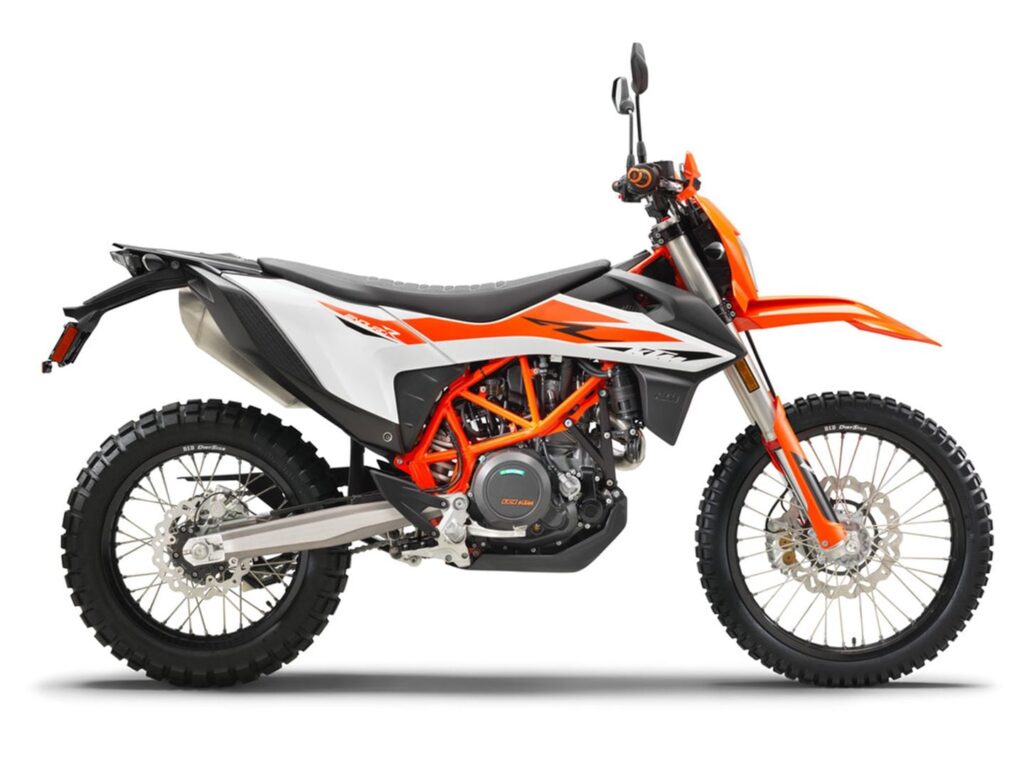
KTM Parent company Pierer Mobility had big trouble with a major bank.
After the initial scepticism of the banks and accusations of dodgy dealings at Pierer Mobility Group, one bank began to kick up more fuss than the rest.
They were owed over 64 million Euros and it had still not materialised. And by the 31st of March, KTM had run out of money again.
Bajaj had made 50 million euros available for the start-up of the new production, but a further 100 million euros was still needed for production to continue and it was still not clear whether either KTM or Pierer Mobility had found any new financier for it, or raised any funds themselves.
When would the next 50 million euros be found to continue ramping up production?
This question remained open, but it needed to be answered by KTM on April fools day of all times.
By this point, restructuring manager Peter Vogl was quoted as saying he was not convinced that the money would be available.
Michael Seemayer, Managing Director of the PRO-GE trade union in Upper Austria said at the end of March, the 30-hour week agreement was over and “All the workers should be back in the factory,” but as you will hear as we go on that might not be as accurate as I thought at the time, and the further money needed to pay them was still not in place.
Rosenbauer: Ex-Lenzing Board Chairman
Then, we had news from the newly acquired Rosenbaur company about how Pierer Mobility were taking control.
The Supervisory Board was reassembled. and Christian Reisinger, an ex-Lenzing board member now had the chair.
The Robau consortium led by Stefan Pierer, Mark Mateschitz and Raiffeisenlandesbank Oberösterreich now has full control.
The supervisory board of the fire brigade company was restructured and the original board of the fire brigade was cut-out of the picture completely in February.
Another extraordinary shareholders meeting was scheduled there, at which three candidates from Robau joined the Supervisory Board with Friedrich Roithner Chairman of Pierer Industries, Gernot Hofer Chairman of the Board of Management of Invest AG and Florian Hutter Managing Director of Mark Mateschitz Red Bull Consortium were now in control.
At the same time Jörg Astalosch, Bernhard Matzner and Martin Paul Zehnder quit the board completely with no explanation.
Securing EUR 50 Million in April
Motorcycle production at KTM in Mattighofen had been running since 17. March, and it was announced that it can be continued.
They had set up the next 50 million euros necessary for continuation but again there were no details.
So when and where does the money flow?
How much has been transferred?
All month these questions had been repeatedly asked of KTM, with increasing tension surrounding the new board.
Then, on April fools day, Bajaj were reported to have provided 150 million euros needed to continue production.
But previously the administrators had been working on a 100 million per month costing to restart production. So things still don’t add up, and now Peter Vogl himself was embroiled in the financial trickery.
Vogl announced the money had been forwarded to KTM. And on April the first, Pierer Mobility AG announced that KTM had an additional 50 million euros available to ensures production for April.
But then on the 2nd of april we got the headline KTM continues to play for time.
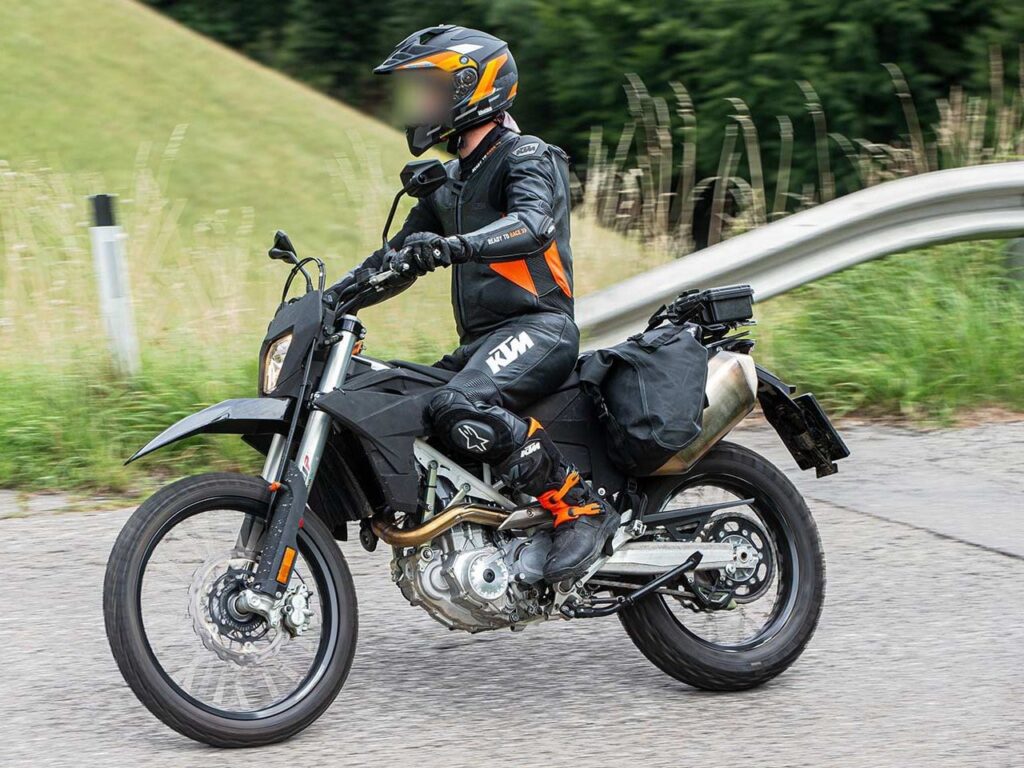
Fight for the future: KTM continues to play on time
One question remains.
When will there be an answer as to who joins KTM as the new investor?
Pierer Mobility then announced they had to raise 600 million euros for procedural costs but continued with the line about the confidentiality of the conversations.
So the question became, had 200 million already been paid into the administrators account beyond the Bajaj investment? But no details were given.
For those who have lost their jobs at KTM, the whole thing is a disaster anyway. There were many still looking for work.
Michael Seemayer, Managing Director of PRO-GE union then said, “The longer it takes, the more insecure it becomes to me,” and the employees still have many questions. He continued, “We cannot make any recommendations, that is a very personal decision,
The lack of information also puts suppliers and customers in a torture chamber.
From Seemayer’s perspective, “You need some predictability. It would therefore be good to ensure relatively quick clarity on how to continue.” But KTM have just said that patience is needed.
Do customers and suppliers have any patience left?
Then, In answer to a freedom of information request about the Extraordinary General Meeting, PMG announced that they will be creating a cash capital increase of 150 million euros by granting statutory subscription rights to the shareholders, and that shares for which subscription rights have not been exercised may be taken up by Pierer Bajaj AG.
So, that means that unless existing PMG shareholders reach into their empty pockets, that Pierer Bajaj could sweep up a big pile of shares at half price.
The document continued by saying that “Any public offering of shares in PIERER Mobility AG in the context of the cash capital increase will be made exclusively by and on the basis of a capital market prospectus, to be prepared in accordance with the provisions of the Prospectus Regulation, and approved by the FMA and subsequently published.” and that “An investment decision regarding any offered shares of PIERER Mobility AG should only be made on the basis of such a capital market prospectus.”
and if you can understand that corporate gobbledygook you are a better man than me, so do let me know in the comments and I will pin the best explanation if anyone has one.
Capital is still required
Then the term “Capital increase in kind” was introduced.
That would be the capitalization of immovable property, securities, and other tangible and intangible assets with economic value in the company.
The key characteristic of this form of capital increase is the use of non-cash assets, so they are now counting non cash assets as part of the money needed to pay off investors and i have no idea how that could work.
How do you think the creditors will react when Pierer announces that “we don’t have any money for you but you can have this 800 million euros we owe you in monopoly money if that is ok”
This could be executed after the KTM group’s restructuring proceedings have been completed successfully. But they haven’t.
What it would mean that only the main shareholder, Pierer Bajaj AG, will be admitted to subscribe to this non-cash capital increase.
Pierer Bajaj AG intends to contribute loans made available to date for the ramp-up of production to the total value of € 150 million as a contribution in kind.
A further prospective loan of € 50 million is also to be contributed as a contribution in kind.
So, when KTM are riddled with debts, the only solution found so far seems to be to lend them more money. That isn’t my idea of a sound financial plan and looks like it is just another way of funnelling money OUT of the KTM coffers in the form of extra interest payments to the Pierer Bajaj group.
All of the loans to be contributed in kind provide for a “right of termination” if the described non-cash capital increase is not carried out at the issue price of € 7.50 per share, or if the corresponding resolution of the General Meeting is challenged in court by a shareholder.
The funds for these loans was in theory provided to Pierer Bajaj AG by its long-standing partner and shareholder Bajaj Auto.
That means that the share capital of PIERER Mobility AG will be artificially increased by a figure of around 2.4 million euros.
So you begin to see that the solution looks just like the original problem really.
Then we began to see some very significant trading on PMG stocks which you can see in the charts here.
We were then told production would no longer be continued in a part-time 30-hour week basis, and although for the time being a single-shift operation would continue, They would be working to introduce two shifts, with further production lines being reactivated gradually.
But again no details of where the money was coming from.
New investment?
The Indian partner Bajaj was named as one potential investor. Then BMW and the Austrian company BRP-Rotax a subsidiary of the Canadian Bombardier group was mentioned.
Stephan Zöchling, head of the supervisory board of Pierer Mobility AG, was also talked about as an investor, but his money would come with strings attached, and since then, that suggestion has gone quiet.
So again we reach an impasse with no real information as to where the money is coming from.
All in all there have been many promises made.
The shareholders agreed on the rescue package, but PMG are refusing to announce where and when the money will come from, Zochtling seems to be doing his best to keep Pierer’s dirty fingers out of the negotiations, but Pierer is still pulling the strings behind the scenes.
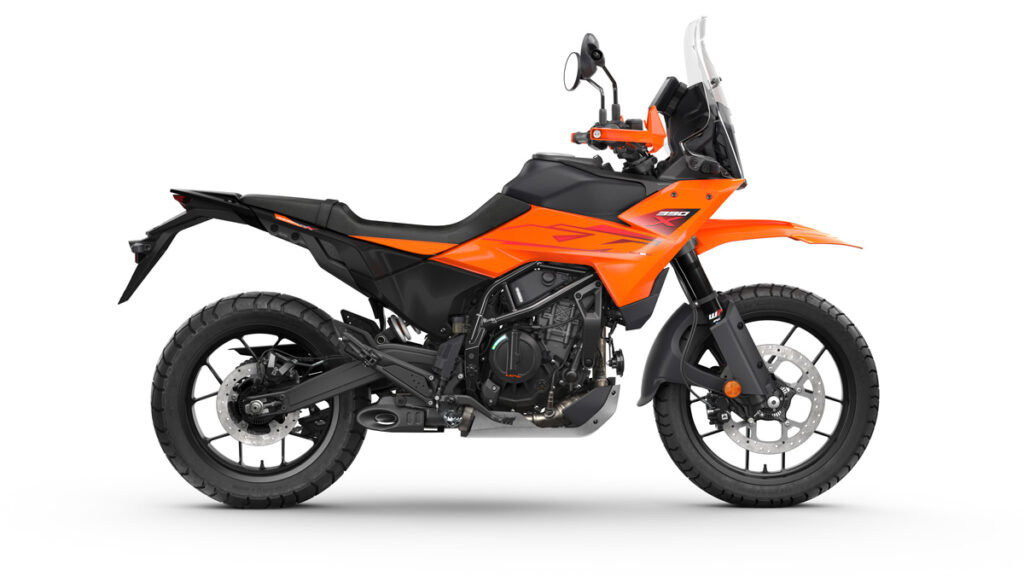
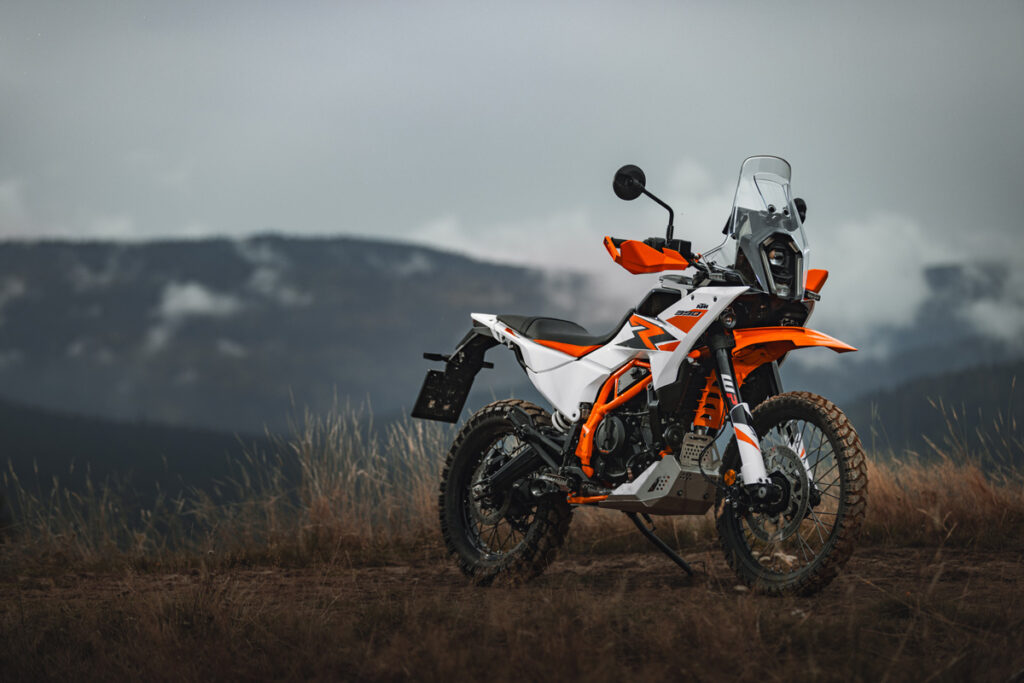
We are still bombarded with a marketing blitz on the new 390 adventure and now a future 690 Rally, and we are constantly told not to worry, everything is ok.
The motorcycle press in general talk of everything being fine and that all the exciting new 2025 range will be available soon, but we are already almost in May and the dealers who haven’t already ditched the brand have no idea when that 2025 stock will be available.
To make it worse, they still have a massive backlog of stock sat in warehouses and dealers that will not simply disappear.
Dumping that stock onto the market at rock bottom prices may raise money, but it would devalue the brand overall.
Buyers are still wary to say the least and there has been no talk of the future of the various race teams under the KTM, Husqvarna and Gas Gas names.
And remember, even the administrators stressed the importance of racing as the only real chance of future marketing success.
The MotoGP team continues to struggle, the GasGas and Husky Rally teams have been disbanded. The sponsorship of the Super Enduro World Championship has been dropped and now much is being left to the many successful privateers to try and elevate the brands status again.
We have a saying. ALL TALK AND NO ACTION. And that appears to be the state of play still.
One of the things not being talked about is the fact that so far, all the funding has come from Bajaj, and that is only in loans.
Conclusions
So a company crippled by debt before this happened is yet again being funded by more debt.
The shareholders have still not been paid, and no names at all have been confirmed as the source of any real money.
Pierer may have stepped away from the camera, but he is still the one pulling the strings, and he is the one who is set to make the most out of this mess along with the Bajaj group.
The Indians are sat there quietly counting shares and are now in many ways the ones in control. They are the ones making the bulk of the new KTM stock, and details of what is being made in Austria is not being released anywhere.
Dealers are being pushed to take on new stock they haven’t even seen, while they are still stuck with piles of 2024 bikes they are struggling to sell.
Pierer is already causing problems at his new investments, and it appears no one is able to stop his ever expanding greed.
However, his actions have triggered investigations by the banks, and if they find evidence of his wrongdoings they will be standing at the courts to try and force him to take responsibility.
But the courts, administrators and the Austrian government seem to be blind to his financial jiggery pokery, or maybe they just don’t care beyond their own vested interests.
So after yet another month of glorified and exaggerated news stories, we have nothing in the form of concrete evidence that the administrators rescue plan is being adhered to.
In addition, another 150 million in debts to Bajaj have been wracked up to restart production of something, but we don’t know what, and now that money has been used up and we have nothing more in the pipeline.
None of the 600 million needed to pay creditors has been detailed despite passing the date when it should all have been in place, and the 600 million minimum in shortfall is nowhere to be seen.
Bajaj have obviously said “No More”, Stefan Zochtling’s talk of further investment has not materialised and BMW and BRP Rotax are running for the hills.
Now production has been stopped again, Staff are back at home being paid a pittance with their career’s and future in question, the relationship with CF Moto has failed, parts suppliers are demanding business will only happen on prepayment terms and Stefan Pierer is nowhere to be seen.
So is this the end for KTM?
Honestly, I see no way out now.
I really do think the writing is on the wall and the break up of the company is now the only thing on the cards.
And yes, it makes me sad that we will loose at least one iconic brand, and maybe Husqvarna and GasGas too and it leaves me angry that Stefan Pierer and the PMG board are simply being allowed to walk away from all of this after fleecing the company for years.
Tell me below in the comments what you really think will happen.
I have heard many say that KTM are too big to fail, but they said that about Lehman Brothers Bank too, and it still happened.