Today we are off on another journey into the Quirky side of the industry.
We did the 10 worst bikes and the 5 ridiculous bikes video’s last year and I was asked to continue the series so here you go.
We have 5 more ridiculous bikes.
Taking a look at these bikes they could all have been included in the previous videos, and there are more I could include. But these are the next 5 motorcycles that I thought most deserved to be called terrible or ridiculous. I also think there would be some people say all of them should never have been built.
Some of today’s entries are just a bit weird, whereas others, were simply terrible. So I have split them up as the good the bad and the ugly again. But all those terms are relative, and as before it is just a bit of fun.
Some of the bikes had flaws so big they are happily forgotten, by manufacturers and customers alike.
I know some of these bikes will have caused many curses and lost tempers over the years as the thankless task of mending them over and over again was endured by the riders, so I do look forward to hearing some of your tales in the comments.
I do sometimes wonder, when the amounts of money thrown at developing new models results in something that barely even resembles a motorbike, why they don’t just let one of us do it.
Before I go on I have to say a big thanks as always for all the support, but especially the BareBonesMC family on the Ko-Fi page.
There are links to more videos on there and on the Rumble channel too, so go and take a look.
A quick reminder too if I may. Try and remember to like the video and subscribe to the channel if you haven’t already.
Sharing the video anywhere you think people will be interested helps us a lot too.
There is more info about the channels here, on rumble, and the Ko-Fi group later, so I will leave that for now.
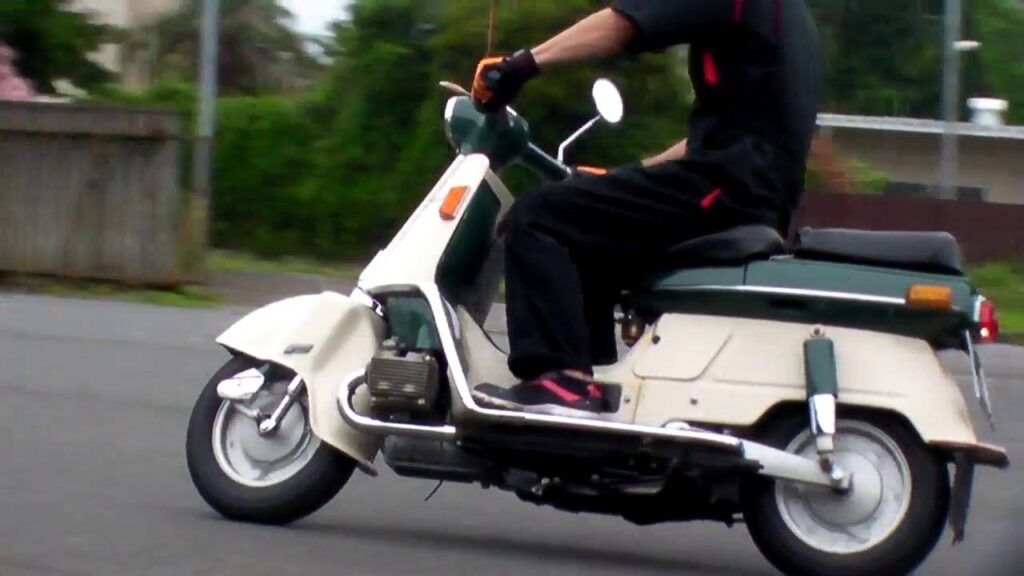
Honda Juno M85
First today let us start with the good, and we have the story of When Honda Built A Boxer Twin. And I am starting here because despite its failure, it was a really well built machine.
Some of you may never even have known it happened, and Honda maybe wish it hadn’t.
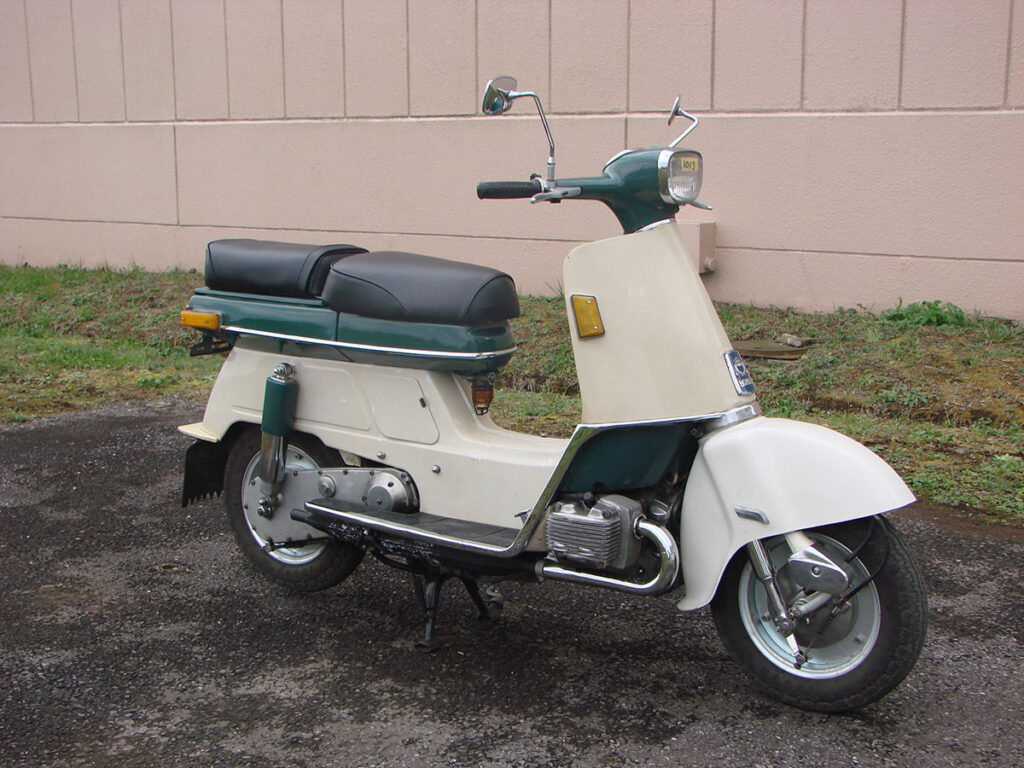
The bike in question was the Honda Juno M85.
In the ever-evolving world of motorcycles, where innovation and creativity reign supreme, Honda has always been a trailblazer, but it doesn’t always work as we have seen before. Sometimes it gets very expensive, and often the market just isn’t there.
But Honda has never shied away from pushing boundaries, and amidst their many successes there lies a peculiar little bike called the Juno.
The Juno wasn’t a bad bike at all. It was a scooter that dared to be different and might well be defined as the very first Maxi Scooter. Instead of the usual rear mounted engine used on most scooters, they put a boxer twin engine across the front of the chassis.
But the engine made it expensive from the start.
It came in 2 sizes, a 125cc version called the M80, and the 170cc M85 I will concentrate on here.
It was 1962, just four years after Honda’s groundbreaking Super Cub hit the streets. While the world was still marvelling at the simplicity and practicality of the Cub, Honda’s engineers had decided to cook up something entirely different.
The Juno M85 wasn’t just a scooter; it was a statement, a bold declaration that Honda wasn’t afraid to experiment, and push the boundaries of what a scooter could be.
But all that came at a cost.
Its air-cooled, 169cc boxer twin engine was like a diminutive Douglas Dragonfly, and the M85 boasted a massive 12 horsepower at 7,600 rpm, there was 10 ft/lbs of torque on tap at 5,700 rpm too.
That was almost 3 times the power of the Super Cub of the same year and twice the power of the fastest Lambretta 150 of the day.
Together they gave it a top speed of over 62 miles per hour.
That made it a full 7mph faster than any Italian scooter of its day.
The steel monocoque chassis looked sleek and modern for its time, especially compared to those Ariel were making with the antiquated machinery at BSA, and the design meant that the center of gravity was kept low, making it ultra stable.
It also had a unique party trick up its sleeve.
If you ever needed to tinker with the engine, or just play a joke on a friend, the front wheel and body could be rolled away from the power-train, swingarm, and rear wheel assembly.
It made access a breeze, but I am really not sure I would want to be pinning the throttle on any bike that had been designed to come apart in the middle. Even a Honda.
Imagine the scene: you sit astride this weird little scooter outside the local coffee shop, the little boxer twin purring away beneath you, drawing curious glances from passers by. Then just walk off holding the handlebars pushing the front wheel ahead of you as the engine just sits there puttering away in the car park.
Can you imagine the laughter?
Alas, the Juno M85’s reign was short-lived.
Despite its innovative design and quirky charm, it failed to capture the hearts and wallets of the public.
Perhaps it was the price tag which was expensive for any scooter, or maybe the world just wasn’t ready for such a powerful scooter.
Whatever the reason, the Juno M-series scooters faded into obscurity.
And it would be over 30 years later that any of the big four tried their hand at a maxi scooter again.
BSA Dandy
Next today we will go with the bad, and as far as one of the subscribers is concerned possibly the worst bike ever made.
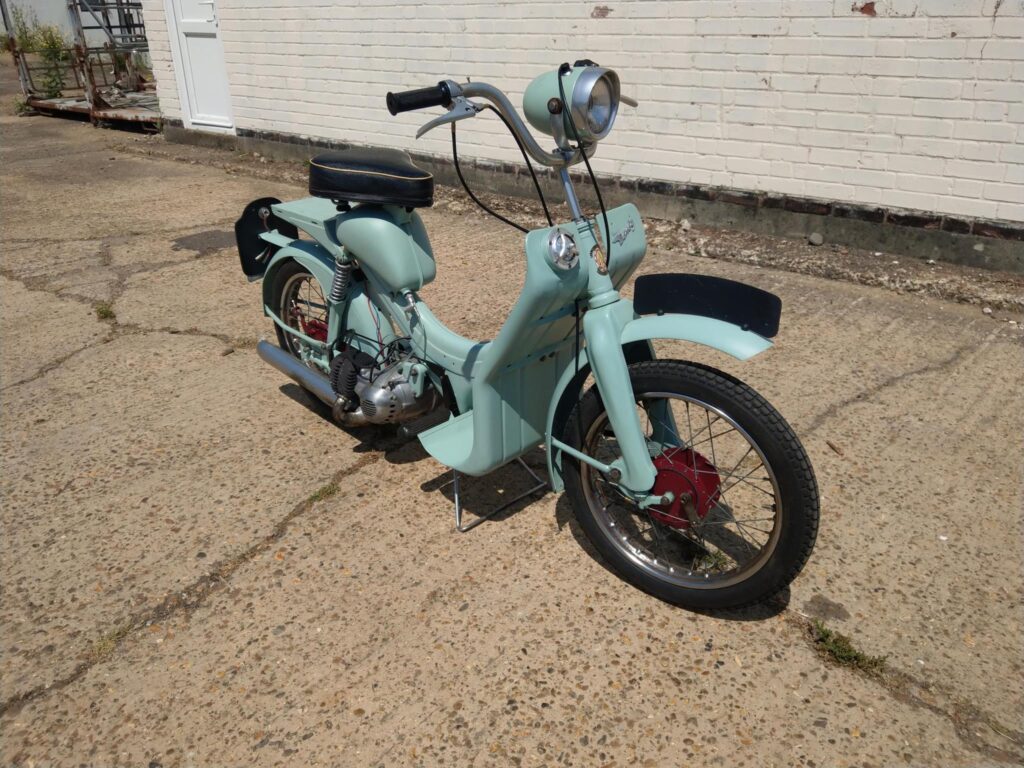
That bike was the BSA Dandy.
First, lets just think about that name. In the dictionary is says a man unduly concerned with looking stylish and fashionable.
That’s not a good start lets face it.
Was it a stroke of genius ahead of its time, or a catastrophic blunder of British engineering?
Today, we look into the fascinating story of the Dandy, exploring its innovative features and its fatal flaws
Then I will leave you to decide if it was the worst bike ever built by Britain.
The Dandy was conceived in the mid-1950s, a time when the market for affordable commuter vehicles was booming.
BSA, aiming to compete with the influx of imported 50cc mopeds, embarked on a project to create a keenly priced, home-grown alternative.
So the idea of the Dandy was born. Described as a 70cc “scooterette” it was built with practicality and ease of use in mind according to BSA.
It boasted weather protection, and a step-through frame and was aimed squarely at female riders in skirts, a very specific demographic that BSA’s marketing department had decided to target.
So right from the start they had successfully alienated half of their potential customers.
The Dandy’s design incorporated several peculiar features which were theoretically aimed at novice riders.
The first, a hand starting lever was sold to people as offering a convenient alternative to traditional kickstarting. But it didn’t really work, so it was replaced by a left-side kick-starter on later models.
It had a compact design with the swingarm attached to a backward-facing, horizontal 2 stroke engine.
The engine itself formed part of the right side of the swingarm, but was bolted directly to the pressed steel frame on brackets. The left fork arm was mounted to the gearbox. So in a remarkable way, they had made what should have been very simple, very complicated.
And as was said by the man who brought this bike to my attention, Who the hell thought it would be a good idea to use a 70cc air cooled two stroke engine facing backwards, tucked away out of the air flow?
The constant seizures were in the end blamed on penny pinching. Because the bosses at BSA decided to ditch the original Ally barrels for cheaper steel ones, but being honest, I don’t think that one point would have saved the reputation of this bike.
Built like a miniature Ariel Arrow it had all of the flaws and none of the saving graces of its bigger brothers.
Front forks used the thinnest possible elastic bands to save another penny or 2, and the miniature four-inch brakes front and rear meant that even though the Dandy weighed in at a mere 115 lbs, it was impossible to stop unless you had a runway ahead of you.
The 70cc two-stroke engine came in two halves, the right side housing the cylinder and generator, and the left containing the clutch and gearbox. The distinctive U-shape casing fitted around the rear wheel, and the chain guard and rear mudguard were bolted directly to the engine casing, which made for a rattly ride.
Perhaps this bikes most distinctive feature, was a rather unique two-speed pre-selector gearbox.
This system meant you had to pre-select the gear with the twist grip, then engage the clutch to execute the change.
While functional, most of the time, it was always harsh because you had almost no control over the engine speed when the gear change happened.
It did boast a claimed fuel economy of over 130 miles per gallon, but it claimed it could achieve a top speed of 33 mph too and it could only do that down hill with a tailwind.
The Dandy was plagued by a series of critical flaws. The biggest of which, was the placement of the ignition points. These needed constant attention, but were buried deep within the bowels of the engine to keep it looking neat. So to access them required a Herculean effort involving suspending the bike in mid air, removing the rear shocks, electrical connections, and clutch and splitting the crankcases.
While the concept was sound, its execution was far from it.
From its unveiling at the 1955 Earls Court show to its eventual demise, The BSA Dandy was doomed.
Velocette LE
Now I have no idea what to call this next bike, but it bridges the gap and I do think it is just plain ugly too.
The bike in question was built by an illustrious company with years of victories on the racetrack. They made some of the most beautiful motorcycles of all time and then ruined it all by making a sort of motorcycle, scooter thing that looked like it had been made from household utensils and was held together with sticky back plastic.
And for those of you in the States and Australia who don’t know, that comment relates to a kids TV show where they always made ridiculous models out of everyday objects that never looked remotely like the thing they were supposed to be.
And that was at least part of the problem with this thing. It just didn’t look like a motorbike. It didn’t even look like a scooter.
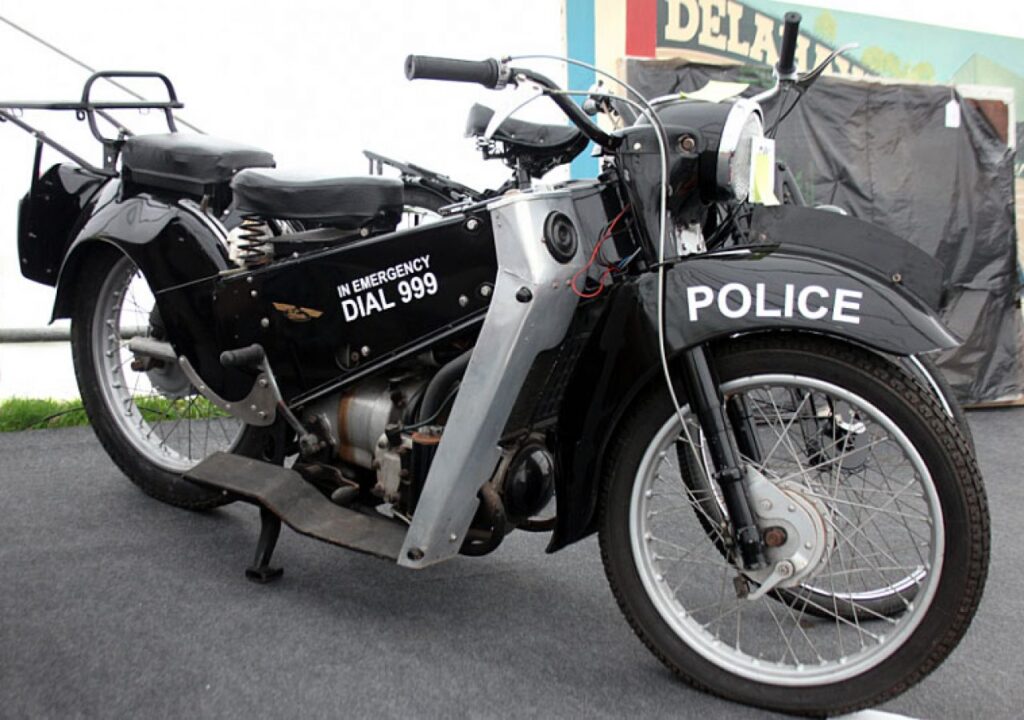
Nicknamed the “Noddy Bike”, the Velocette LE went through many changes in its illustrious life.
It was hailed as the Bike for Everyman. Unfortunately, every man and his dog didn’t want one.
Hilariously it was the British police that kept this bike in production for so long. Without them, it would have faded into insignificance very quickly.
I still can’t help but laugh at the idea of a copper trying to chase down a gang of bank robbers on his trusty Velocette LE. That one will never get old.
I know it was built when rationing was still in place but surely they didn’t need to build it from over used biscuit tins.
Velocette were famed for their punchy, big, single-cylinder motorcycles. So where the idea for the LE, short for “Little Engine.” came from is anyone’s guess.
It could sit alongside BSA Dandy and Beagle, the Sunbeam S7 and Ariel Leader in a pantheon of unconventional designs born from a clean slate and a desperate need to build personal mobility solutions in post war Britain.
It had what was described as a torsion box frame, and I had to look this up to be honest, but it is the sort of lightweight but relatively strong structural element, often used for assembling tables or workbenches. It is characterized by a grid-like core sandwiched between two flat surfaces (skins) that resists warping and sagging.
Because we wouldn’t want a motorbike frame to warp and sag would we!
Well, unfortunately, with metal that wouldn’t be out of place wrapped around some chewing gum it was as structurally sound as a piece of origami.
The rigours of the road are a very good way to challenge anything, and challenge the Little Velocette they did.
Every last welded and bolted joint was shaken to within an inch of its life on the roads and the structural integrity was dependent on every last panel staying straight.
Despite its eccentricities, the marvel of pressed steel wizardry called a chassis can be detached in minutes. This gave you access to the entire engine, gearbox, and rear wheel assembly.
So this was yet another bike that was designed to come apart in the middle.
Most of the bike was designed to be stripped with a single ½” Whitworth spanner. Even major component rebuilds were simple and that is where the little Velocette did win fans.
Unfortunately a pressed steel chassis on winter roads laden with salt was never going to be a good combination no matter how well they were built.
Riding it began with you perched on top with a low-slung saddle, and the first thing you noticed were two handles sprouting from the right side of the engine.
The larger one is your hand starter, while the smaller one is your hand gear shift.
Yes, you read that right – a suicide shift, despite the fact that Velocette had long since pioneered the positive-stop foot shift gearbox for motorbikes.
Starting the LE was a bit of a song and dance. Pull the choke out, wind the hand crank a few times, but not too many, flick on the ignition at exactly the right point, turn it over again and if all the planets were aligned the water-cooled twin would splutter into life, emitting a whisper so faint you might mistake it for a polite cough.
Maybe that’s why the police liked them. Stealth mode would help them creep up on unsuspecting villains without being noticed?
The problem was, if they did notice, even a steady jog would be fast enough to stay ahead of the Velocette LE.
The bike could be described as having armchair ergonomics, but shifting gears, was an art-form. Pushing the lever forward put you in first, pulling it back engaged second, and a combination of a down-and-inward motion unlocks third.
Any hand change gear system on a bike isn’t easy, But the LE’s system took serious concentration, The one saving grace is that at least you wouldn’t be going fast enough for anything to hurt too much.
Another oddity was that the LE’s speedometer and ammeter are thoughtfully located in the top of the leg shields. This would provide a constant challenge if the damn thing went fast enough to break any speed limits. But in some ways that was a good thing. Because even though the brakes were bordering on useless, unless you were hurtling downhill with a following wind, they would stop you just before the end of the street. If you pulled hard enough that is.
Regardless of everything the LE does have a certain charm and a shaft drive was something that seperated it from any similar bike. Riding them takes you back to a simpler time, a time of quiet country roads and unhurried journeys, until you remember that damn gear-change.
One thing you should always remember with the LE is to wear ear plugs. Nothing to do with wind noise or the levels of sound from the whisperingly quiet engine. Without them your slow steady journey will be spoiled by the ever growing line of cars stuck behind you honking their horns at you.
Once described as ” An economy lightweight which ended up as the most sophisticated pure design in motorcycle history.” Sadly, the LE’s innovative design and meticulous engineering weren’t enough to save Velocette from its eventual demise.
Despite its popularity with police forces, the LE never quite achieved the Everyman appeal it was designed for.
And so, the story of Velocette and the Velocette LE came to a close.
It’s a story that reminds us that making a bike chassis from a pile of left over biscuit tins is just not a good idea.
The engine will keep chugging along regardless, but having your bike named after an intellectually challenged wooden boy from an old cartoon was never going to be a good thing.
To give it credit, the Velocette LE did leave its indelible mark on the world of motorcycling. It just did it slowly. One quiet revolution at a time.
The Ariel Pixie
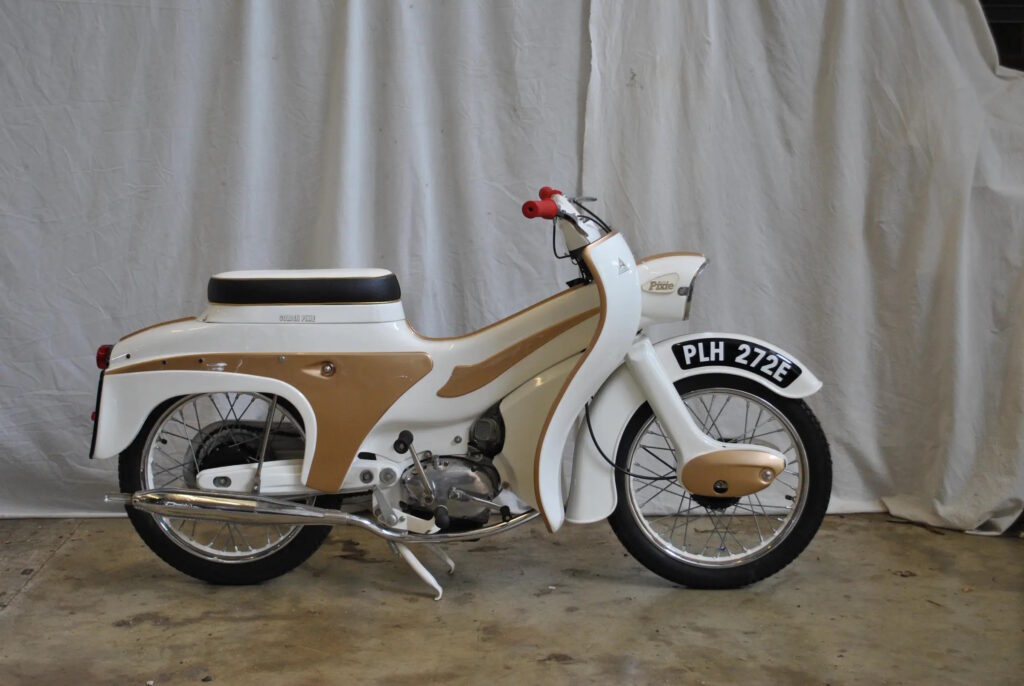
Well we had the good and then the bad, the questionable came next and the ugly is at the end, but somewhere in the middle we have another oddity from our friends at Ariel.
In some ways you could say that this was Ariels updated version of the BSA Dandy, but it wasn’t quite as bad.
The Ariel Pixie was a 50cc machine, dreamt up by Val Page.
What he was thinking when he drew the original sketches I have no idea.
It promised to be a British contender against the rising tide of Japanese motorcycles in the early 1960s.
But it looked like a stick man drawing of the illegitimate child of a motorbike and a witches broomstick.
Page was the mind behind many iconic bikes including the beautiful BSA Gold Star, and he even had a hand in the design of the Brough Superior SS100 engine.
This time, he poured all his expertise into this project to build a small capacity bike to take on the Super Cub.
Despite its pedigree, the Pixie was so bad that finding any video of the thing is pretty much impossible.
Page originally envisaged the Pixie with a 75cc OHC engine, a direct competitor to the Honda 90 that had sent shock waves through the British motorcycle industry. However, BSA, Ariel’s parent company, opted for a simpler and more cost-effective OHV engine derived from the BSA Beagle’s 75cc motor which I am sure we will talk about another day.
This decision was often criticized, and seen by many as the biggest single factor in the Pixie’s commercial failure, but the underlying issues went far deeper than engine design.
The Pixie was produced at BSA’s Small Heath factory, a facility hampered by antiquated tooling rescued from the NSU and DKW Factories after the war. This put the Pixie at a significant disadvantage compared to the cheap and reliable Honda’s flooding the market.
The Honda’s were manufactured with state-of-the-art machinery and built to tight tolerances, and they were churned out in the tens of thousands, benefiting from a vast Asian market right on Honda’s doorstep.
The Ariel Pixie wasn’t any of those things, and BSA only had a limited market in the former British Empire and the United States.
Even the most innovative designs were inevitably more expensive and less reliable than their Japanese counterparts when they rolled off the BSA production line.
One Ariel dealer from that era succinctly captured the sentiment around the bike, saying, “When we sold them new, they got called the Poxy Pixie!”
The tiny machine again featured a version of those ridiculous trailing link front forks that used rubber bands to help bounce you down the road.
Sadly, it was probably at least part of the reason this bike became Val Page’s final design.
At least he gets remembered for his better designs though.
I remember once hearing the comment that “if Honda had licensed BSA to produce the Cub on their production lines, even that would have leaked oil and suffered reliability problems”
While the Pixie may not have achieved the commercial success Val Page had hoped, it remains a fascinating footnote in the Ariel story.
Its tiny proportions, and unique styling make it stand out in a crowd, even today. I just wish that was for better reasons.
One of the final range when the Ariel brand was canned in 1966 by parent company BSA. It marked the end of an era and was among the last bikes to carry the Ariel name, sort of, but that is a completely different story.
Honda Vultus
Now we come to the last bike on today’s list, and although ugly will always be a subjective opinion, this bike might well be one of the most grotesque ideas ever to role out of any motorcycle factory, and yet again it was Honda that managed to build it.
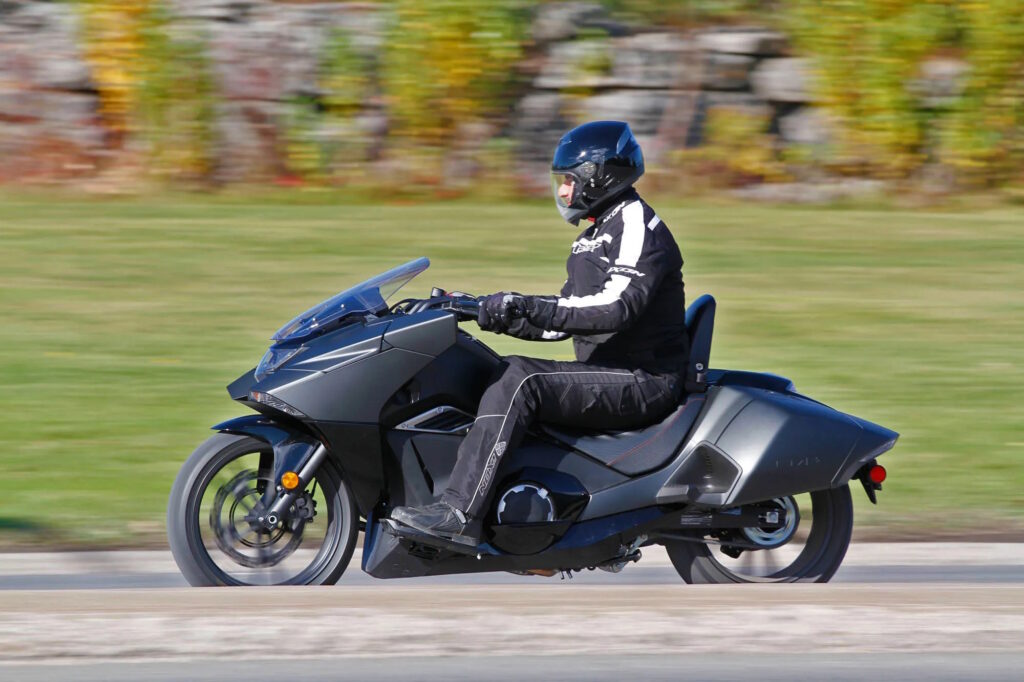
The bike was the Honda Vultus, and it was hit with the ugly stick so many times it didn’t stand a chance.
To begin though, what is that name about?
Is it a cross between a vulture and a cactus?
Well, I had a look and there is only one reference I can find and that is to a Latin word meaning facial expression. So perhaps it was named after the faces of horror on the people who first saw it.
Now you know Ive already taken a pop at the Honda DN01, but this thing takes all of the bad about the DN01 a whole chapter on.
Although a masculine noun in Latin, this is a gender-defying two-wheeled monstrosity that challenges its placement in any conventional category of bikes.
Born with an identity crisis, I think personally the NM4 or NC700J or NC700JD, because yes it had 3 seperate designations, took design cues from the Quasar that had failed so badly in the 1970’s.
That is one I talked about in our very first Dangerous Bikes videos linked above and in the description.
On a good day you might say it looked like H.R. Giger’s Alien had an illicit affair with a stealth fighter.
On a bad day you would just stare in complete disbelief that anyone had let this get past the initial design sketches.
The NM4 Vultus was supposed to look aggressive and some might say it looked like the motorcycle from the anime film Akira.
Personally, I think it looked like someone hit it over the nose with a shovel over and over again.
First showcased at the 2014 Osaka and Tokyo Motorcycle Shows. Eventually the “Vultus” name was dropped in many markets,
Sales were so bad that Honda tried all sorts, even repositioning the leftover stock as “limited edition” models trying to shift the backlog.
It may have added to the mystique and exclusivity, but they still couldn’t sell them.
I have never even seen one in a showroom never mind on the road, but there are plenty of reviews from people who were obviously invited to a press launch. Even the wining and dining of the Honda marketing department couldn’t make any of those reviews good though.
Beneath its unconventional exterior was the proven NC750 platform. It featured a 745cc liquid-cooled, 8-valve SOHC parallel-twin engine mated to Honda’s first generation six-speed Dual Clutch Transmission (DCT). But the 50hp engine wheezed trying to push along the 250kg weight and the auto box did nothing to help.
The tapered nose pushed the air above a woefully inadequate screen right under the chin-bar of your helmet for maximum buffeting and the mirrors were mounted so low that when the vibration did clear, their only real use was for looking at your elbows or the road by your rear wheel.
The 18” front wheel, lazy steering geometry and a wheelbase as long as a GL1800 Goldwing meant in a straight line it was fine, but, at the slightest hint of a curve no matter how hard you tried it did not want to change direction.
That wasn’t helped by a back tyre that was as wide as a hippo. That, and a weird effect of the dual clutch transmission had seemed to push you into the litter at the edge of the road at every corner.
So with questionable aerodynamics and the riding position of a windsock it is hard to find any saving graces with the Vultus.
If you are its mother you will be the only person to ever think it is beautiful, but even if you are, riding it will put you off completely.
That sounds a bit wrong somehow but you get my meaniing.
One review from a passenger reported the buttock clenching sensation every time they saw a roundabout approaching and the feeling of vulnerability being perched head and shoulders above the rider.
An 11 litre fuel tank on a bike with integral panniers was another ridiculous failure. That’s 3 US gallons or just 2 and a half of our genuine imperial gallons. So even if you are absolutely boring and never take it above a quarter throttle you will still struggle to get more than 150 miles to a tank. Every journey had to be planned around fuel stops even if the engine was frugal.
So I guess it was made for short range touring.
Its price of £9666 back in 2014 would make it the equivalent of over £13,000 today, and I am sure someone would probably pay that today, but I’ve still never seen one.
When you consider the Honda NC750X DCT today is just £8,299, that sounds a bit pricey. The down side though is that if you buy the NC750X you won’t have every person you see in fits of hysterical laughter.
So I guess the choice is yours.
There are bound to be a few stashed away in some dusty basement somewhere.
Unless of course Honda decided to smash them all to pieces in the hope everyone would forget.
Anyway, that’s it for today. I am sure I will come back to this list again though.
There are far more terrible bikes that have been built over the years.
Let me know which bikes you think should be included next time in the comments below.
Thanks as always to everyone for all the support. Try and remember to like the video and subscribe if you haven’t already and sharing the video anywhere you think people will be interested helps us a lot too.