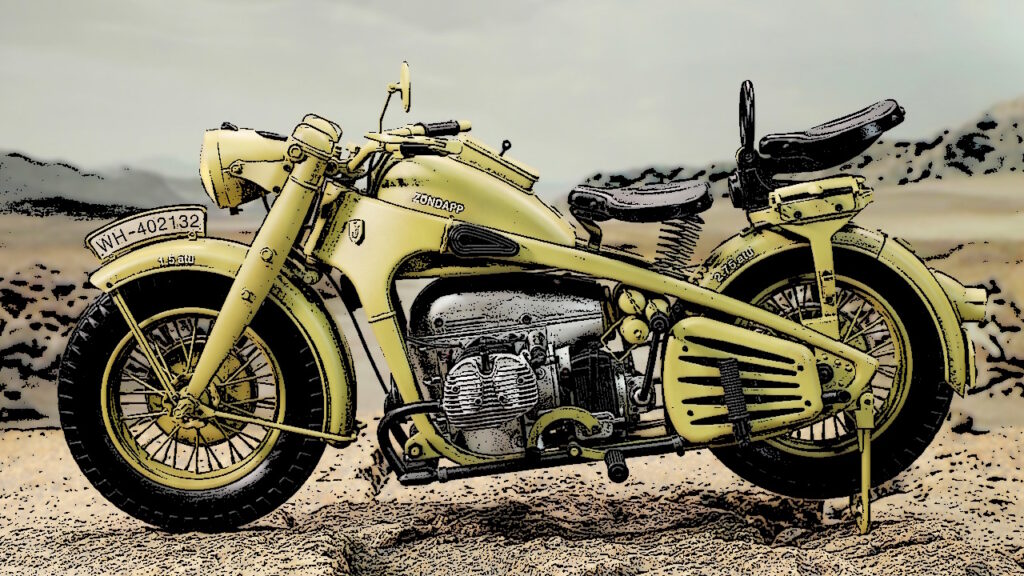
From muddy battlefields to desert warfare, motorcycles have played a crucial role in military over the years. In this video, we’ll explore the engineering genius behind some of the most famous military bikes and uncover the stories of those that succeeded, those that failed, and the fascinating way these machines influenced the industry.
I will look at the motorcycles that the military from around the world chose to put on the front line. Exploring the shared design DNA of German and Soviet heavyweights, the surprising story of America’s experimental contenders, the ingenious specialization of British bikes, and the enduring legacies that still live on today.
So grab your helmet, because we’re about to hit the road on a journey through motorcycle military history.
Often used for rapid deployment, scouting, courier work or more, these are those bikes that were built for the battlefield. The motorcycles that not only shaped the course of wars, but also helped create the world we know today.
Their influence endured long after the guns fell silent, and some of their engineering carries on being used right up into the present day.
Whether it was speed, agility, or manoeuvrability that was needed, someone made a motorcycle built for it somewhere, and if they didn’t, there was a determined engineer who would help design them somewhere.
Some you will know but hopefully some will be a surprise, and I will do the most obvious ones first.
I have tried to include as many as I could find to make this the most comprehensive military motorcycle reference work I could. There are bound to be ones I have missed so do let me know in the comments. If there are enough, I will maybe do a follow up.
Essential tools of war, these motorcycles had to be able to run on terrible fuel, be resilient, adaptable, dependable, and fast enough. A good tank range was always a good idea too. So they had to tick a lot of boxes.
Cost was always a factor as well. Whether that was a destitute war department trying to save money, or a successful country trying to make a show of flexing its muscles, cost would always come into it somewhere.
The British seemed to use more motorcycles than anyone else, but different armies did use their motorcycles in quite different ways, so some of the bikes here are very different indeed.
They all carved their own niche, and nurtured an unwavering spirit of adventure for many of those who rode them into the heart of conflicts.
But let’s get on with it and explore these often forgotten warriors of the motorcycle world.
We start in the UK with a bike that had been built in one form or another from 1907.
1, Norton Big 4
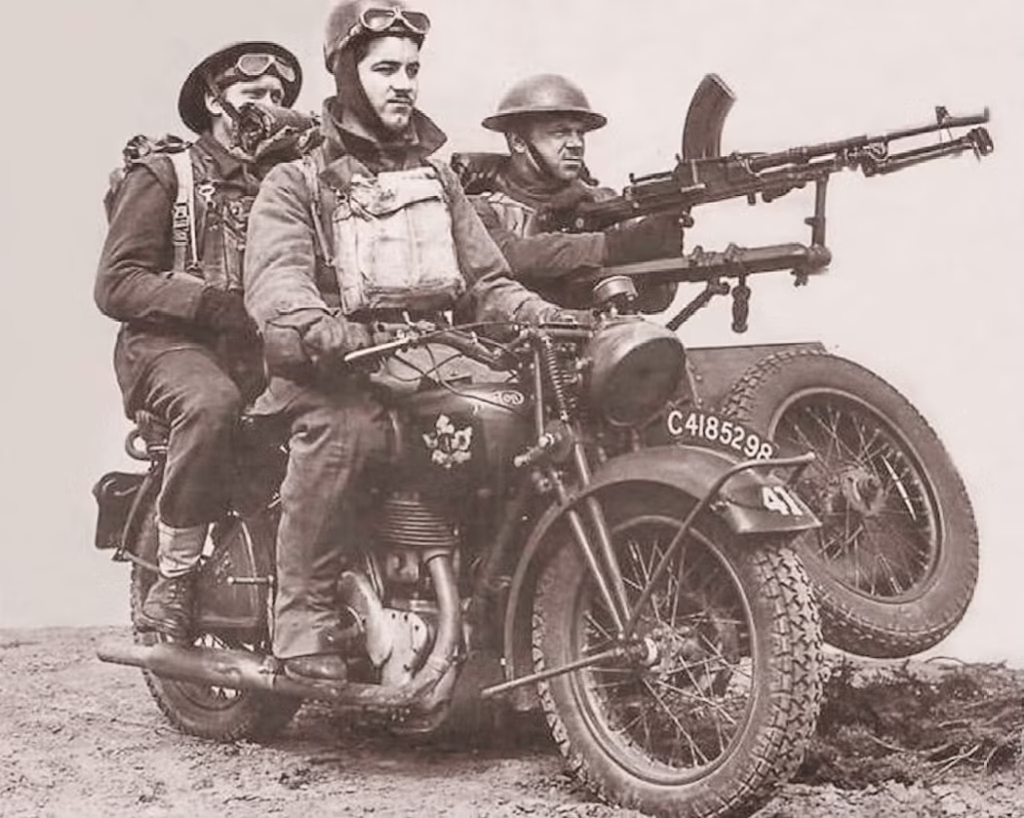
The Norton Big 4, or to give it its official designation the Model 1, served as a heavy-duty workhorse for the British military during World War II.
Designed to carrying two or three men and their equipment over rough terrain, the Big 4 was primarily used for reconnaissance and moving ammunition to the front-line troops.
It had a 633cc side-valve air-cooled single-cylinder engine, generating a meagre 14 HP, but it would pull a train with the masses of bottom end torque making hauling heavy loads, including sidecars a breeze.
Around 5,000 Big 4 sidecar outfits were produced for military use during the war, and they featured a four-speed gearbox with chain final drive, girder front forks, and a rigid rear suspension.
Its simple design made it easy to maintain in the field which was a crucial factor during wartime conditions. Its role was gradually taken over by other more up to date bikes and small 4 wheel drive cars like the Land Rover, but the Big 4 played a valuable role, especially in the early years of the war.
Next, for the motorcycle that will define this list for many, we go to the USA.
2. Harley-Davidson WLA
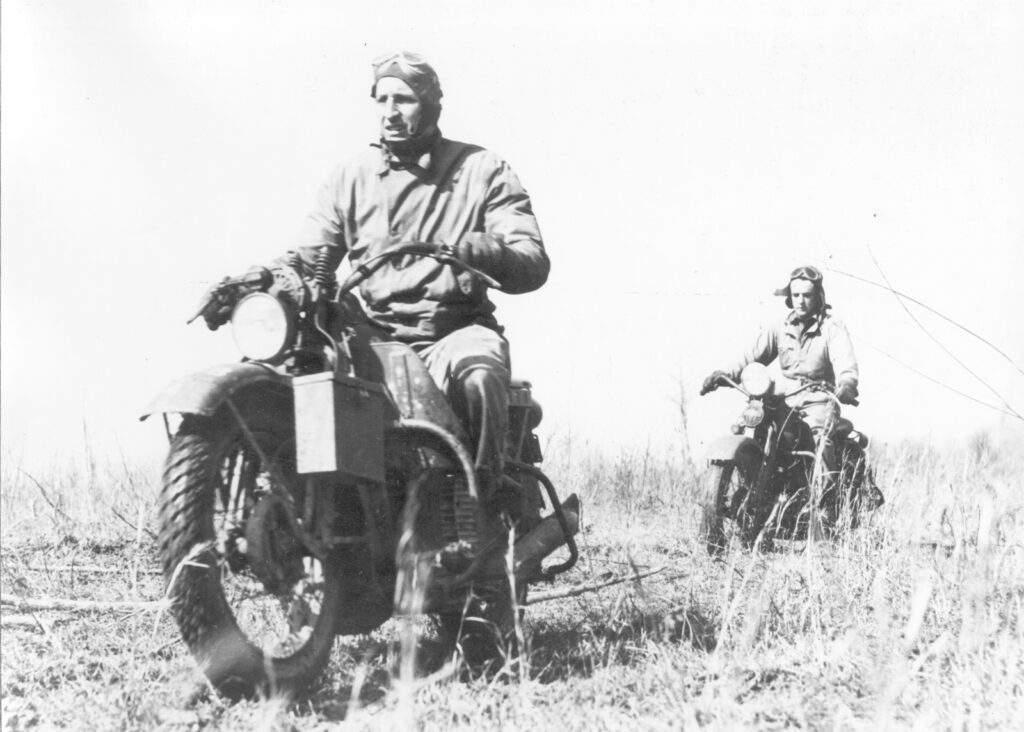
The Harley-Davidson WLA, nicknamed the “Liberator,” is arguably the most iconic military motorcycle of World War II. Produced from 1940 to 1945, and later revived for the Korean War, the WLA was based on the civilian WL model, but adapted for the rigours of war.
Its 45-cubic-inch or 740cc side-valve V-twin engine, produced around 25 HP and it proved reliable, with a top speed fast enough for convoy escorts and dispatch riders.
There were many military modifications beyond olive drab paint. Blackout lights, and fenders with removable sides to prevent mud clogging, and it was solid enough to carry a full radio set up along with ammo boxes and even a Thompson submachine gun scabbard. Which wasn’t a small achievement.
An oil bath air cleaner, initially designed for tractors, meant it was reliable even in dusty environments like the desert, and the WLA came with a three-speed hand shift transmission and springer front forks, but it had a rigid rear end.
They were simple, robust and easy to maintain in the field.
Weighing 245kg or 540 lbs dry, the WLA was a substantial motorcycle, but its low center of gravity and wide tires gave it great stability, even on rough terrain.
The Americans didn’t often use it as a combat vehicle. However, the WLA’s supplied to the Soviet Union were often fitted with sidecars for a small artillery gunner and were used as front line battle wagons.
Many WLA’s were sold as surplus in Western countries after the war. The low cost of the bikes made them an obvious choice for returning soldiers as well as new riders and their legacy lives on.
Going back to a time before the Harley WLA, we have another heavyweight.
3. Sokół 1000
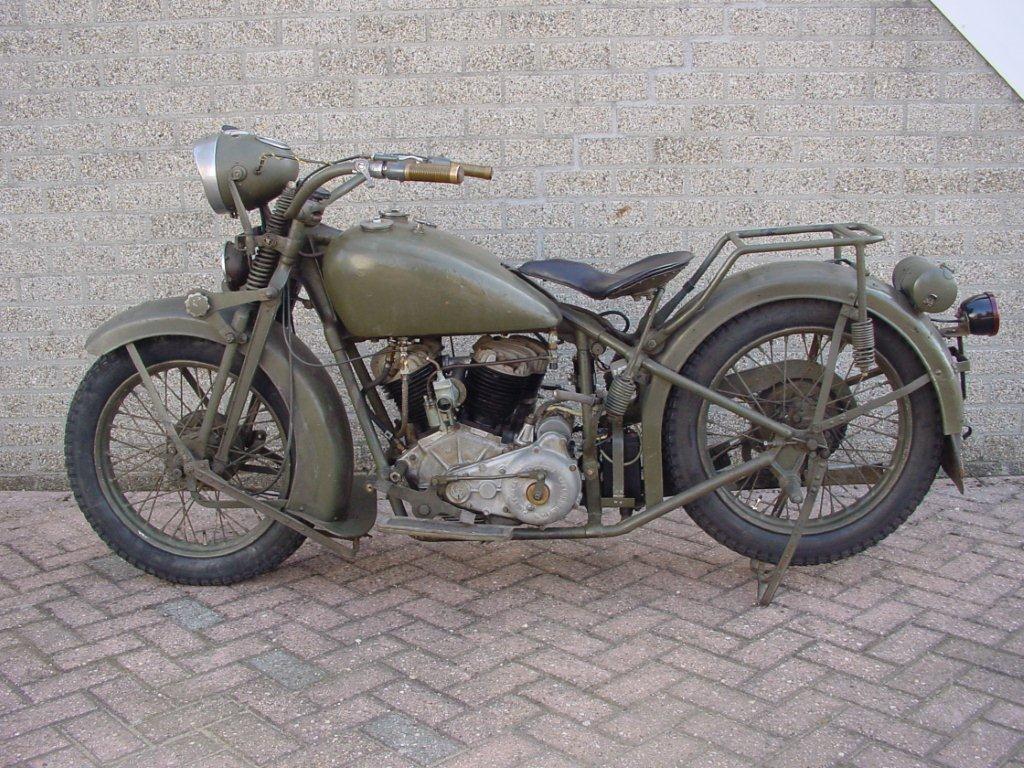
The Sokół 1000 or CWS M111 was produced from 1933 to 1939, and it was Poland’s heaviest pre-war motorcycle, serving both civilian and military roles.
Its 995cc four-stroke V-twin engine produced 18 HP at just 3000 rpm, so with a top speed of 62 mph it wasn’t fast. This was a heavy hauler.
Designed for reliability and durability, the Sokół 1000 had a robust frame with a six-spring suspension, and was fitted with a sidecar as standard.
Its big 5.3-gallon fuel tank provided a significant range, making it perfect for extended patrols and dispatch duties, as well as a way to get weapons and ammunition to the front line.
While heavy for its class, the Sokół 1000’s strong construction and over-engineered design gave it fantastic off-road capabilities, and it was a valuable asset for the Polish Army.
One of its innovative features was a soft sidecar mounting, designed to absorb impacts over rough terrain.
This gave the Sokół 1000 better handling and allowed for greater off-road speed by absorbing shocks and maintaining better control on uneven ground.
This innovative feature was a key technical innovation developed by Polish engineers and it made the motorcycle much more stable and controllable when riding off-road. It meant that the motorcycle could handle bumps and uneven surfaces much more effectively, and was faster off-road compared to any of the other heavyweight assault bikes.
Despite its relatively high cost, the Sokół 1000’s reliability and durability made it a popular choice, and every tenth motorcycle produced underwent rigorous testing to ensure a consistently good build quality.
The Sokół 1000 stands as an example of the ingenuity and resourcefulness of the Polish motorcycle industry in the pre-war era and it makes me wonder what happened to the engineers, factory and tooling.
Shortly after the Sokół 1000 was built, we got a German flat twin sidecar outfit, but maybe not the one you might think.
4. Zündapp KS 750
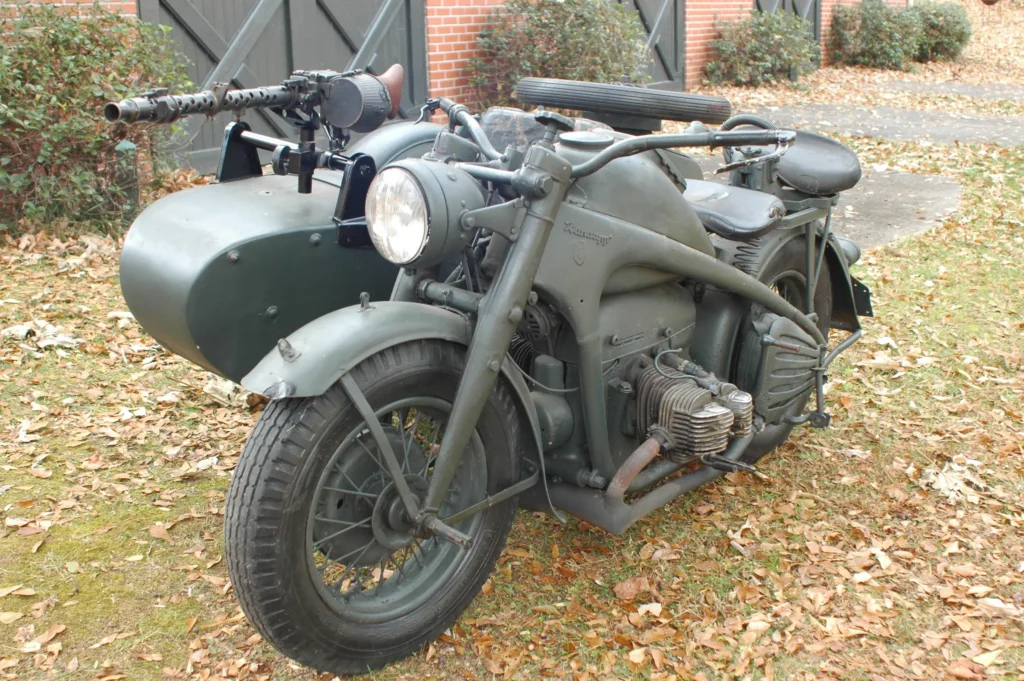
Developed in 1937 at the direct request of the German Army High Command, the Zündapp KS 750 was a purpose-built military motorcycle and sidecar built with a specific set of demanding criteria.
The Army needed a motorcycle that could carry a 500 kg or 1,100 lbs payload, three soldiers, and achieve a top speed of 95 km/h or 60mph. The KS 750 could run all day fully loaded at 50 mph or 80kmh on the Autobahn. But also crucially, it also had to be able to maintain a minimum speed of just 2.5 mph or 4 km/h so it could keep pace with marching infantry.
The Zündapp KS 750 was designed with a unique two-wheel drive system where both the rear wheel and the sidecar wheel were shaft-driven. It had a five-forward, one-reverse gearbox and a locking differential to effectively split torque on difficult terrain. Equipped with 4.5 x 16-inch cross-country tires, the KS 750 had great ground clearance and was capable of handling even the most rigorous wartime service.
The motorcycle, powered by a 751 cc flat-twin engine, entered service in 1941 after 4 years of development and was deployed on all major German battlefronts.
Despite its advanced features and success on the battlefield, its high production cost led to its discontinuation in 1944, but over 18,500 units were built before it was discontinued, showing its value as a purpose-built war machine.
It began with the search for the ultimate all terrain motorcycle and the Zündapp KS 750 was the culmination of that search.
Imagine how unstoppable it would be if the V-Twin Sokol with its off road chassis and the drive train of the Zundapp had been built into one bike.
Next we go behind the iron curtain.
5. MMZ, IMZ, GMZ, M72 Ural
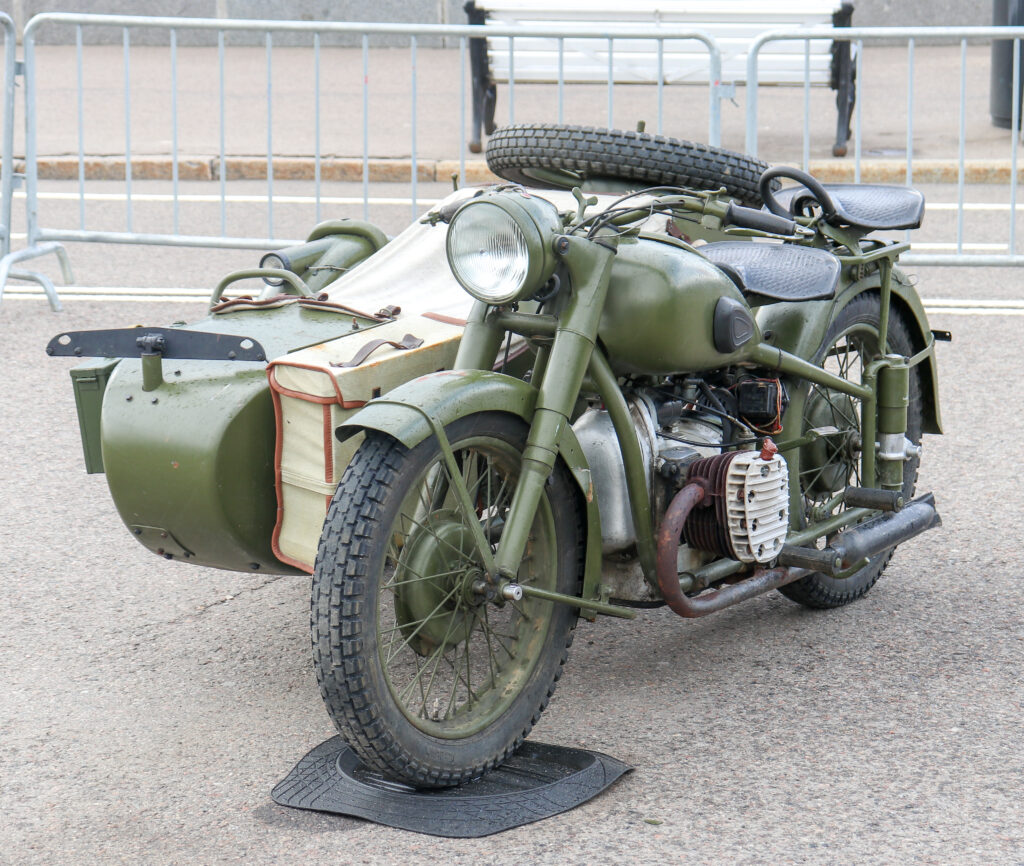
Because Perhaps one of the most fascinating stories of military engineering comes from the other side of the conflict.
Originally branded as the MMZ, it was then called the IMZ and then the GMZ when the factory moved.
The IMZ-Ural, initially designated the M-72, has its origins in the Soviet Union’s preparations for a potential conflict with Nazi Germany.
The Red Army needed a small, durable, multi-purpose vehicle that could handle the poor roads and unforgiving battlefields of the USSR.
A meeting at the end of the 1930s concluded that the Nazi Army’s BMW R71 motorcycle was the ideal design. And In an incredible feat of military-industrial espionage, the Soviets covertly acquired five R71 units through the back door via Sweden.
They then reverse-engineered the entire bike to create their own version.
The M-72 was not a similar design, it was a direct and very intentional act of copying.
Production of the M-72 began in August 1941 at the Moscow Motorcycle Plant, but when the Nazis invaded, the factory was moved east to Irbit in the Ural mountains to protect it from the Luftwaffe’s bombing.
It was at this point that the motorcycle got its new name, the Ural.
It had a 746cc flat-twin, 4-stroke engine with a shaft-driven final drive and was capable at least in theory of hitting a top speed of 65mph or 105kph, but in practice that was unlikely, especially if it was loaded down with soldiers or ammunition.
A total of 9,799 M-72s were delivered to reconnaissance and mobile detachments during World War II.
After the war, military production was shifted to another plant, and IMZ began focusing on producing bikes for the domestic market.
In 1994, Urals began to be sold on the world stage, and today, they are a globally recognized brand.
The main product, the Ural Gear Up, has the same classic appearance as the old Ural, but in a more modern motorcycle with some pretty high-end parts from international suppliers, like Brembo brakes and Sachs suspension.
It shows the enduring viability of a design that was forged over 80 years ago on the brutal battlefields of the Eastern Front, but still carves a niche in the modern industry.
We go back to Germany next with one of the most iconic designs ever built.
6. BMW R12 and R17
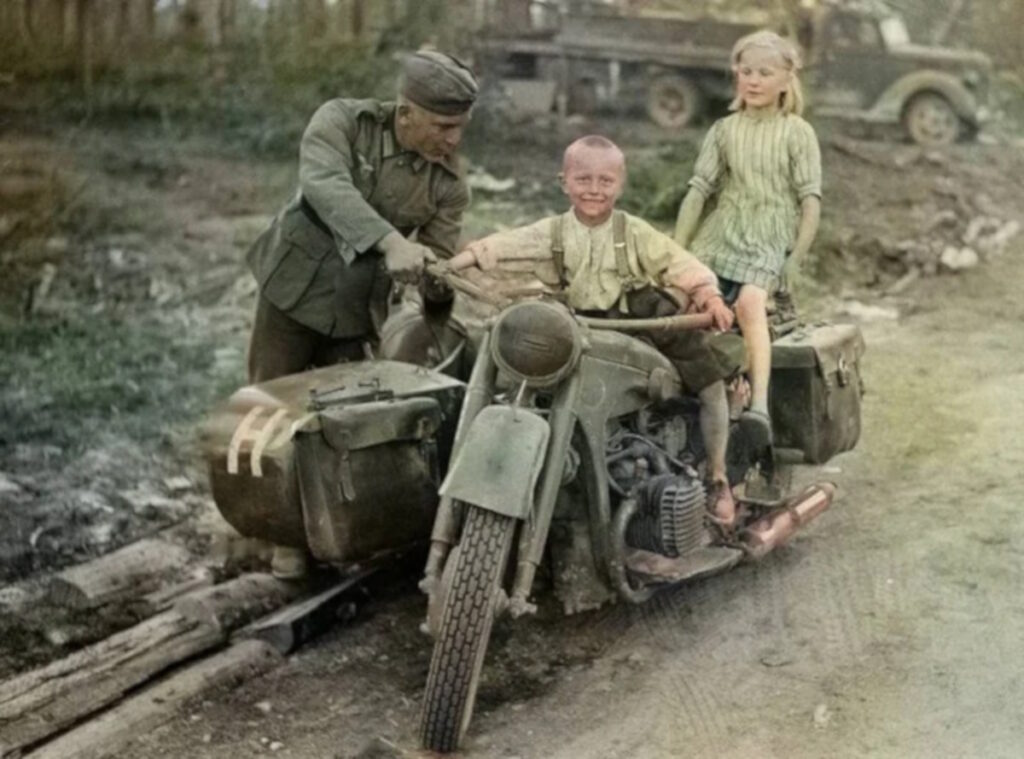
The BMW R12 and R17 were produced from 1935 to 1942, and represent a significant chapter in the history of military motorcycles.
Both were flat-twins.
The R12, had a 745cc side-valve boxer twin engine that produced 18 HP. It had a four-speed manual gearbox with a hand-shift lever, which gave it a top speed of around 70 mph.
The final drive was a shaft which was a game changer in the mud of the battlefields.
For military applications, a single carburettor version, known as the Einvergasermotor, was made exclusively for the R12, and they became the workhorses of the German army during World War II.
The R17 featured a new overhead valve engine to push up performance for special duties, but they were a rare beast.
You will hear that It was heavily influenced by the 1934 R7 concept motorcycle, which introduced a new hydraulic fork design and that it was that single innovation would prove a game-changer.
That is true except for the fact as you will hear in my video about motorcycle innovations linked in the description, they weren’t the first. They stole the design from Nilfisk.
But you could say that the R12 was the first mass-produced motorcycle with hydraulically damped telescopic forks. This innovation in suspension technology, made it perfect for military needs, with far better handling than most of its competitors.
Compared to the competition they were relatively compact too, though they weren’t lightweight.
With a 3.1-gallon fuel tank, the R12 and R17 had a decent range, so they were often used for extended patrols and dispatch duties. The R12 could return anything from 60 to 67 miles to the gallon which gave it a significant advantage with a 200 mile range.
Their robust construction and dependable performance made them valuable assets for the German military and they were strong enough to pull a heavily loaded sidecar with ease and shaped the future of the BMW brand more than any other bike.
Back in the USA, the wheels were turning.
7. Indian 841
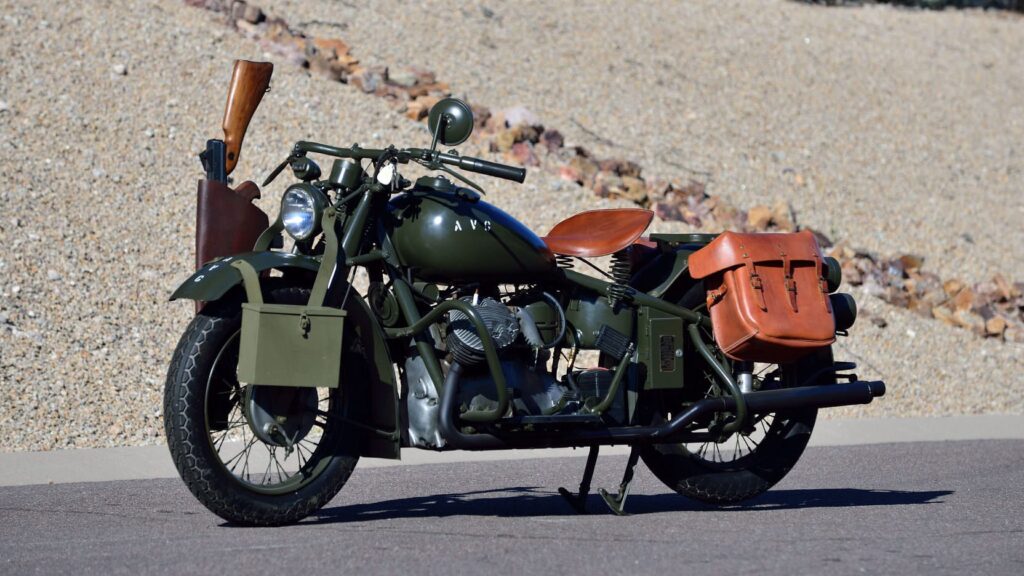
The Indian 841 was one of Indian’s more innovative approaches to military motorcycle design.
Developed in 1941, specifically for desert warfare during World War II, the 841 featured a unique longitudinally mounted air-cooled 90-degree V-twin engine with shaft drive to the rear wheel, a configuration later made famous by the Moto Guzzi brand.
This 737cc engine produced 25 HP and would push the 841 to a top speed of around 70 mph.
Its tubular frame, plunger rear suspension, and four-speed transmission with foot-operated shifter and hand-operated clutch were similar to the BMW R71, which served as inspiration for the 841’s design. However, the Indian 841 distinguished itself with its unique engine configuration and girder front forks.
It also featured a heel-and-toe shift pedal, crash bars for cylinder protection, 18-inch wheels, and two separate petrol tanks holding a full 5 gallons of fuel.
While the 841 ultimately wasn’t adopted for widespread military use, its innovative design make it a fascinating example of wartime motorcycle development.
At the same time in the UK it was the Birmingham Small Arms Company that were at the forefront of the war effort.
8. BSA M20
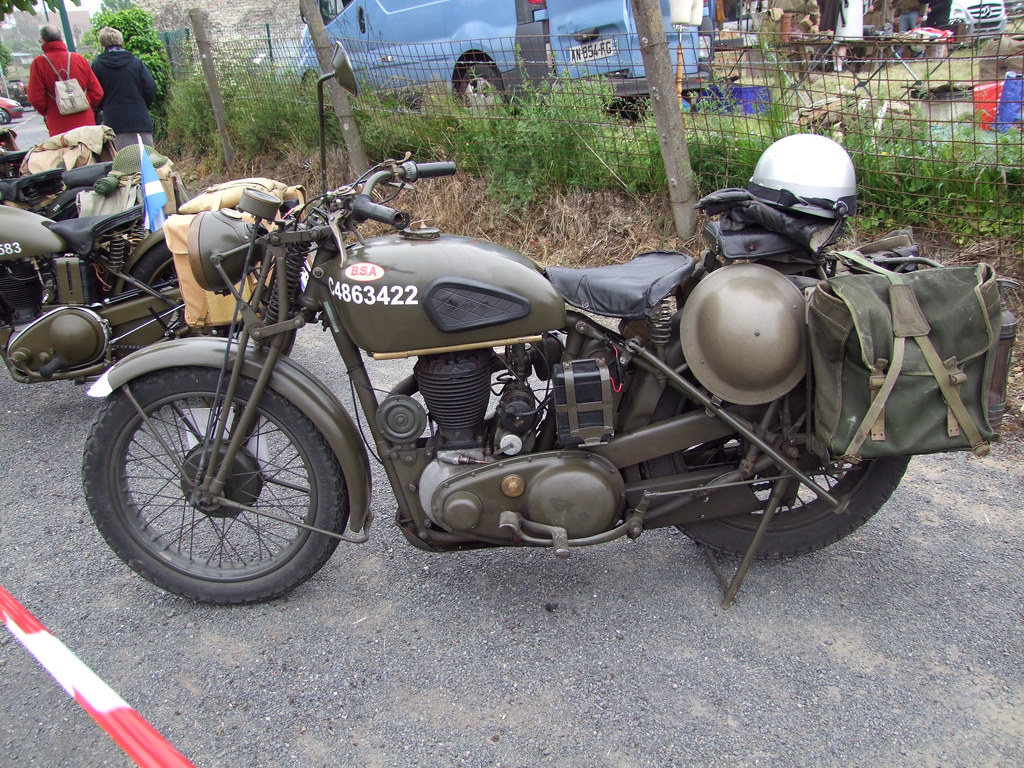
Initially deemed a near failure by the War Office in 1936, the M20 proved its worth through sheer reliability and ease of maintenance.
Manufactured by the Birmingham Small Arms Company, it became a workhorse for the British military during World War II both as a solo motorcycle and also a sidecar outfit.
Its 496cc single-cylinder side-valve four-stroke engine produced just 13hp at 4,200 rpm, but it would pull a truck through the mud on the battlefield when needed it was so strong.
The M20 was a simple design and its robust construction allowed it to survive the harshest conditions of wartime service.
With a 3-gallon fuel capacity and a 4-speed transmission with chain drive, it offered a practical range and utilitarian functionality.
Eventually, over 126,000 M20s saw active service during the war, making it the most common motorcycle produced for the British military at the time. Its tough simplicity made it a favourite among troops, and its name still lingers today, with many M20s still in use around the world.
It might not get anywhere quickly, but the M20 would always get there, even if it was loaded down with artillery shells and pulling a trailer behind the sidecar outfit.
9. Ariel W/NG 350
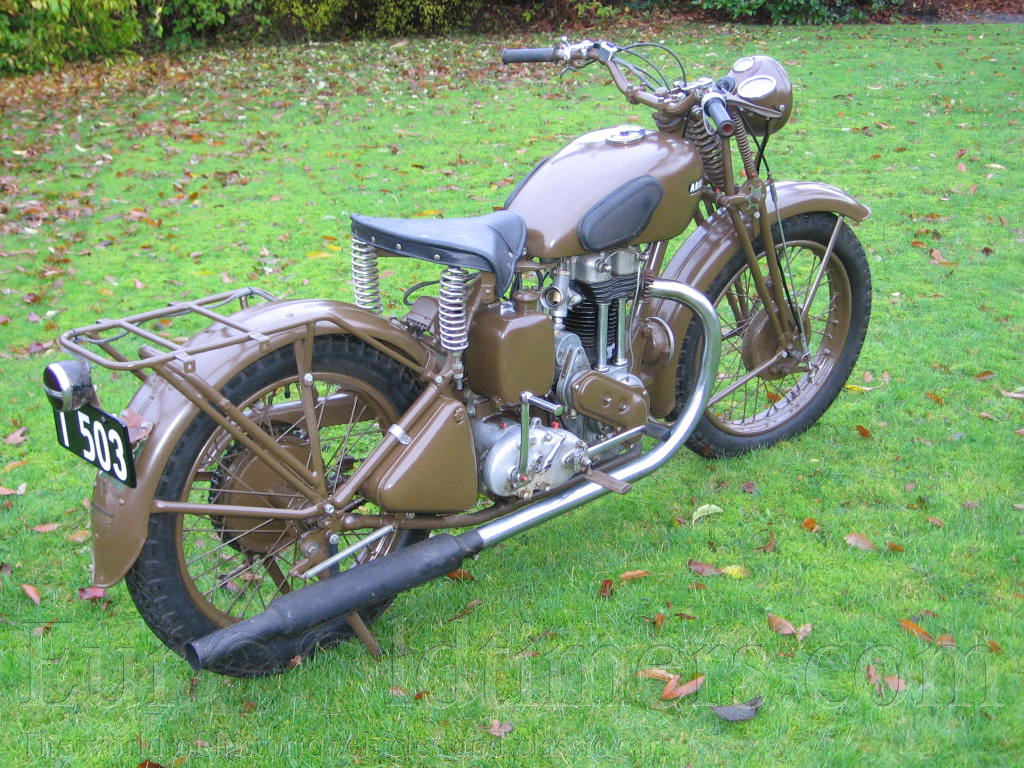
Down the road in 1932 , the Ariel W/NG 350, was being designed by Val Page, based on the Ariel Red Hunter.
It was powered by a strong 346cc, OHV two-valve air-cooled single-cylinder engine that delivered 17 HP at 5,800 rpm. It had a four-speed gearbox and chain final drive, making the W/NG 350 fast and responsive for its time.
While not initially chosen by the War Department, the W/NG 350 became highly sought after following the Dunkirk evacuation in 1940. The British Army had lost a significant number of motorcycles and the Ariel was drafted in to fill the gaps.
It was basic, with girder front forks and a rigid back-end, but they were simple and robust enough to handle the challenging terrain of the battlefield.
Weighing just 169 kg dry, the W/NG 350 was lightweight compared to many of the military bikes in use, making it very manoeuvrable, and its compact size made it easy to transport.
The bike’s 2.625-gallon fuel capacity provided a reasonable range, and the Ariel W/NG 350 filled a critical gap in the British army’s motorcycle inventory, proving its worth during a time of great need.
The UK did just use a lot of motorcycles and Velocette were next to the front.
10. Velocette MAC
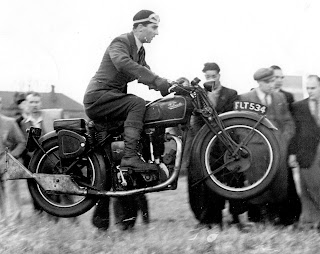
The MAC was born in 1933 really, from the M-series overhead valve MOV 250, but the MAC 350 followed, offering 75mph from its 349cc high-camshaft pushrod engine. The short rocker arms meant less vibration and it became a firm favourite as a smooth, straightforward, slimline, single-cylinder motorcycle.
Military versions of the MAC, were made for the war effort from 1939. The MDD had a beefed-up clutch while the MAF had a reversed race shift or “up-for-down” gear-change, which was subsequently adopted across the whole range.
The pressed-steel front brake drum was dumped in favour of 7-inch front and 6-inch rear cast-iron drum brakes for the military models and it found a niche in post-war military service too. The four-speed gearbox with chain final drive, 19” wheels, and a 50.25-inch wheelbase, with a seat height of 27.5 inches gave the rider a balanced, but commanding riding position, and its 349cc OHV air-cooled single-cylinder engine provided a smooth reliable ride.
It coped well with the lower-grade petrol available during the war and in the post-war era, which made it a practical choice for military use, and it excelled in roles where dependable transport was the primary focus rather than high performance, and adaptability made it a valuable asset in certain applications.
11. Harley-Davidson XA
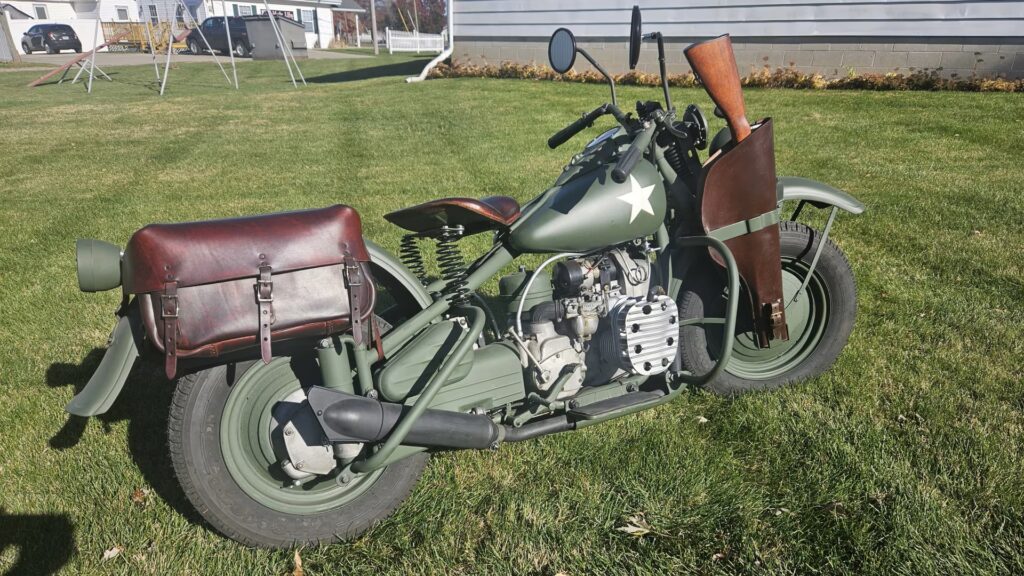
Back to the USA, the Harley-Davidson XA was another experimental Army motorcycle produced in 1942. It represents a unique chapter in Harley-Davidson’s military history.
Developed during World War II, the XA was again specifically designed for desert warfare, and was inspired by the BMW R71.
Its 740cc side valve flat-twin engine was a departure from Harley-Davidson’s traditional V-twin engine format. It generated 23 HP at 4,600 rpm which was pretty good for its time. Compared to the Norton Big 4 it was a powerful bike.
The XA featured a four-speed foot shift transmission, shaft drive, and a tubular steel double cradle chassis, but it used a leading link front suspension and plunger rear making it a more comfortable ride over rough terrain.
The XA was tailored for off-road performance and a 57.5-inch wheelbase made it more manoeuvrable in the dirt.
While ultimately not adopted for widespread military use, the XA’s unique design and desert-focused features showcase Harley-Davidson’s willingness to innovate specifically for the needs of the military.
Back to the UK again and the bikes were getting smaller.
12. Matchless G3/L
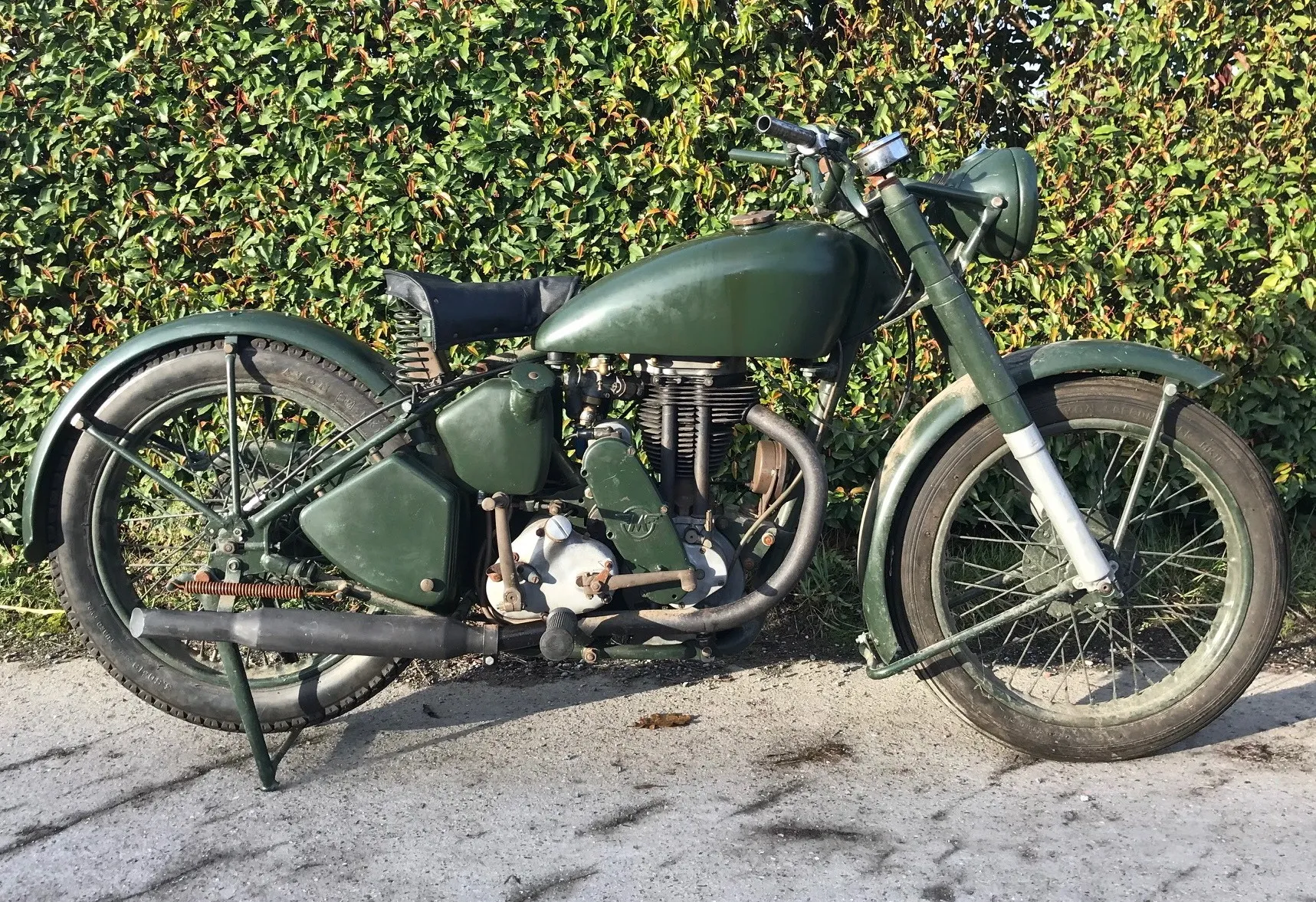
The Matchless G3/L was a British motorcycle produced from 1939 to 1946. It played a significant role during World War II and was in fact still being used well into the 1960’s which shows its durability.
Matchless manufactured approximately 80,000 G3 and G3/L models for the British Army, and this motorcycle marked a significant shift for the British. This military motorcycle introduced what the company called “Teledraulic” front suspension, which went on to become the Norton roadholder system.
Based on the same technology as the Nilfisk and BMW suspension it used an oil damped telescopic system replacing the less forgiving “girder” forks of earlier models. This improved the handling significantly and improved rider comfort, especially over rough terrain.
The G3/L’s 349cc air-cooled single-cylinder engine produced around 16 HP at 5200 rpm, which proved more than sufficient power for its military duties. A 4-speed transmission with chain drive offered reliable performance, and it proved itself a reliable and durable steed in challenging military environments.
13. Royal Enfield WD/RE
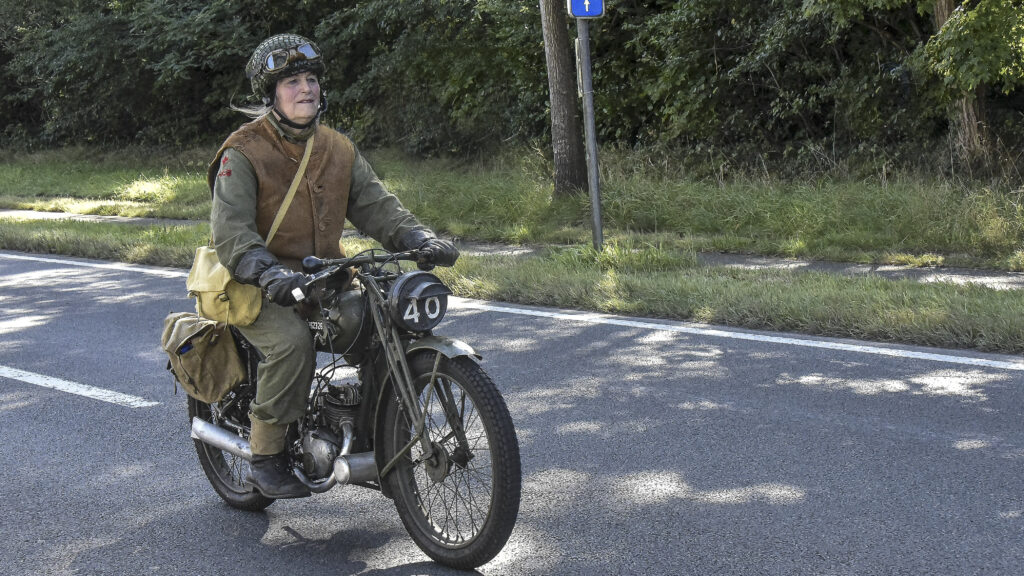
Next we go from the sublime to the ridiculous and in 1942 one of the most unique bikes of the war. That bike was the Royal Enfield WD/RE, or as it was more famously known, the “Flying Flea.
It was a lightweight British military motorcycle created for a very specific mission. To be dropped by parachute or carried in gliders to quickly transport messages and signals for airborne and assault troops when radio comms were not available.
Its compact size and light weight of just 59kg or 130 lbs wet allowed it to be simply dropped into danger zones from the air.
The 126cc two-stroke engine delivered 3.5 HP, propelling it to a top speed of 45 mph, and its light weight and impressive fuel efficiency of 130 mpg made it ideal for reconnaissance missions and messenger duties.
The WD had a simple three-speed transmission, chain final drive, and drum brakes.
Rigid suspension didn’t make it comfortable, but it was deemed sufficient given the bike’s intended role. The need for comfort was outweighed by the need for simplicity and durability.
It featured folding kick-starter, footrests, and handlebars for compact packing which was essential for airborne deployment, and while few were actually parachuted into battle, they could be loaded four at a time into troop-carrying gliders.
It had an ingenious sealed fuel vent to prevent spillage during transport too.
The “Flying Flea” was perfect for beach landings, to help communication between the beaches and front lines, and it is another example of a specialized military design finding a new life too.
After the war, the demand for cheap transport led to many Flying Flea’s being stripped down and repainted for civilian use.
The Royal Enfield “Flying Flea” solved a very specific military problem with an ingenious, lightweight design.
Next we move forward to the 1970’s and a very different time.
14. Condor A350
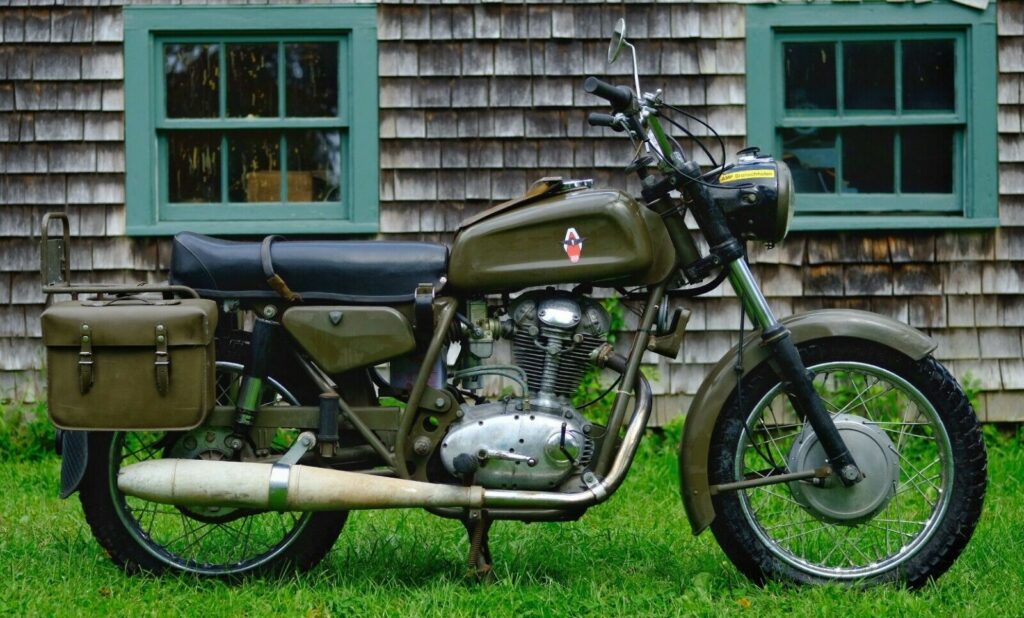
The Condor A350 was a Swiss military motorcycle that marked a unique collaboration and a rugged design.
Produced for the Swiss military from 1973 to 1978, it was a solid motorbike
At its heart was a Ducati 350 scrambler engine, chosen for its reliability and performance. The scrambler engine was heavily modified for military use. Compression ratio was reduced to 8.2:1 to ensure reliable performance even with lower-quality fuel. Power was about 16 HP and that gave it a top speed of around 70 mph.
The exhaust system was redesigned to give it near-silent running, perfect for reconnaissance and covert operations.
The A350’s frame, built around the Ducati engine, featured rubber mounting for enhanced rider comfort. Marzocchi front forks and Koni rear shocks made for a comfortable ride, even on rough terrain.
Grimeca wheels and 200mm drum brakes were as good as you could get, and offered reliable stopping power, essential for navigating the challenging Alpine landscape.
The A350 came equipped with leather saddlebags and specific military accessories, including blackout lights and mounts for two Stgw. 57 assault rifles, highlighting its role as a versatile military platform.
The A350 went on to be used by the French and Italian armies for nearly two decades.
The French army used a specific model up until the First Gulf War and continued its use in training manoeuvrers, keeping the motorcycle in service with one regiment until at least 2006.
This demonstrates that while motorcycles were no longer a front-line combat vehicle, they still filled an essential, long-term role in the military.
Back in the UK we got a motorcycle I have a soft spot for.
15. Armstrong MT500
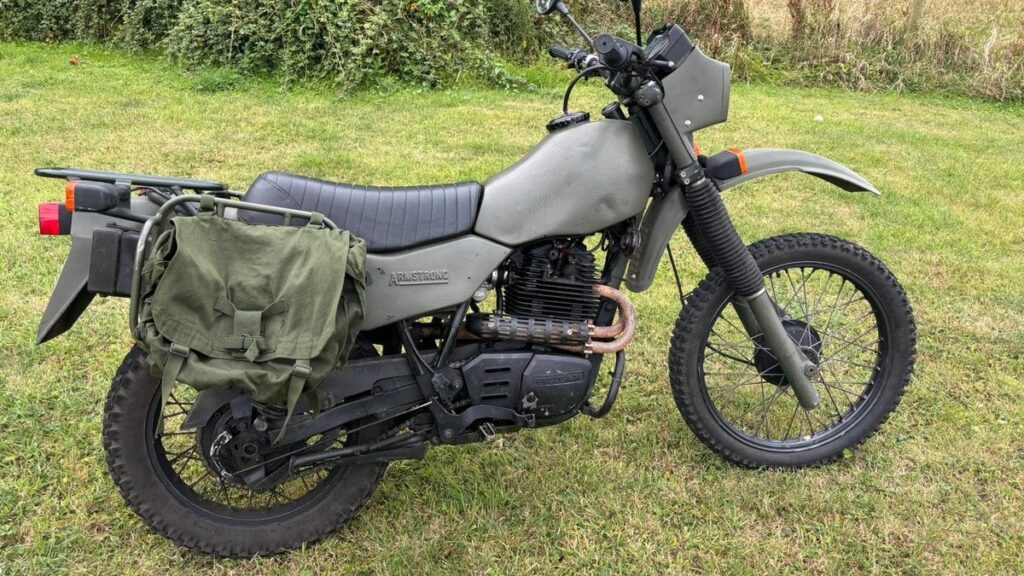
The Armstrong MT500 was a British military motorcycle that emerged from the ashes of the Italian SWM XN Tornado, going into production in the early 1980’s.
Armstrong-CCM Motorcycles, based in Bolton, near Manchester, acquired the rights to SWM’s Rotax engine, and from it they developed the MT500 for the British Army.
This was a rugged machine with a 481.3cc air-cooled single-cylinder four-stroke engine with four valves and a single overhead cam.
That helped it produce around 32 HP at 6200 RPM and 38 N⋅m of torque at 5500 RPM, so the MT500 had enough power for crossing even the most challenging terrain and would tow a jeep if needed.
But its trump card was manoeuvrability. Its short wheelbase helped to make it nimble, while the compact size made it ideal for navigating tight spaces.
A 13-litre fuel capacity gave it a reasonable range for patrols and reconnaissance missions and the MT500 was also one of the first motorcycles to feature an “O” ring chain, which ran on hardened steel sprockets for better durability.
While the standard model relied on a kick start, electric start versions were produced for the Canadian and Jordanian armed forces. This illustrated the bike’s adaptability to different operational needs.
The MT500’s legacy extends beyond its own production run too, as its design formed the basis for the later Harley-Davidson MT350E.
16. Harley-Davidson MT350E
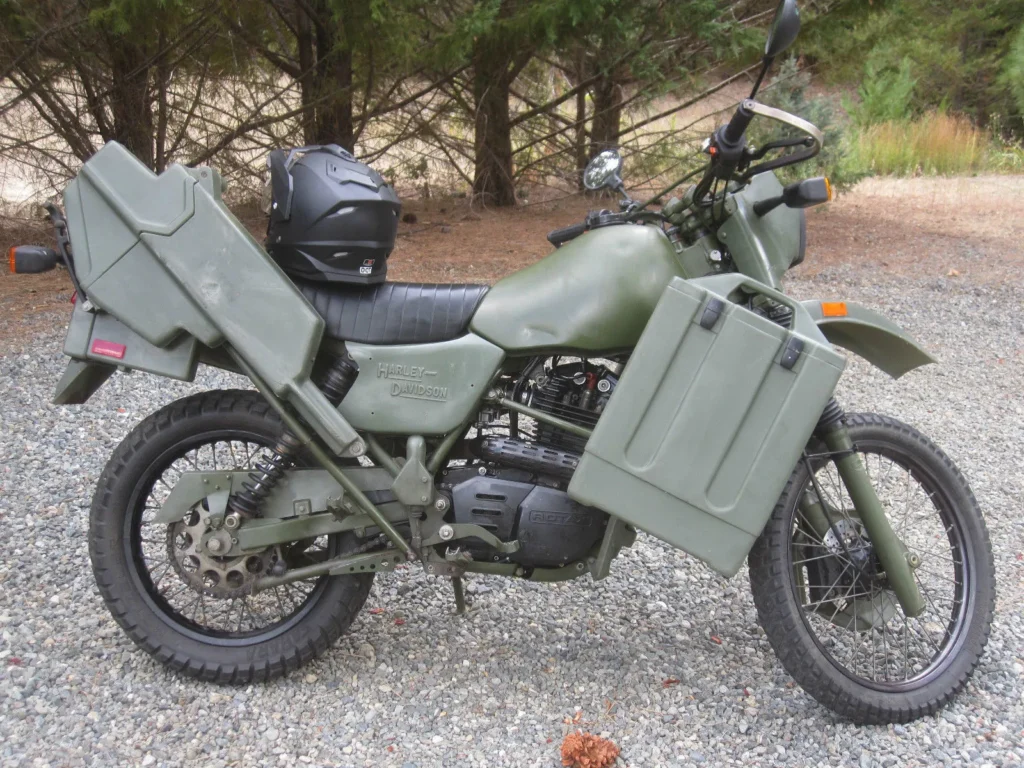
The Harley-Davidson MT350E was an evolution of the Armstrong MT500, inheriting its robust design while incorporating some key improvements.
Its Rotax 348cc air-cooled single-cylinder four-stroke engine, featured a single overhead camshaft design and delivered 30 HP at 8000 RPM and 28 N⋅m of torque at 6500 RPM.
The MT350E retained the MT500’s short wheelbase and overall dimensions, making it just as agile and manoeuvrable. But the inclusion of electric start and disc brakes marked significant upgrades over its predecessor.
This improved usability and stopping power, and the same 13-litre fuel tank offered a better range than its bigger, older brother had achieved which made it a perfect scout raider.
It took on many military operations and was possibly the only good bike that left the Harley factory during the dreaded AMF years.
The MT350E’s dependability and robust construction meant it was kept in use well beyond its intended service life, and a strong after-market for spares and support means it continues to be used even today.
Last but definitely not least we have the newer Italian development of that old SWM design.
17. Cagiva T4
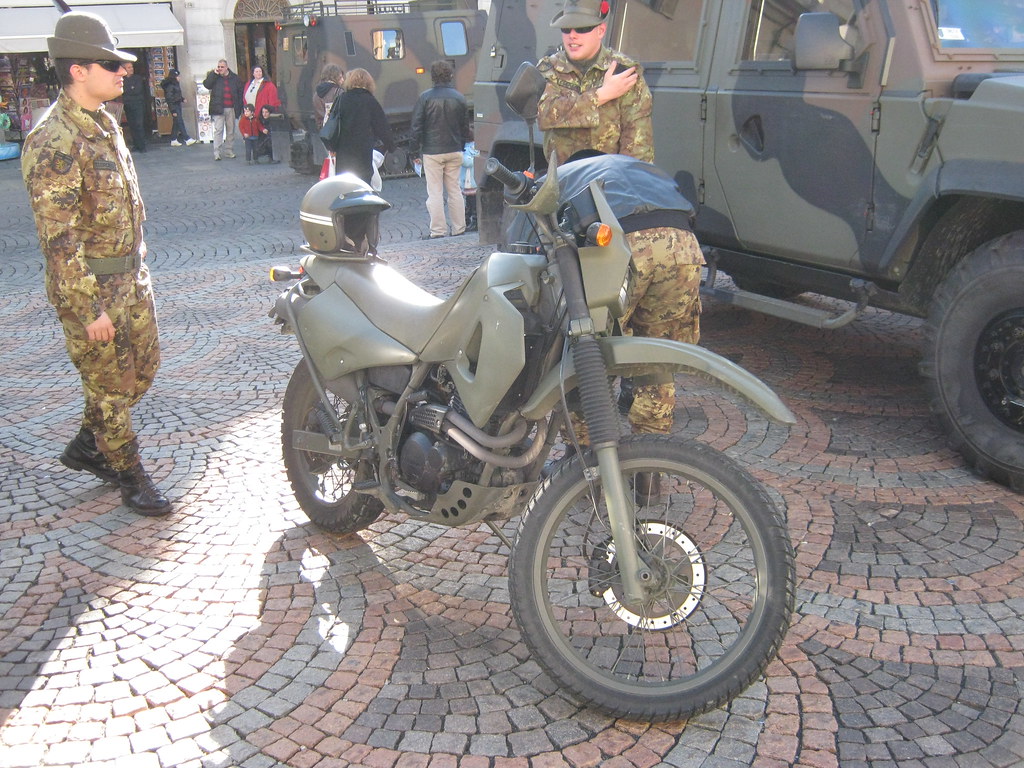
The Cagiva T4 was produced from 1987 to 1991, and it was a lightweight and effective off road motorcycle that was perfect for military use. It held true to the original design of the SWM TornadoIt was robust and manoeuvrable, and the 350cc version, the T4 350 E, saw service with the French and Italian armies for nearly two decades.
This air-cooled single-cylinder four-stroke engine built by Rotax produced 33 HP at 7,500 rpm and 28Nm or just over 20 ft/lbs of torque at 7,000 rpm and the whole bike weighed just 308lbs or 139Kg, making it a punchy lightweight go anywhere bike.
The T4 featured a five-speed transmission, chain drive, and a simple cradle frame with telescopic front forks and a mono-shock rear suspension with masses of travel for off-road riding.
A 240mm front disc brake and rear drum brake meant it stopped just as quickly as it went too,
The T4 was simple, durability, reliability, and perfectly suited for demanding off-road conditions in military service.
It offered a practical and capable platform for many military applications.
Conclusion
From the revolutionary engineering of the German and British bikes to the widespread legacy of the American V-twin, these 17 motorcycles represent a diverse range of designs and functions, each tailored to the specific needs of the military forces they served.
From the lightweight agility of the Royal Enfield WD/RE to the robust power of the Zündapp KS 750, the reliability of the BSA M20 and the innovative design of the Indian 841, these machines played vital roles in wartime operations.
They showcased the ingenuity and adaptability of motorcycle design in the face of conflict.
Their legacy extends beyond the battlefield, influencing motorcycle development and inspiring generations of riders., the history of the military motorcycle is a story of innovation, adaptation, and unforeseen consequences.
These machines were far more than just transportation; they were tools of war that influenced engineering, shaped cultures, and left an indelible mark on history.
The pressure of military requirements pushed manufacturers to innovate, leading to breakthroughs that now define modern motorcycles and their legacy is still with us.
Whether it’s the “Liberator” sparking a new cultural movement, the “Flying Flea” re-emerging as an electric icon, or a Ural still rolling with a sidecar, the impact of these motorcycle workhorses is still very much alive.
They remind us that even the smallest, most nimble machines can play an outsized role in the grand narrative of history.
We’ve covered a lot of ground today, but we’ve still only scratched the surface.
Let me know in the comments which of these bikes is your favourite, and what other vintage military bikes you think I should have included.