Ayup everyone,
If there was one component on modern motorcycles that might prevent them from becoming classic motorcycles, what do you think that component would be?
I spend way too much time on ebay and Facebook Marketplace, usually looking at older classic motorcycles, I see all kinds of bikes, from 30-year-old BMWs that run like a clock, and Japanese bikes from the 80’s and 90’s that have gone around the clock and are still going strong, old Moto Guzzis, Triumphs and more.
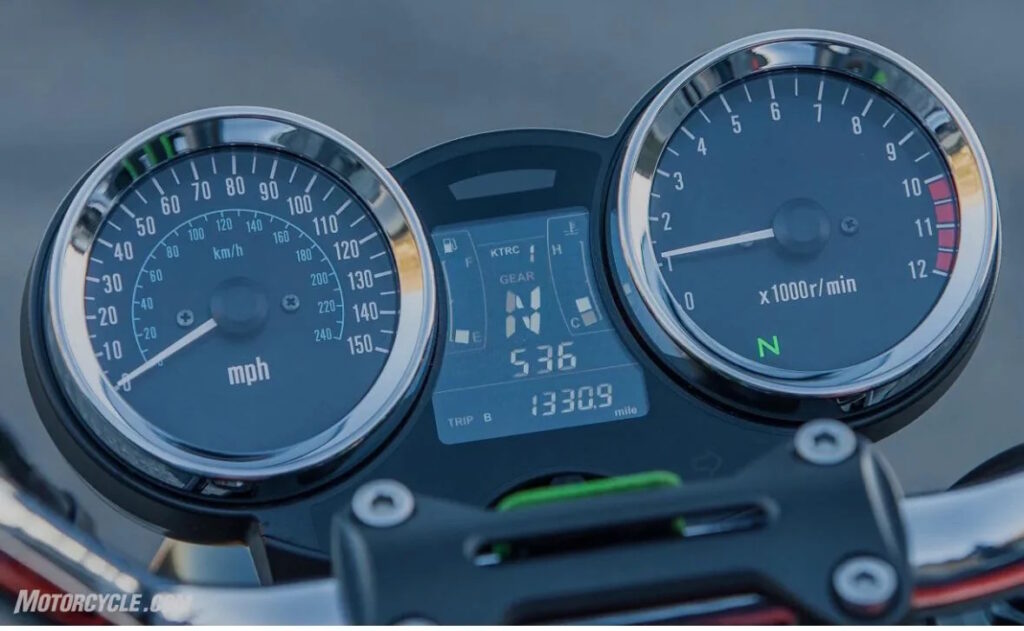
One thing all of those bikes have in common, is that they don’t have something stuck between the handlebars that looks like a TV screen.
There are some modern clocks that look ok, and I’m thinking of the Trident 660, Royal Enfield Himalayan 450 etc that have a gauge cluster that’s modern in some ways but very retro looking.
However, that is now, when they are new. What are these screens going to look like after 20, 10 or even 5 years?
Will they even still function?
Will it just be dim and ugly?
Or will it not work at all?
The shift from analogue instrumentation to these Thin-Film Transistor displays has been a fundamental change in the motorcycle industry. There aren’t many motorcycles now that run real analogue gauges with a mechanical, cable drive system.
Even electrically driven analogue gauges are rare.
We’ve moved from a collection of discrete, repairable components to a software-defined, interconnected system.
While manufacturers market these screens for their enhanced functionality, high resolution, and connectivity features, they have a cost incentive because TFT screens are as cheap as chips.
But, there’s a significant and often hidden financial liability that most riders don’t realize until it’s too late.
On a set of analogue clocks, if a bulb goes, you ride home, swap the bulb and the jobs a good un. If the cable goes, you simply buy a new cable and fit it. In the very unlikely event that the clock mechanism itself goes, that may get more expensive if the guages are part of a bigger console, but it is such a rarity outside accident damage it is hardly worth thinking about.
With TFT screens, none of that is quite so simple.
And let us be clear, faults happen.
Let us look at the cost of this technology.
A older Ducati Multistrada 1200 TFT screen replacement costs between £700 and £800 minimum, just for the screen. But that’s just the beginning. The new screen will need pairing to the bike, so that is a trip to an authorised dealer and we all know what that means. They will always add a hefty price on top.
A Triumph Street Triple owner recently faced a €1,750 bill after moisture got into their display.
KTM owners are reporting replacement costs of $1,700 for the 890 Adventure display, with the part alone costing $1,200 plus installation fees.
BMW riders face huge costs too – their TFT displays start at around £1,200 to replace, and there are accounts of replacement fees reaching up to £3,000 if the wiring loom gets damaged.
Before I go on, I have to say a quick thank-you for all the support, and especially to the BareBonesMC family on the Ko-Fi page.
You can find more videos there, and on the Rumble channel, as well as the back up channel here on youtube, but for now, grab a cuppa and settle in for some home truth’s you won’t hear about elsewhere.
These aren’t isolated cases, they are now the normality. Forum discussions across every major manufacturer confirm this is a systemic industry problem.
What makes it all worse is that these aren’t plug-and-play components.
Modern TFT screens must be paired with the bike’s ECU and immobilizer system using proprietary software that only authorized dealers possess.
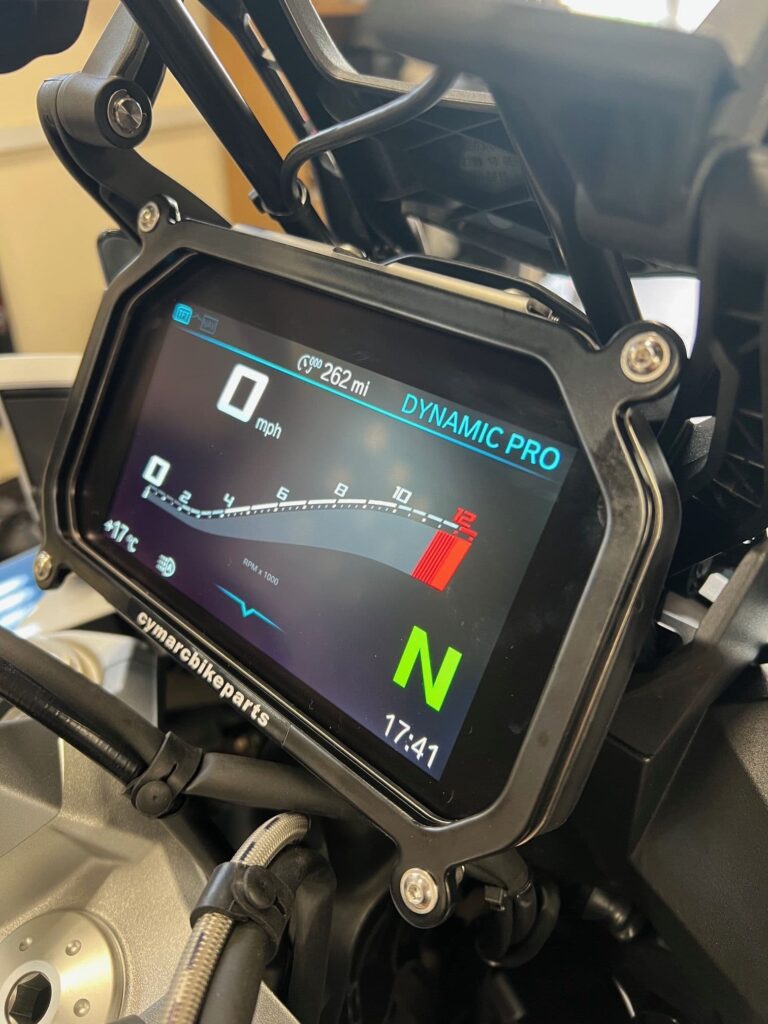
This creates a technical monopoly where you have no choice but to pay the dealer’s exorbitant labour costs, which can add yet more to an already astronomical repair bill.
And here’s where it gets really concerning.
These displays by nature are inherently fragile.
Honda CB650R owners report brown burn marks on their TFT screens from parking in direct sunlight, made worse by some after-market screens that seem to focus the sun’s rays directly onto the display.
Triumph riders have experienced complete failures after moisture gets between the display layers during bad weather. That is the sort of weather we have in the UK for over half of the year.
This often leaves permanent water spots and stains on the screen even if they don’t stop working completely.
CF Moto owners have reported displays flickering after just four months, despite otherwise perfect electrical systems, and KTM riders are seeing stress fractures develop from vibrations and potholes, with condensation building up inside the sealed units. Perfect for bikes built to take on enduro level off road riding.
The technology itself creates a ticking time bomb for long-term ownership. TFT panels rely on software in the rapidly evolving consumer electronics sector, where a specific screen model can become obsolete within just a few years. TFT suppliers give manufacturers “end-of-life” announcements, and retooling for replacement parts costs can be massive.
When a display goes wrong and has been discontinued, your perfectly functional motorcycle will become uneconomical to repair.
This creates a devastating scenario where insurance companies will write off an otherwise mechanically sound motorcycle as a Category N total loss, if the repair cost exceeds the bike’s depreciated value.
A minor drop that damages only the dashboard can easily trigger this economic threshold. Even worse, some replacement TFTs reset the motorcycle’s mileage to zero, immediately destroying any resale value regardless of actual condition.
The after-market offers little relief.
Cheap LCD panels on eBay and AliExpress just wont work. They are just the display component with no backlighting and a standard interface, and they require skills well beyond most of us to integrate them properly.
Even if you manage to fit and connect it, you will still need expensive dealer programming software to pair it with your ECU.
High-end companies like Aim offer full dash replacements for around £1,000, but these are designed for racing and lack the functionality needed for a street bike, like turn signals, fuel guages etc.
Compare this to traditional analogue gauges. Their failures are typically simple mechanical issues – a snapped cable or worn drive gear. Usually they can be fixed affordably with readily available parts.
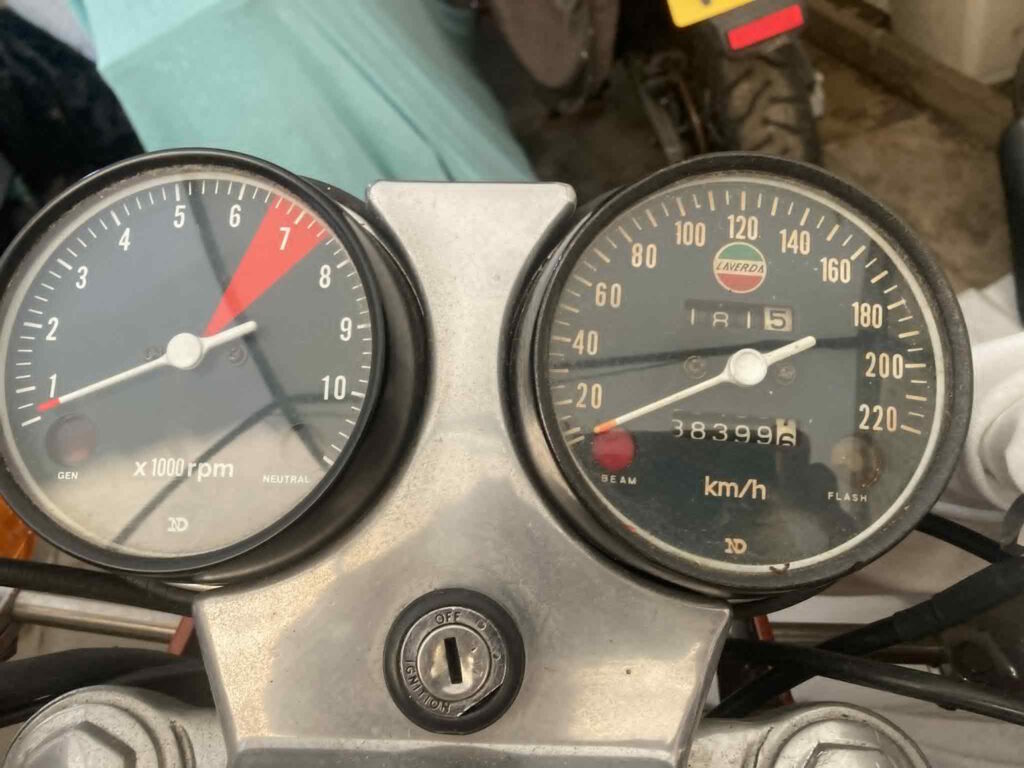
Analogue components aren’t subject to the rapid technological advancement and planned obsolescence that plague electronic components. You can still find parts for Harley-Davidsons from the 1940s, specialists are still around to rebuild Smiths Chronometers and even the ever present Nippon Denso units from the 70’s and 80’s.
Primarily because analogue manufacturing processes are stable and well-understood.
Recent data from rider forums shows TFT failures are happening within just 4-6 years of ownership, well before their technical life span and certainly before most riders expected to have to replace them or their motorcycles.
Due to a different problem, BMW has even started selling anti-theft brackets for their TFT displays. Because it has now become an ever increasing problem that thieves target these units specifically because they’re worth £1,200 and secured by just three clips.
This isn’t about being anti-technology either. I use technology more than many and I want it in my life. But when a single component failure can economically total an otherwise perfect motorcycle, we need to question whether this represents genuine progress, or if it is part of a greater drive towards planned obsolescence being designed into motorcycles to shorten the vehicle lifespan.
The financial equation is stark: TFT displays transform motorcycles from relatively simple, repairable machines into complex electronic systems with a finite and unpredictable lifespan.
The hidden cost isn’t just the eventual replacement either. It is a fundamental shift in ownership philosophy from “fix when broken” to “replace when obsolete.” and that is something that to be honest, I abhor.
For buyers of both new and second hand bikes, it means factoring potential TFT replacement costs into your ownership budget from day one.
Before you buy, research known issues with specific models and cost of repair or replacement.
Things to also consider are the Installation of screen protectors and covers, vibration dampers or other anti vibration mounts and secure mountings if it is possible to retrofit them.
Most importantly, understand that buying a modern motorcycle with a TFT display means accepting a significant financial liability that could strike at any moment. And being aware that however good the bike still is mechanically, that the electronic system’s control interface will have a limited lifespan.
For the industry, this represents a critical juncture.
Manufacturers must balance innovation with long-term ownership viability.
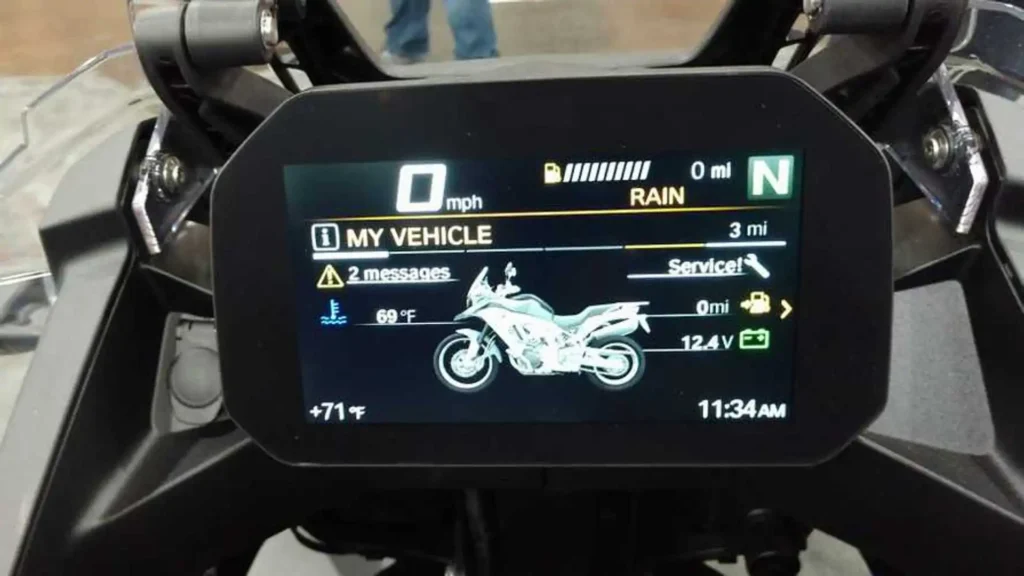
Creating more modular, repairable systems with standardized components would build customer loyalty far more effectively than proprietary, closed-loop technologies that can devastate owners financially, but that is not in the interest of individual companies profits.
The question isn’t whether any particular modern motorcycle will become a classic. It is whether any of them stand a chance of surviving long enough as economically viable motorcycles to even have that chance.
Increasingly, the answer to that question depends on a fragile piece of consumer electronics that was never designed for motorcycles and costs more to replace than many people’s entire bike cost just a few years ago.
Can you think of a motorcycle that is on the market right now that has a modern TFT display that you could see becoming iconic and something that’s going to be here 30 years from now still fully functional?
The evidence suggests the answer might be none of them.
As an example, I think the Yamaha XSR900 GP has all the hallmarks of a future classic, but with a speedo replacement cost of around £800 without fitting now, and many sites already listing the 2024 model as unavailable, how many will last the test of time so that the bike can fulfill its potential as a future classic?
Getting down to the nitty gritty truth.
A TFT or Thin Film Transistor screen generally lasts between 30,000 to 60,000 hours of operation depending on use and environment.
The reality is, that in harsh conditions, 10,000 to 30,000 hours would be expected, whereas in a more amenable environment 50,000 to 90,000 hours might be achieved.
That translates to about 3.5 years of continuous 24/7 use, which might sound a lot, but is it? I have bikes 50 years old that still have the original speedo and rev counter in fully working condition.
A local guy still refurbishes Smiths Chronometers, and I know there is a guy in Holland who does the same with the old Honda CB750 style Nippon Denso clocks.
How many TFT screens will still be working 40 to 50 years after purchase? How much will a replacement cost? And how many people will still be able to remember anything about the software that was used 40 years after the fact?
if you live in Spain where high temperatures are the norm, you will likely get more problems sooner, especially when you consider screen brightness is also likely to be higher as well as ambient temperature.
In the UK the problem would more likely be damp and humidity causing failures, but nevertheless, again it causes a potentially shorter lifespan.
A screens lifespan is affected by many factors. Intensity and frequency of use, brightness settings, operating temperature, vibration, environmental integrity of the housing and the overall quality of the display will all have an effect, and a motorcycle is hardly an ideal environment for any electronic devices.
This of course is especially true for dirt bikes, yet even there we see the use of TFT screens growing every year.
If the brightness is set high on a tft screen it can cause the display to heat up, increasing stress on components, which can shorten its life. If much of that display is fairly static as it is with motorcycle gauges, there will be uneven wear on pixels. This can lead to permanent after-images or ghosting.
A high ambient temperature will also accelerate the ageing of TFT screens, so it is best to avoid exposing them to prolonged heat.
Parking your bike in direct sunlight is just not a good idea with a TFT screen, it’s that simple.
You should also always use a specialized LCD cleaning solution and a soft micro-fiber cloth to clean the screen too. Using water can damage the screen, especially if used alongside the sort of chemicals present in even the most gentle motorcycle detergents.
So, avoid riding in the rain, put a waterproof sealed bag around the unit if you are washing the bike, never leave it in the sun. turn the screen on and off and if possible from dark to light as often as possible, never ride at the same speed for too long, don’t go to visit or live in a hot country or a wet climate, especially if its hot and humid, make sure to fit the sort of anti vibration mounts no manufacturer seem to use, and don’t touch them with wet, greasy or oily hands.
So basically we are stuffed as riders really.
These things just weren’t designed for bikes, and thats before I get started on carplay screens and keeping your attention on the road.
As always, I’ll see you on the next one.