Super-Naked motorcycles, Sports Naked’s, Streetfighters or whatever you want to call them, have always been a part of the motorcycle industry. Once they were the domain of the skilled, or not so skilled home mechanics, but over the years the manufacturers picked up the trend and some ran with it.
Bikes like the KTM 1290 Super Duke R, Kawasaki Z1000, Yamaha MT-10, Ducati Monster 1200 and Streetfighter V4, BMW M1000R, MV Brutale 800 and the new Rush as well as the updated Tuono V4 mean the market is now flooded with naked bikes so powerful they will rip your arms out of the sockets with the slightest twitch of the throttle.
But many are very expensive.
Despite that, in the UK, sales of naked machines are now higher than that of fully faired sports bikes. And with all the performance and handling of a sportsbike in a more comfortable rider friendly package, they have a lot of plus points.
Today I am going to look at how you can get your hands on one of these blisteringly fast bikes without the need to sell your grandma or a kidney. Because it is more than possible.
You don’t need to spend a fortune to get a great bike as I have said so often.
First I will look at the evolution of the bikes, then, at the end, I will go through some prices with you to show you how much it will cost you for bikes like those I have talked about.
The First Proper Super-Naked Motorcycle!
Looking back at bikes like the CBX and Z1300 there has always been a market for force fed UJM’s, but todays high power naked bikes are a whole new breed.
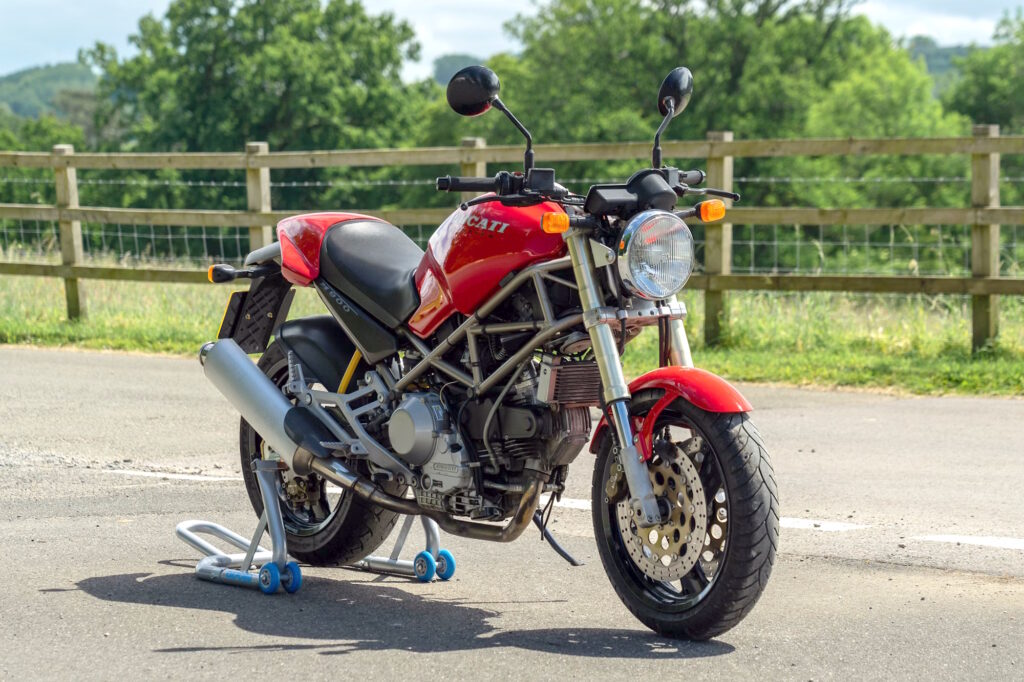
The Ducati Monster 900 is generally accepted as the first of the modern breed of Super-Naked’s, but you could say that the old CB900F from 1979 and VF1100S Sabre might equally be given that title, but the difference really was the weight.
At just 185kg or 408lbs dry, the Ducati Monster 900 was over 50kg or 110lbs lighter than even the lightest of the big Honda’s.
Looking back to 1992 when it was first unveiled at the Cologne Motorcycle Show there is no wonder it arrived with such a bang.
Back then, if you wanted fast, it was a choice between a race replica or a giant behemoth and the Monster 900 was neither of those things.
It was light, agile, and on the roads it was a match for most of the sportsbikes of the day, but it was comfortable to ride too.
The proven trellis chassis, quality suspension and a thumping great air-cooled V Twin motor, made the Monster live up to its name in a way most bikes never do.
They cut away everything that wasn’t essential to keep it as light as possible and with a short wheelbase and sharp geometry it really was a scalpel of a bike, so you could ride it to work every day, go scratching at the weekends and even take on a trackday, knowing the package was a match for any situation.
So that is where I will start today.
That is the benchmark by which the rest will be judged.
The Bikes That Followed
The success of the Monster was a shock for everyone, and a newly relaunched Triumph were the company that reacted fastest.
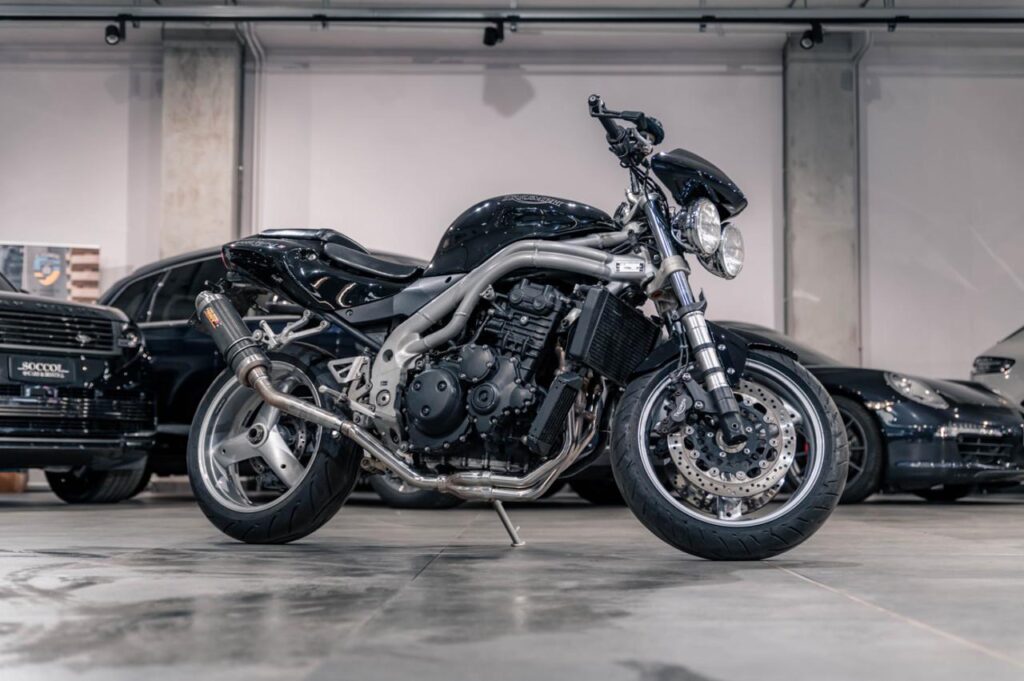
They took the fairings off the Daytona to create the first Triumph Speed Triple. It was heavier than the Monster at 210kg or 463lbs dry and the spine frame of the first generation meant it was a top heavy bike, but it handled well and it was more powerful than the Ducati, producing around 95HP.
The sound of the big triple was hypnotic and it won many fans.
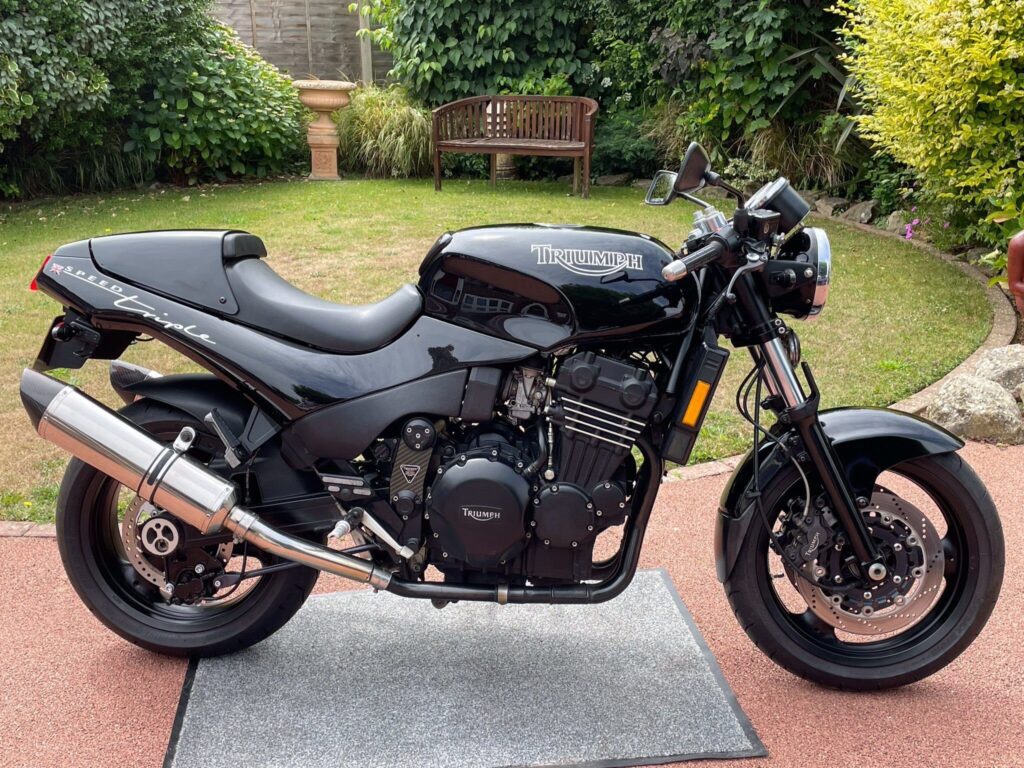
It was seen as sportier than the Ducati, and it was more powerful and possibly a little faster, but where the monster still won was with its sublime handling and the way it got it’s power down on the road.
Suzuki were the first of the big four to react and they stuffed the proven 1157cc air over oil cooled GSXR1100 engine into a cheap, simple, but well designed tubular steel chassis. And so the Bandit 1200 was born.
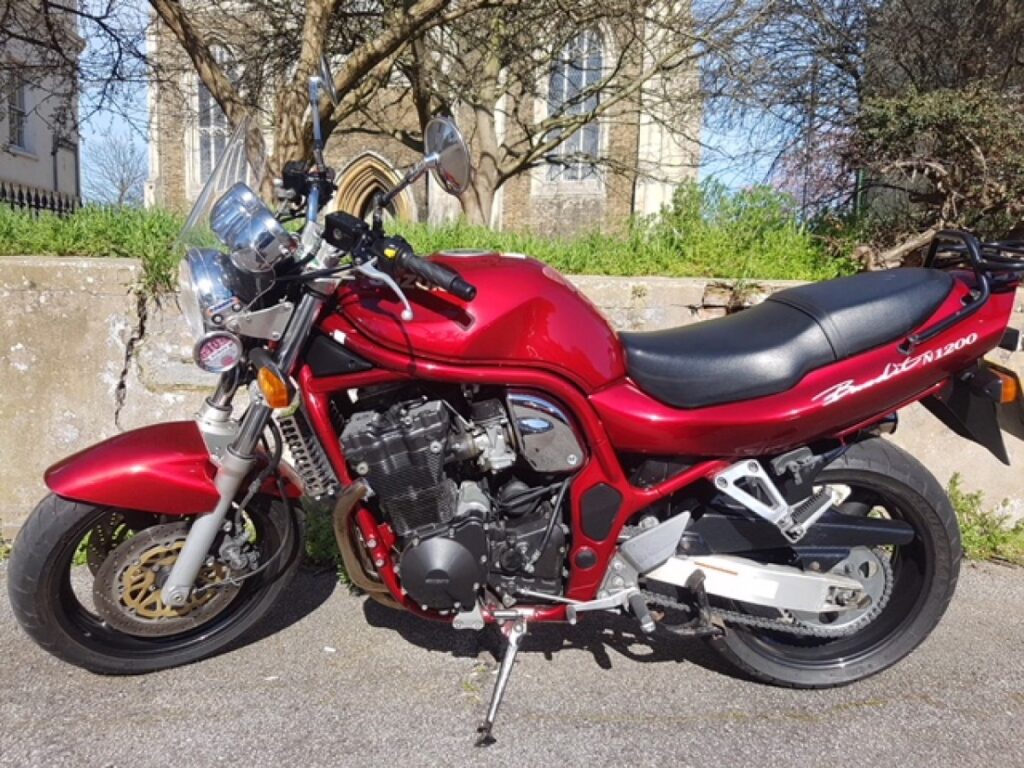
Launched in 1996 the Suzuki Bandit 1200. was bombproof and the slightly retuned engine had plenty of grunt as well as a screaming top end. It was more powerful than the Ducati and had just as much power as the Triumph pushing out just under 100HP stock, but the Bandit engine was easier to tune and had massive potential power on tap for anyone who wanted to take it further.
Even stock it performed admirably and although significantly heavier than the Ducati at 220kg or 485lbs dry, the extra power made it a good match up on the roads.
On a track you could watch the Ducati carry more corner speed, the Triumph fly out of the corners faster, and then the Suzuki would come on strong at the end of the straights, so there really wasn’t much in it when it came to real world performance.
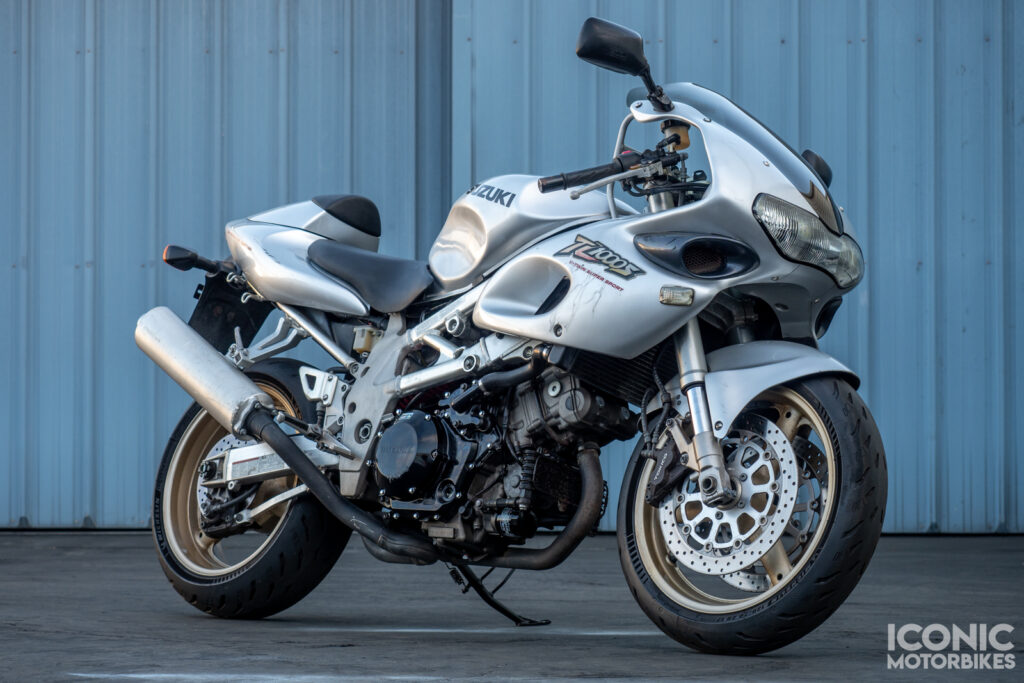
We got a semi naked V Twin Suzuki the year after in the Suzuki TL1000S, but it was never a naked bike really. It quickly gained a reputation for throwing riders into the air like a bucking bronco and although it definitely achieved cult status, was dropped quite quickly by Suzuki.
A New Contender
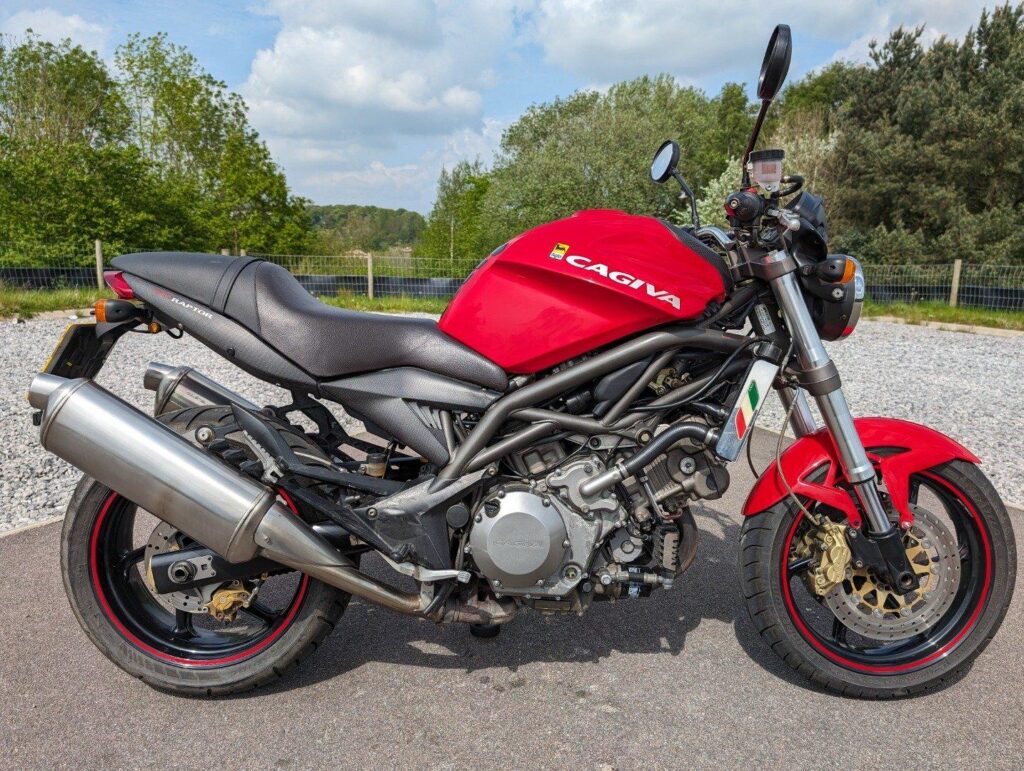
The engine was a peach though and after a spat with Ducati, Cagiva did a deal with Suzuki and in 2000, put the growling 1000cc V Twin engine from the TL1000 into the Cagiva Raptor.
The Cagiva Raptor was a direct attack on the market the Ducati Monster had created and with 105HP and 90Nm of torque on tap, with a weight of 192kg, it set a new benchmark. The Italian chassis and running gear tamed the unruly TL1000 engine and the extra power meant the surge of acceleration you got from the Raptor was hard to beat. So maybe arguably, but a new king was at the top.
By then, Triumph had redesigned the speed triple around the new Triumph Daytona 955 engine and chassis. It was lighter and more powerful in the new model, but Ducati were determined to regain their crown at the top again and they released the first water-cooled S4 Monster in 2001.
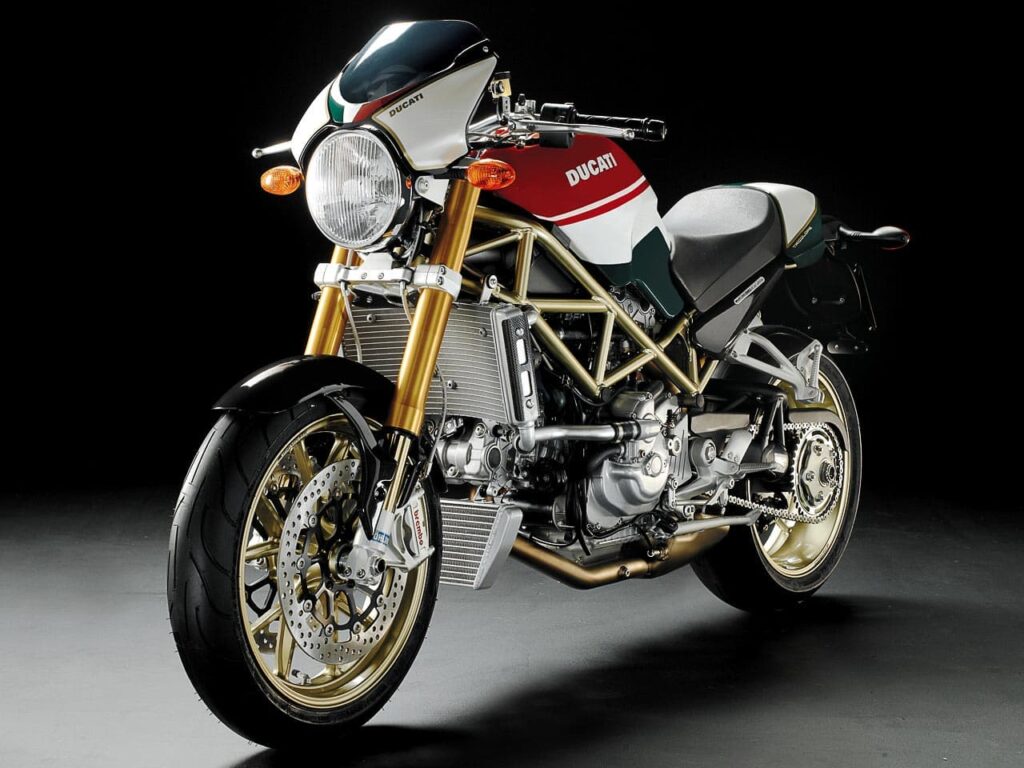
Power in the new Ducati Monster S4 was up over 100hp and torque of 92Nm or 68ft/lbs hit at 7,000 rpm, and although weight was up, at 193kg, it lived up to its name and was still arguably the best all round package alongside the Cagiva Raptor. They both crossed the quarter mile marker togethether at 11.1 seconds, but that was the closest to that 11 second quarter mile barrier any of these bikes had got at the time.
Other than Suzuki the Japanese seemed bereft of ideas.
With the R1 engine in their arsenal Yamaha should have been at the cutting edge of this sector, but they weren’t. Their best attempt was the Yamaha Fazer, which although a great bike, just didn’t have the precise handling that had begun to define this sector. They scrimped on suspension and detuned the engine too much, which produced a great sports tourer, but it would never break the Super-Naked market.
In 2002, Honda tried their hand, taking the 900 fireblade engine and wrapping it in a simple cheap package to give us the Honda 900 Hornet. Again, this was a great bike, and has a serious cult following I am about to upset, because as with the Yamaha, In my opinion, great as it was, the Hornet just never quite gained that Super-Naked status of other the bikes here.
The Bike That Reset The Bar Again!
The bike that reset the bar again was actually another Italian.
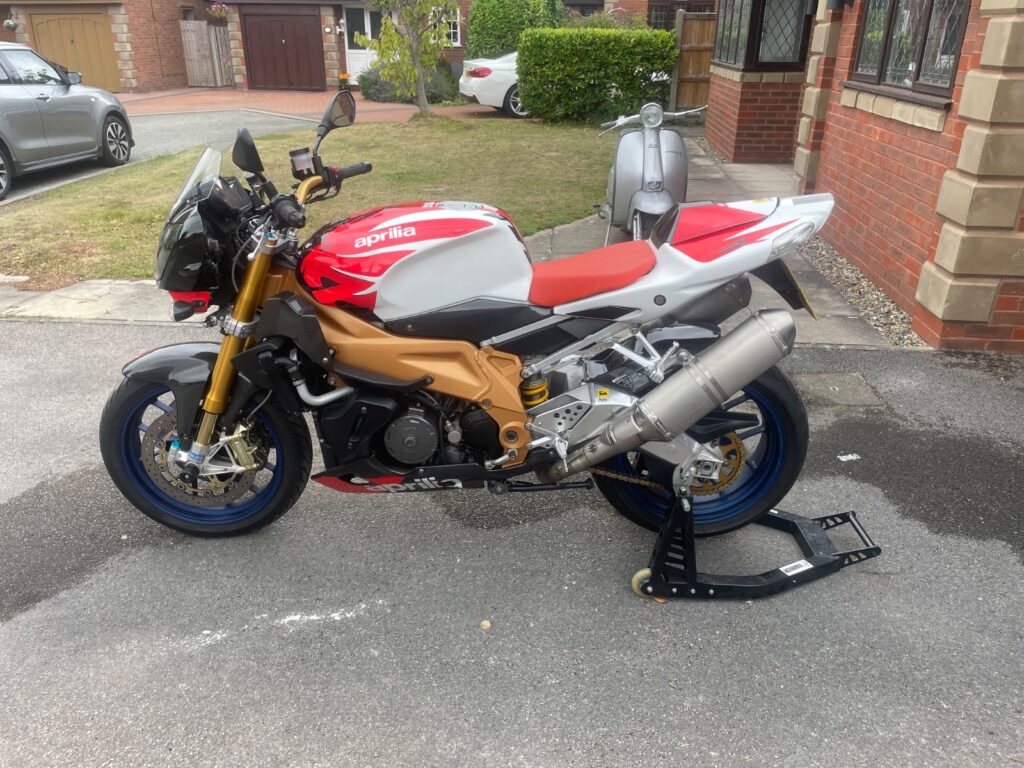
The company was Aprilia and the bike was that first generation of the 1000cc Rotax V Twin engined Aprilia Tuono’s.
You could say the Aprilia Tuono was the first genuine factory Streetfighter in many ways.
There was no getting away from the fact this was simply a Mille without the bodywork. The engine hadn’t been detuned and the suspension and running gear were fantastic. This bike had all the growl and bite of the Mille, but in a cut back and much more street focussed package.
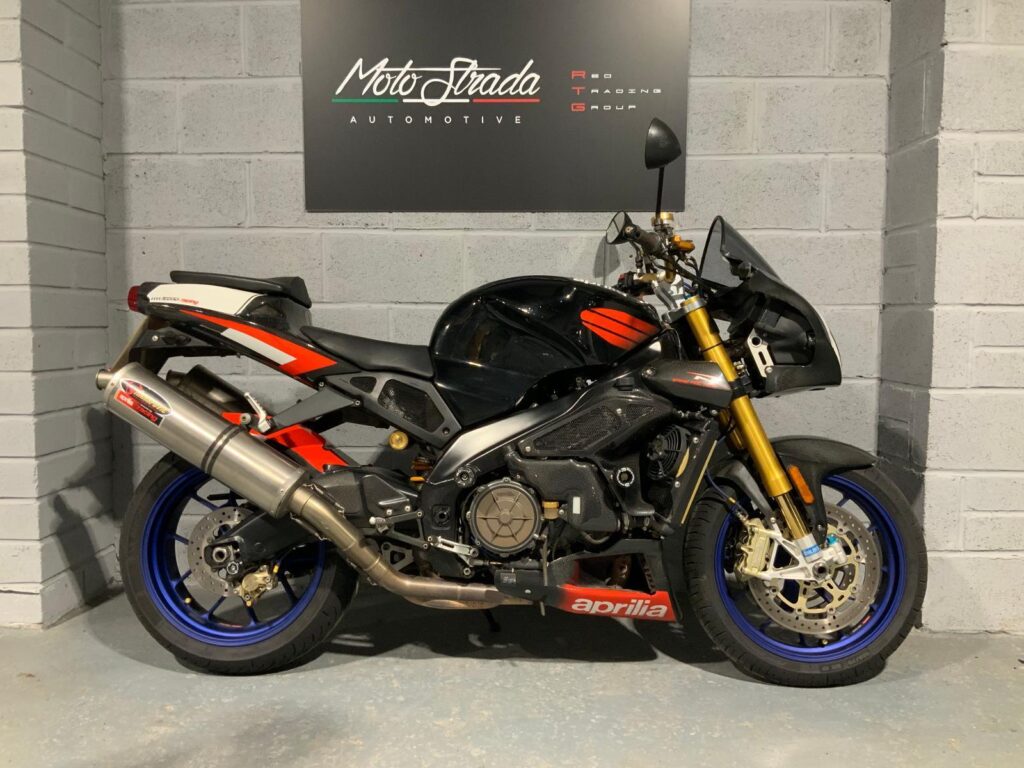
With 126hp hitting at 9,500rpm and over 100Nm or 75ft/lbs of arm wrenching torque on tap at just over 7,000 rpm, this was a bike with muscle to spare. All in a package that weighed just 180kg dry, which put it in a league of its own at the time.
With a standing quarter mile that finally broke the 11 second barrier and a top speed of almost 157mph if you could hang on, it was streets ahead of everything on the market. Even the TL1000 engined Cagiva Xtra Raptor couldn’t compete.
For the very first 100 lucky customers there was a numbered special with a race chip. That motorcycle was dripping with titanium, magnesium, carbon and kevlar too.
Then there were another 200 special Tuono R’s made, and they pushed the limits even further.
The Tuono 1000 stayed at the top of the Aprilia range for the next 9 years, and by 2010 the Tuono Factory R was pushing out over 140hp.
It really had set a new benchmark, and that was a benchmark that few riders would ever explore. Getting the best from a Tuono Factory R took a special kind of rider, but in the hands of someone with the skill and balls to hit the throttle stop there was nothing like it on the market.
The fight was on and it was the Italians who were at the top.
They just seemed to get the fact that it was as much about the weight as the power.
It Was The Austrians Who Reacted Next.
It was 2004 when the first real KTM SuperDuke was released. They had tried with a 950 Duke prototype but it never really got anywhere. 2004 saw the release of their 998cc V Twin that was possibly one of the best incarnations of the LC8C engine to leave the Matthigoffen factory.
120hp and 100Nm of torque put it very close to the Tuono on power and they had kept the weight down too. At 186kg or 410lbs dry, so it was almost a match there too, but the key word there is ALMOST.
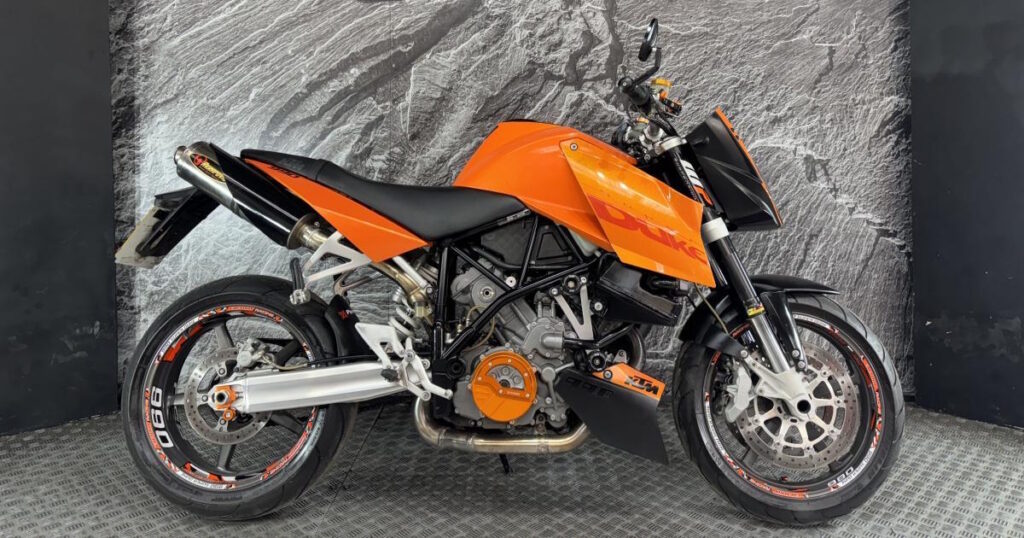
By 2009 the Superduke R was up to 130hp and had kept the weight the same, so the fight was much closer.
By then the Ducati S4RS was also up at 130hp and weight was down to 177kg or 390lbs as long as all the carbon on the extras list was ticked.
Triumph had pushed the Speed triple up to 1050cc and 130hp too. More importantly, they had cut the weight to 189kg dry, so it was even closer to the heels of the Italians and Austrians now.
With 3 different V Twins and a monstrous triple fighting it out at the top, the winner was hard to choose, but whichever was the winner it came from Europe not Japan.
All this time, none of the Japanese companies had really built anything to match the europeans. To say they were slow to the party is a bit of an understatement.
It had been 18 years since the first Monster had been unveiled and the best they had built other than the Bandit, were overweight, detuned Superbikes that were just no match for what had become known as the Super-Nakeds.
In 2008 Suzuki proved again that they hadn’t got the memo about weight. They released the Suzuki B-King, and by the time this naked Hayabusa made it to the market it produced 180hp, but It had been hit by the ugly stick so many times not even a mother could have loved it.
It was a complete and utter flop and Suzuki dropped from the range faster than it had appeared.
Yamaha also missed the mark with the 2005 Yamaha MT-01. It was a great bike, but it was no match for the big V Twins from Europe.
MV Agusta joined the rest with the introduction of the Brutale which took the prize as most exotic and expensive entry, and brands like the newly relaunched Moto Morini ,and even MZ joined the Super-Naked club.
But it was in 2009 that Ducati pressed the reset button again.
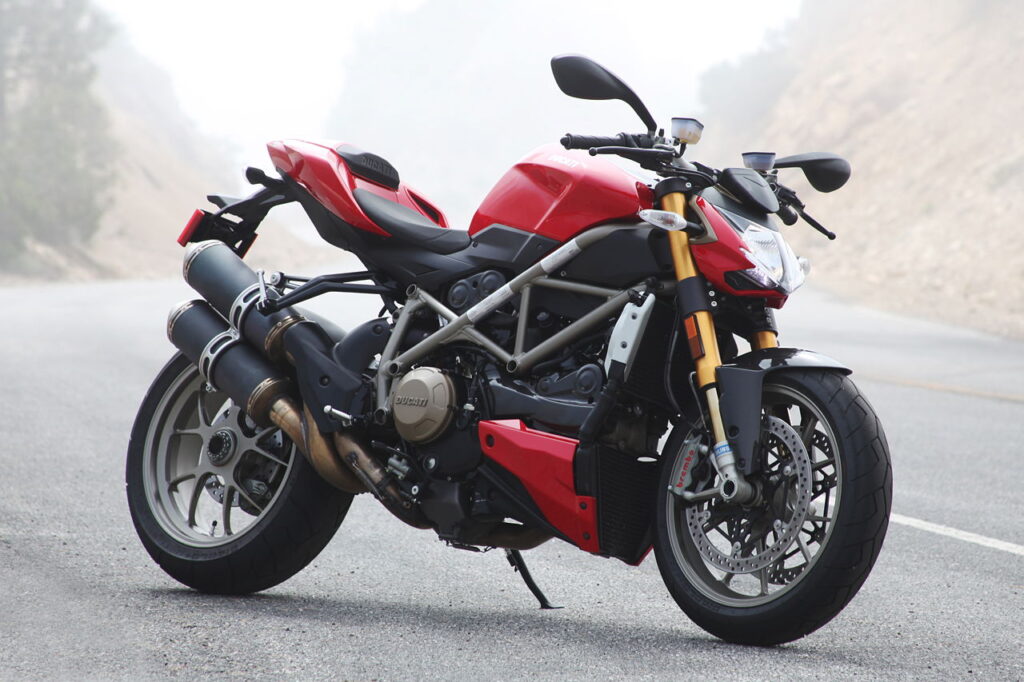
That was when Ducati launched the all new 1098 Streetfighter, which joined Monster in their range.
The Ducati Streetfighter pushed power up to a claimed 155hp.
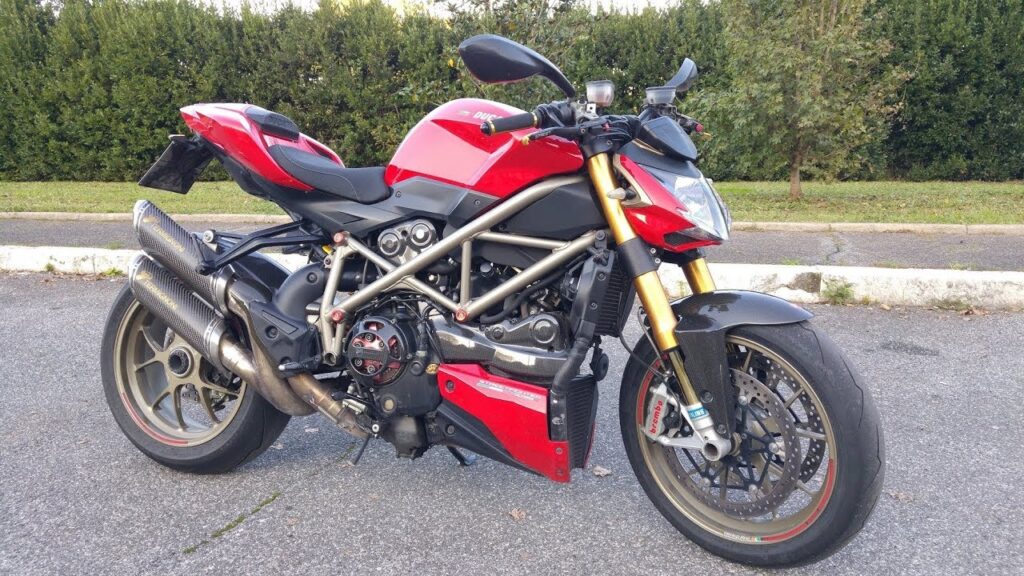
It was the first of new breed of Super-Naked’s and the dawn of another new era of performance.
Not to be outdone, by 2011 the Aprilia Tuono V4 was launched, and it became the most powerful Super-Naked ever built, with 167hp from the factory.
Now it was a simple fact, that without the computerized jiggery pokery they all came loaded with, all but the very best racers could get nowhere near the performance limit of these bikes.
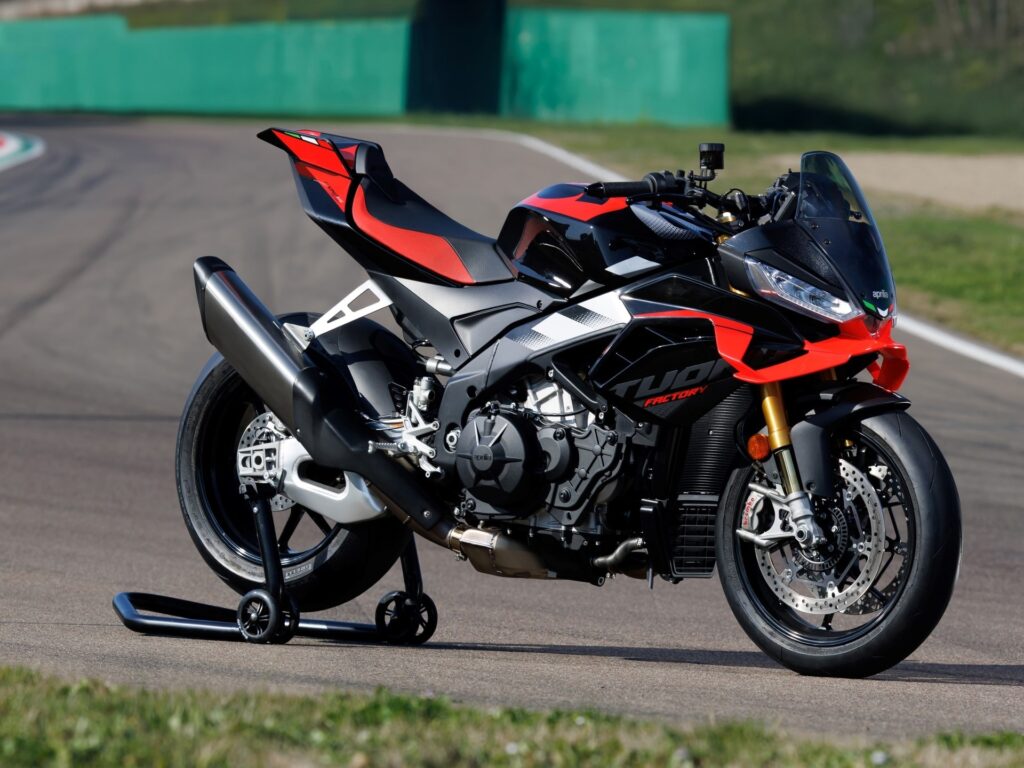
This is where the manufacturers lost their way again in my opinion.
Racing to make the most powerful bike is fine, but when that bike is so far beyond the skill set of the people buying them, that without the many bits of electronic wizardry, they would all end up in a scrapyard very quickly.
Is there really any point?
All it became was a great big pissing contest, and I never got sucked in by the more is better marketing barrage.
If I could have ridden a gen 1 Tuono to its absolute limit, I would have been a very happy man, and probably racing at least at a national level.
The idea of trying to get all the power of a Streetfighter V4 down on the tarmac is mind boggling to me.
I did have the terrifyingly exhilarating experience of doing a few laps around Cadwell Park of a V4 Panigale which is obviously where the streetfighter came from. Even with all the electronics on, because I didn’t know how to turn them off, it was a complete animal. It was far faster than I will ever be and I was under no illusions about that when I rolled carefully back into the paddock.
Now we have the Super-Nakeds chasing ever more unusable power figures and controlling them with ever more complex and expensive electronic systems that have pushed prices higher and higher.
Bikes like the KTM Super Duke 1290 and now 1390, the BMW M1000R, Yamaha MT10 and others have become very expensive toys and it is still the Ducati Monster 937 and Aprilia Tuono V4 that lead the way, in my humble opinion that is.
They are the ones who have stayed more focussed on weight.
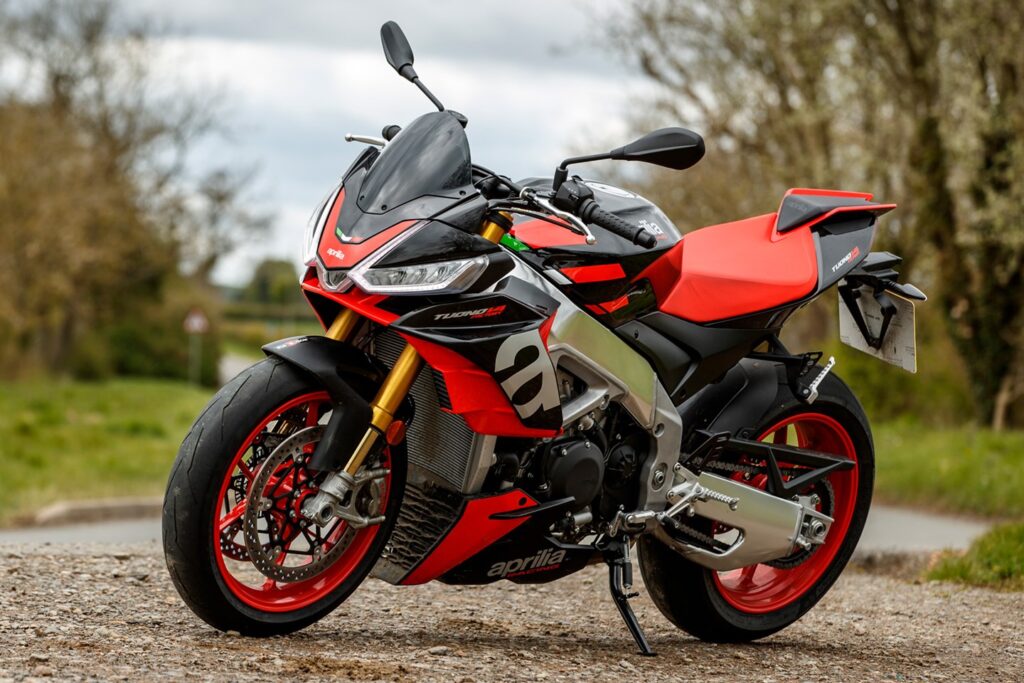
Choosing which is best is a very personal thing.
For those of us who focus on weight and agility more than absolute power it is hard to see beyond Italy. And personally it is the earlier bikes with less electronics that will always draw my gaze first.
They are also in my opinion the ones that are more likely to become collectors bikes.
I know some of you aren’t in the UK, and I know prices will be different in different markets. But if you look hard, there will always be a bargain come along sooner or later.
With any bike, look for the ones that haven’t been messed about with too much. If after-market parts have been used, try to see if the originals are also available. Look for low numbers of previous owners, but you should especially look at how long the last owner had the bike.
Someone who keeps a bike long term will tend to keep on top of maintenance.
The reality is, few riders will have used these bikes to their limit, so it is possible to pick up good quality used examples for a decent price.
Real World Pricing In 2025
You can get a hell of a lot of bike for your money if you search carefully.
For some examples I just looked at sold items on ebay to try and see what price bikes actually sold for, because you will see plenty with very hopeful asking prices that fool others in the market into thinking that is what the bikes are worth.
Of the last 4 Ducati M900 Monsters that have sold, one very clean 1 owner bike went for £4,500, but the other 3, which were all the best 1999 model, went for under £3,000. 2 of them for just £2,250.
That sounds like a serious amount of bike for the money to me, and they were all in pretty good condition.
With the Triumph Speed Triple, one 2005 Speed Triple 1050 recently sold for just £1,800.00, no, it wasn’t pristine, but of the better ones there was a 2010 Triumph speed triple 1050 in pristine condition that sold for £3,750.00. A 2016 Speed Triple 1050 R sold for just £3,000 and there was even an old 1994 4 pot 1200cc Speed Quattro Daytona that sold for £2,650
Finding Suzuki Bandit 1200’s that haven’t been messed around with can be a little harder than you might think, but there was a tasteful 1997 Suzuki GSF1200 Bandit Street fighter that sold recently for £2,650 with probably about £2,500 worth of performance parts on it.
A genuine standard 2005 model sold for £2,700 and there were several that had sold for under £2,000 that looked pretty good bikes.
The Cagiva Raptor is still an under appreciated bike. Parts can be a challenge at times, but the Rapter Chapter of Cagiva owners will help and not try to rob you blind in general, One 25,000 mile example recently sold for just £1,550 ready to ride away, and the TL1000 engine will go on forever.
Just think about that. Suzuki’s big V-Twin tuned for over 100hp in an Italian chassis with great running gear for £1,500, Whoever got that bike got a serious bargain.
The only other one for sale recently was a 2005, 16,000 mile Cagiva XTRA Raptor in great condition that sold for £2,300. There were just 1,000 Cagiva Xtra Raptors ever made, and they came with better suspension and dripping with carbon fibre.
The rear was raised in comparison to the standard Raptor and along with the suspension changes it meant balance was pushed forward to give a more 50/50 balance front to rear. This meant that handling was even sharper, and is only really a bike for a seasoned rider.
On to Ducati. One Ducati Monster S4 fixer upper garage find recently sold for just £935, but for a decent running example you would be looking at around £2,500 for a decent S4, or probably closer to £4,000 for a good S4R.
Recent sales were a 2008 Ducati Monster S4R in mint condition that went for £4,000, a 2003 S4R with just 21,000 miles on it for £3,500, and a 2002 S4 that sold for just £2,400.
With the Aprilia Tuono, a 2007, 1000 factory R with just 7,663 miles on it went for £4,000, a 2008 standard Tuono 1000 sold at £3,500, and a 2009 standard Tuono with a full Acropovich exhaust system sold for £3,800.
For me, possibly the nicest looking one was a standard Tuono from 2005 that went for just under £3,200 with 30,000 miles on the clock.
So the Tuono is possibly the one holding its price better than most right now.
With the newer Aprilia Tuono V4 and Ducati Streetfighter, obviously prices go up, but buying a good second hand bike would be anything from about £7,000 and upwards depending on models and condition.
But that is still one hell of a saving on new prices.
Final Words
The market now has bikes like the MT09 that have the same Super-Naked appeal as the earlier models from Triumph and Ducati for significantly less money.
They offer riders a package that is sub 200kg wet and produces around 120hp for a lot less that the Italians or Yamaha’s own MT10, and let us be real, most people just never use more than that.
A recent 2018 Yamaha MT09 sold for £4,300 but the prices can be all over the place at the minute. Some have gone at below £3,000 for a 2015 bike which is bonkers, but that is why it is worth watching and waiting. You may miss a bargain, but you might find a better bargain too.
Which of these incredible bikes would you choose?
And which do you think I should have included?
What is your favourite Super-Naked?
Thanks as always for watching. I look forward to hearing your comments.