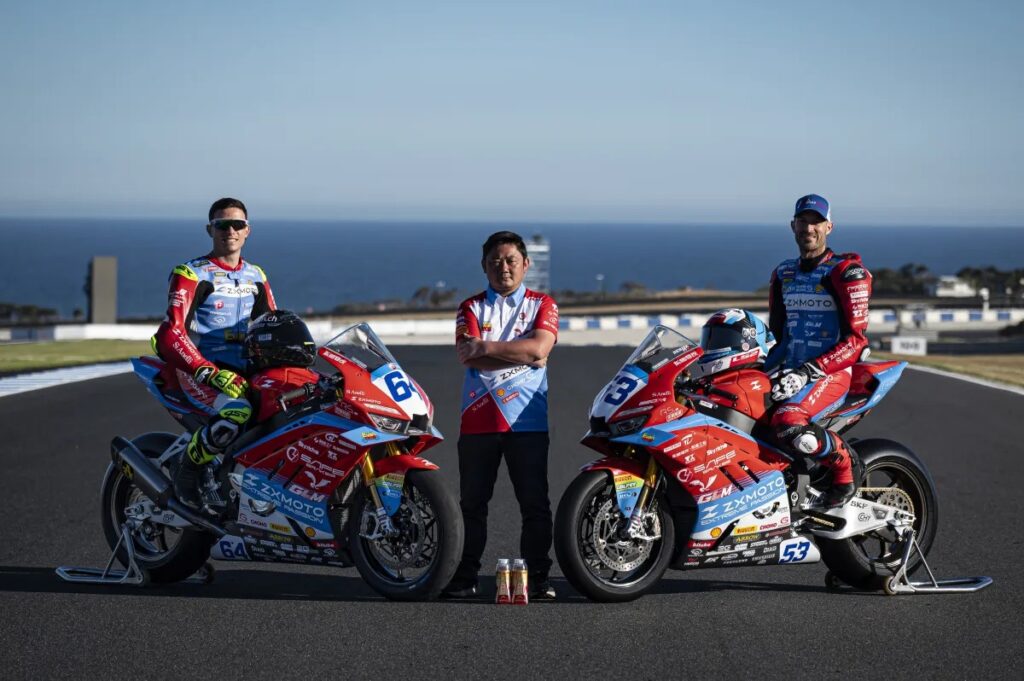
Well after the last ZX Moto win in World Supersport the internet went mental, and now every man and his dog is talking about the man I first introduced to you back in January 2023 before Kove’s first Dakar.
A lot has happened since then, and with the launch of ZX Moto we entered a new chapter.
A year of success
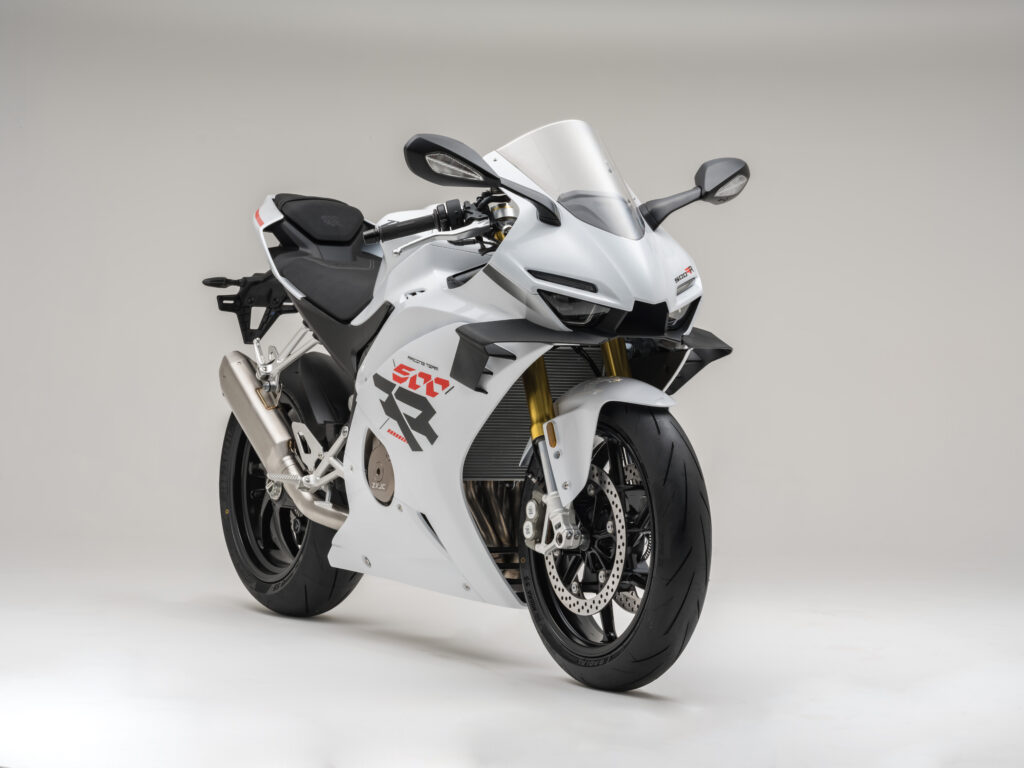
This year, with the sales success in China of the ZX500RR, they moved on to begin their challenge in the World Supersport Championship, and released their flagship bike, the ZX820RR.
Already they have pulled in DJI Osmo and the biggest energy drinks manufacturer in the East into their sponsorship portfolio and that list of sponsors will keep growing.
No one could have expected the impact they would have on the World Supersport Championship, because as well as the wins they have already had, the viewing figures of the World Superbike Series and the World Supersport Championship in particular have gone through the roof.
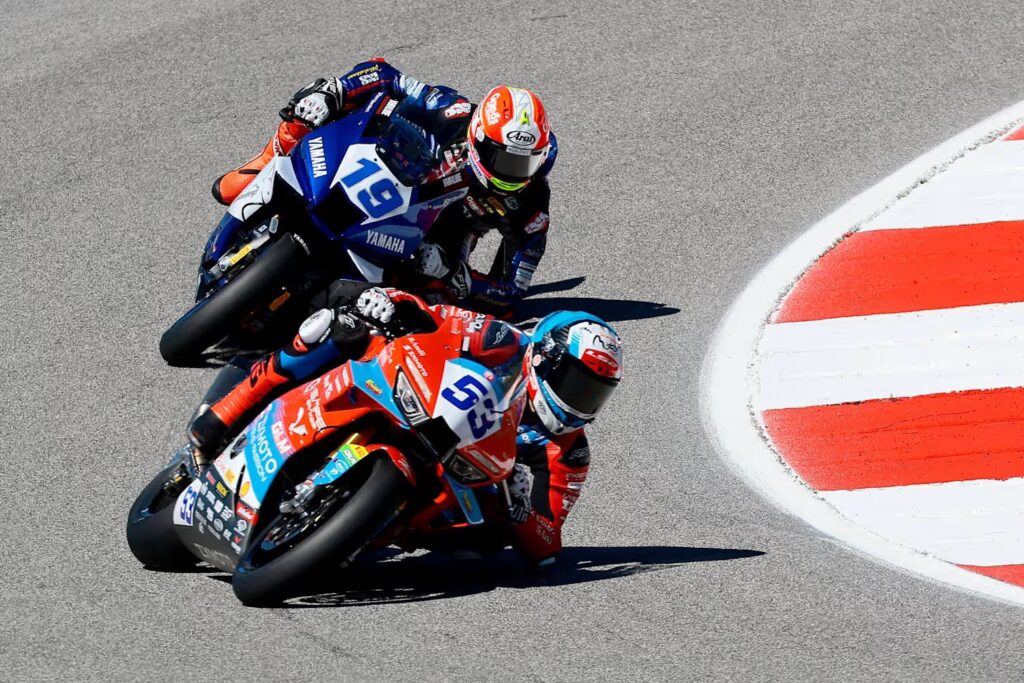
This video wasn’t really about the World Supersport Championship but they won again in Hungary so I have to mention it.
In race 1 after grinding his way forward through the pack and hanging onto the tails of the 2 lead Yamaha’s, Valentin Debise was sat poised in 3rd and could easily have just accepted that with a big gap back to 4th.
However, on the last lap, he saw a mistake and pounced, passing both of the Yamaha’s to take the top step on the podium again.
After race 1 he sat in 3rd in the championship, just 28 points behind the leader Albert Arenas who finished 2nd in the race, and just 9 points behind Jaume Masia who never even finished the first lap in race 1.
One slip from Arenas could have meant 4 riders all within touching distance of the top spot, but in race 2, Debise’s race was the one cut short, this time by a technical problem.
The weekend finished with him still sitting in 3rd in the championship, now 53 points behind the leader Albert Arenas and 20 points behind Masia who is still in 2nd.
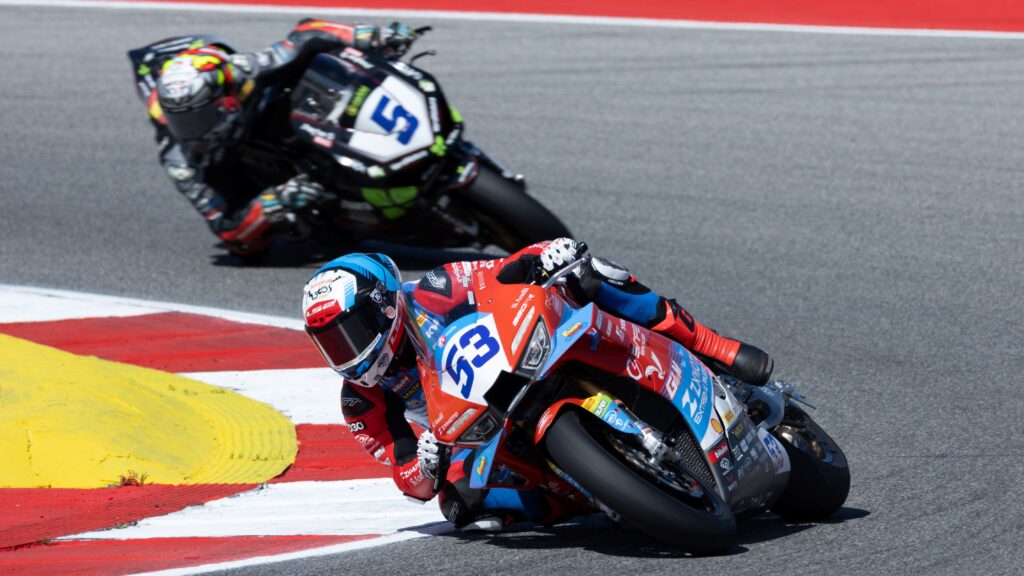
Caricasula had 2 more finishes, but is still struggling to string long fast sessions together. However he is still fast when it comes to single lap times and top speed on the straights, so I have no doubt he will string some good results together before the end of the year.
ZX Moto are the real news
But as I said, this video wasn’t really going to be about that. Because obviously while the season is up and running, the launch of the ZX Moto 820RR has now happened and the first few lucky riders have got their hands on one.
Even Philip Hammond flew off to China to get himself a ride on one, but amid all the fanfare, their was a problem.
One of the engines on the bikes from the very first production run went bang.
Now to be real about it, all first runs can throw up problems, but an exploding engine was certainly not part of Zhang Xue’s plan.
How he reacted to it is the story here.
Zhang Xue just replaced the engine in that bike with no questions, and the replacement was all done very quickly, which is always good to see.
But it was what came after that was the real news.
During the tear-down it was discovered that there had been a O-ring on the suction valve of the oil pick up that got crushed on assembly in the oil gallery in the sump.
As well as being slightly crushed it had a small piece missing, so this is what compromised the oil feed and led to the engine disaster.
On such a high performance engine the margins are always small.
Assembly error
The good news, is that it was probably as simple as an assembly error, but there have already been some updates. The entire oil pan was redesigned as part of the recall on the suction valve, and they’ve also added an aluminium baffle plate in the sump to prevent suction losses at extreme lean angles or under hard braking and acceleration.
Then came the bombshell, and for once, it was a positive news story, because although I thought Zhang Xue’s initial response was great when he addressed the problem so swiftly and openly, he has now issued an open offer to all 820RR owners.
First I heard that he would replace any engine or even the full motorcycle if the customer isn’t happy or they find any evidence of problems due the the oil seal assembly issues, but that wasn’t quite right as you will hear shortly.
I think looking at the timeline reveals a lot though, because it was only on the 16th of April that the ZX820RR we are talking about exploded, with one of the conrods thrown through the casings.
The bike was inspected on the 21st of April, just 5 days later, and they discovered the issue was caused by the incorrectly assembled O-ring on the pressure relief valve, this led to the connecting rod failure, and In response, Zhang Xue announced that if a bike’s pressure relief valve is found to be loose or faulty, the owner can choose to either return the motorcycle for a full refund or get a brand-new replacement bike.
So if any 820RR owners find their bike hasn’t had the O ring assembled right, they have the option of returning or replacing the entire bike, not just the engine!
Now this is completely unprecedented. A first not just in the motorcycle industry, but a first across the whole automotive world as far as I am aware.
A message to the industry
It sets an amazing example for other manufacturers. An example that has been sadly lacking in recent years.
I really hope the big global brands like Triumph, KTM and Harley Davidson are watching. It is high time they took better care of their customers and I hope they will all begin to follow this example.
If they don’t, they will only have themselves to blame when sales start to move.
For the Brits in my audience, the good news here is that a UK distributor has now been signed up.
Llexeter holdings are the new UK Distributor, and I expect that initially it will be the dealers that have proven themselves with Lexmoto products that will receive the bikes.
Everything is in the early stages but the plan is that the first 500RR’s should be available in June or July and the 500F and 820RR should follow soon after.
So by the end of the year we should have some ZX Moto bikes actually on the road here, and not just in the hands of the journo’s.
I am sure there will be many reviews telling everyone how wonderful they all are, but lets face it, that is all most so called reviewers ever do these days so the companies involved keep sending them more new bikes to review.
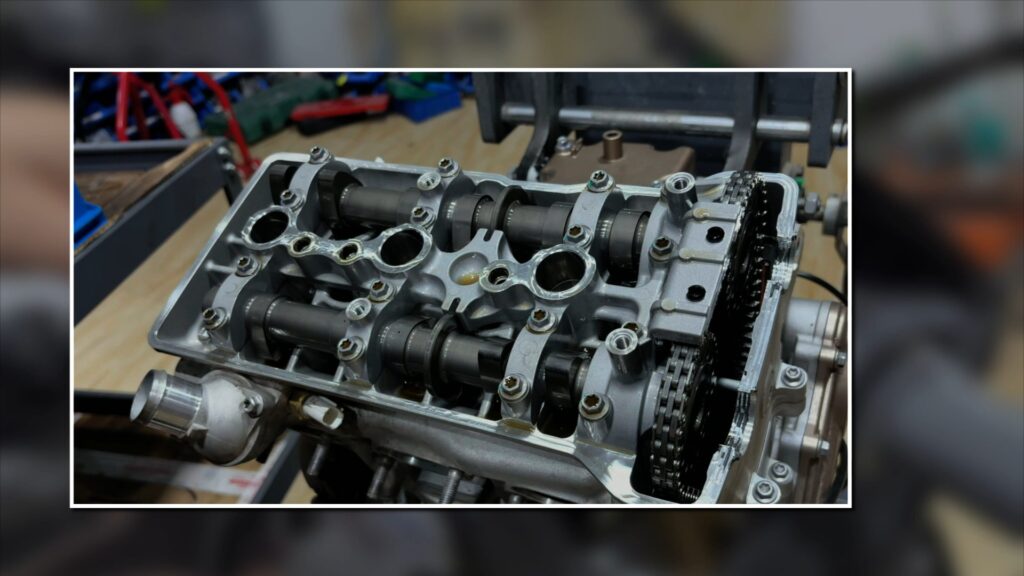
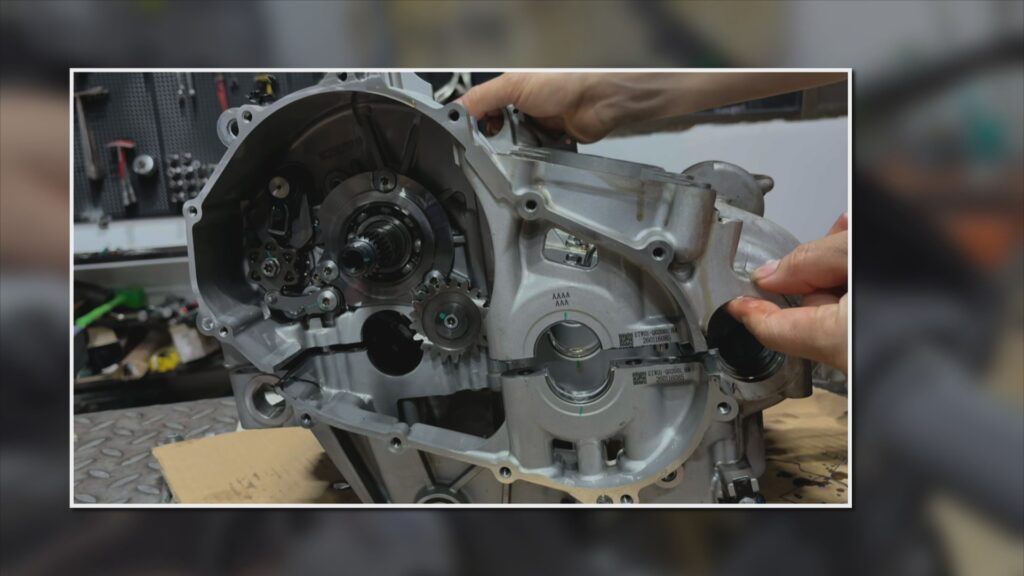
Next we can finally see a real look inside of an 820RR engine. It won’t be a detailed analysis, but it starts to help us see beyond the hype.
Now you know I had an inkling that this engine had some things in common with the old MV triple from the F3, and I have heard people say the same about it in relation to the Yamaha MT09 and the various Triumph triples.
Now we can start to really see that what Zhang Xue seems to have done, is take aspects of all 3 motors, and others, and use them as inspiration for what does seem to be a genuinely new and different engine.
For a start, the crank runs the opposite way to the MV one and the casings split in a very different way.
Built to be fixed
The air filter setup is something Xhang Xue mentioned from the start and his years running a repair shop have paid off here because it does look user-friendly, which cuts down service time and costs.
You simply remove the top cover of the fuel tank and pull the filter out.
I will just mention some of the things I noticed straight away.
The motorcycle uses aircraft-style fuel fittings throughout. For me, this is a good omen, because it is an easy place to save costs and instead they have chosen to use a simple but good quality component rather than skimping.
It has soft-lock rubberised clips all over the body panels too, which you would expect to see on a Ducati, MV Agusta, KTM or BMW, but not on a bargain Chinese bike.
As this is a bike built to homologation standards for the World Supersport Championship, the electronic controls were a necessity really. The advantage of the electronic throttle, is that it makes it far easier to run things like a bi-directional quickshifter, and the front wheel lift control, which is a sort of cross between a launch control and an anti wheelie device. Obviously you get the multiple engine maps too.
Observations
Remember, this was a first run engine. So doesn’t have any of the modifications done yet. Some parts have already been redesigned to improve things.
When you look inside, one of the first things you will notice is that the primary chain is heavy duty, the sort of heavy duty chain that wouldn’t look out of place on a Superbike, and it is a Borg Warner chain.
Then you might see the hollow pressed cover, which is very similar to the MV Agusta design and is simply done to reduce weight without compromising strength.
The camshafts are forged, and drilled to help lubrication, which is something BMW still refuses to do and KTM could have learned some lessons from.
The camchain tensioner is long too, possibly lengthened for better slack take up and a smoother run.
That is something that was a problem on some of the MV Agusta’s if I remember rightly. As the tensioner wear increases the direction change on the cam-chain made it prone to jamming.
The cam buckets are DLC coated too, so wear and friction co-efficient are both reduced, but from what I can see, the shimming is done by swapping the whole bucket, which makes the job easier in some ways, but it means ordering parts is impossible until after disassembly, which is not great in my opinion.
This is another design quirk it shares with the MV Agusta. It makes the bucket/shim combination lighter, and more stable at high rpm, but it means that the complete bucket has to be swapped out if the valves reach the gap limit.
It looks like the counter-balancer shaft drives the generator too. MV Agusta never got the problems that this caused fixed properly, so I hope Zhang Xue figured out a solution.
The engine is quiet, with a scissor gear on the counterbalance shaft that meshes with the layshaft. Triumph’s solution was to put the scissor gear on the clutch drum but that makes it a pain in the proverbials to fit, and both MV Agusta and Yamaha with the MT-09 don’t use scissor gears at all, which is why the engines are just noisier.
The area around the valve seat looks quite different from the MV too, and the valves are a completely different length as well as different diameters.
So basically I was wrong, although set out in a similar way there are very distinct differences to the MV engine.
The entire oil pan was redesigned because of the recall and an aluminum baffle plate has now been fitted.
Japanese bearings
Most of the bearings seem to be Japanese NMB brand bearings, so a recognised brand and the same as are fitted to many of the bikes made by the big 4.
The shells are bimetallic copper Daido shells just like all the Japanese bikes too, and the crankshaft is forged, as are the con rods. The connecting rods aren’t a fracture-split design like many are these days though. That means they don’t all need replacing as split pairs. So again, this is designed to be maintained easily, and at minimal cost.
Obviously the design of a mechanic, not a bean counter.
The pistons are forged too, but liners are not ceramic as far as I can tell, maybe this was just on the prototype, but again, maybe it is a legacy of Zhang Xue’s time with a spanner in his hand, because it is far easier for a repair shop to replace or rebore iron sleeves than it is to do any work on an engine with Chromed, Nikasil or ceramic liners.
The engine isn’t a monoblock design either, which is another way costs could have been cut. The cases are split, so repairs are easier. With a monoblock design a damaged barrel would mean replacing the entire crankcase assembly. So at least here the barrels can be replaced or rebored.